Two of the most popular materials on the market today are nylon and silicone cooking utensils. Both are praised for being gentle on pans, but when it comes to heat resistance, durability, and long-term safety, which one truly comes out on top? Choosing the right cooking utensils is more than just a matter of personal style—it’s a decision that directly impacts your food safety, the longevity of your non-stick cookware, and your overall cooking experience.
As a leading manufacturer specializing in high-quality silicone products, we’ve seen a significant shift in consumer preference. In this comprehensive guide, we’ll break down the science, performance, and real-world applications of both materials to help you make an informed choice. We’ll also explain why many home cooks and professional chefs are making the switch to food-grade silicone utensils.
Understanding the Contenders: Nylon vs. Silicone
Before we dive into a head-to-head comparison, it’s essential to understand what these materials are made of.
Nylon cooking utensils are a type of thermoplastic polymer. They are popular because they are lightweight, rigid, and inexpensive. They offer a good level of heat resistance, typically up to around 400°F (204°C), making them suitable for many everyday cooking tasks.
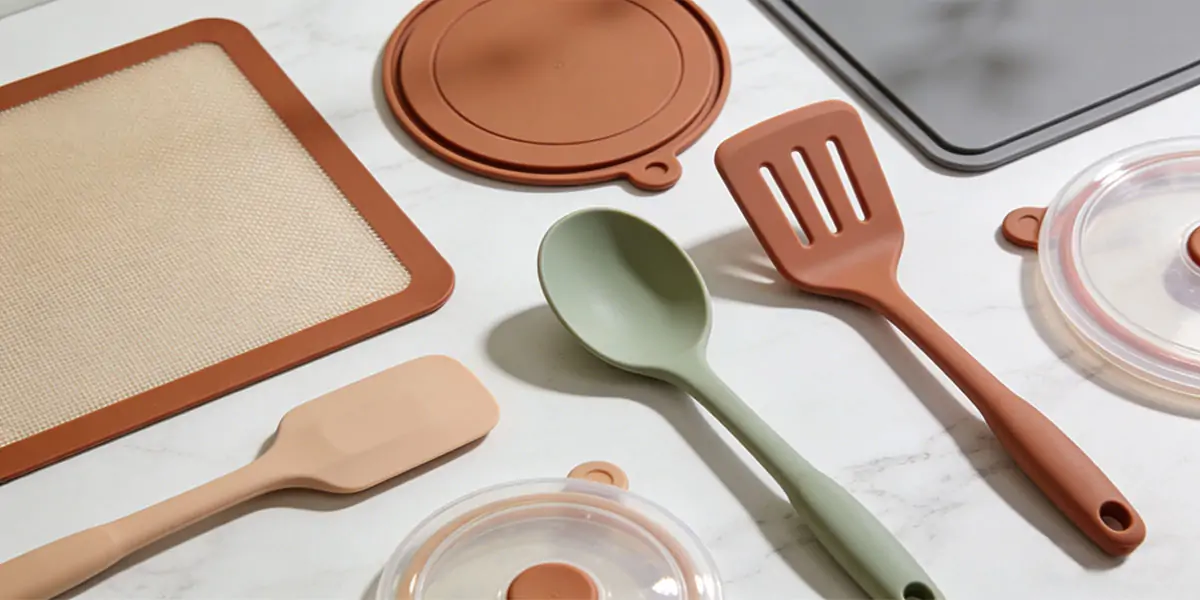
Silicone cooking utensils, on the other hand, are a synthetic rubber made from silicon and oxygen. This composition gives them unique properties, most notably a superior tolerance to heat. High-quality, food-grade silicone is generally safe up to 450°F (232°C), with some premium versions rated as high as 500-600°F (260-315°C).
What Are Nylon Cooking Utensils? Pros & Cons
Nylon cooking utensils are made from synthetic polyamide fibers, a thermoplastic material first developed in the 1930s. They gained popularity for being lightweight, affordable, and gentle on nonstick pan surfaces.
Pros of Nylon Cooking Utensils
- Budget-Friendly: A full set of nylon utensils costs a fraction of silicone or stainless steel alternatives, making them ideal for those on a tight budget or looking for temporary kitchen tools.
- Non-Scratch: Nylon’s soft texture won’t damage nonstick coatings, ceramic, or cast iron cookware—protecting your investment in high-quality pans.
- Lightweight & Stiff: Their rigidity makes them suitable for scraping pans or flipping heavier foods like burgers or pancakes, and their light weight reduces hand fatigue during long cooking sessions.
- Non-Reactive: Nylon doesn’t react with acidic or alkaline foods (e.g., tomato sauce, citrus), so it won’t alter the taste or color of your dishes.
Cons of Nylon Cooking Utensils
- Poor Heat Resistance: This is nylon’s biggest downside. Nylon softens at around 350–400°F (177–204°C) and melts at approximately 450°F (232°C). Leaving nylon utensils in a hot pan, using them on high heat, or exposing them to open flames can cause warping, melting, or even the release of harmful oligomers (unreacted monomers and additives).
- Short Lifespan: Repeated exposure to heat, dishwashers (especially heated drying cycles), and regular use causes nylon to become brittle, crack, or break over time. Most nylon utensil sets need replacement within 1–2 years.
- Chemical Leaching Risks: Low-quality nylon may contain additives like phthalates, which can leach into food when heated above safe temperatures. Even high-quality nylon has a higher risk of chemical release compared to silicone.
- Stain & Odor Retention: Nylon’s porous surface tends to absorb food stains and odors, making it hard to clean and leading to discoloration over time.

What Are Silicone Cooking Utensils? Pros & Cons
Silicone cooking utensils are made from a synthetic elastomer derived from silica, oxygen, and carbon—known for its exceptional heat resistance, flexibility, and safety. High-quality silicone utensils are food-grade, compliant with strict standards like FDA 21 CFR 177.2600 and EU 1935/2004, and have become a staple in modern kitchens for their reliability and versatility.
Pros of Silicone Cooking Utensils
- Exceptional Heat Resistance: Food-grade silicone withstands temperatures ranging from -40°F to 600°F (-40°C to 315°C). This makes them safe for high-heat cooking, baking, and even use in the oven or microwave, without warping or melting.
- Non-Toxic & Safe: High-quality silicone is non-toxic, odorless, and does not leach harmful chemicals like BPA, phthalates, or heavy metals. Even when exposed to high heat. It passes strict FDA migration tests, which simulate real-world use (e.g., 121°C heat, contact with oils and acidic solutions) to ensure no harmful substances are released into food.
- Durable & Long-Lasting: Silicone is resistant to wear, tear, and brittleness. With proper care, a set of silicone utensils can last 5+ years. They won’t crack, fade, or break, even with daily use and frequent dishwasher cycles.
- Non-Scratch & Gentle on Cookware: Like nylon, silicone’s soft, flexible surface protects nonstick pans, ceramic, and cast iron from scratches. Extending the lifespan of your cookware investment.
- Easy to Clean & Hygienic: Silicone’s non-porous surface resists stains, odors, and bacteria growth. Most silicone utensils are dishwasher-safe, and any food residue wipes off easily with a damp cloth. Unlike nylon, they won’t retain odors from strong foods like garlic or onions.
- Versatile & Customizable: Silicone is highly flexible, making it perfect for scraping bowls clean, stirring sauces, or flipping delicate foods like eggs. As a custom silicone product company, we offer personalized options. Including custom colors, logos, and shapes to suit both home cooks and commercial brands.
Cons of Silicone Cooking Utensils
- Higher Initial Cost: Silicone utensils are more expensive upfront than nylon. However, their long lifespan makes them more cost-effective in the long run.
- Less Rigidity: Silicone’s flexibility can be a downside for tasks that require stiffness, like scraping tough food residue from pans. For these tasks, look for silicone utensils with a reinforced metal core for added strength.
- Low-Quality Risks: Cheap, non-food-grade silicone may contain fillers that degrade at high heat, release odors, or leach chemicals. Always choose 100% food-grade silicone with FDA or LFGB certification, and avoid products with a strong chemical smell when new.

Nylon VS Silicone Cooking Utensils: Key Comparison
|
Feature |
Nylon Cooking Utensils | Silicone Cooking Utensils |
| Heat Resistance | Softens at 350–400°F (177–204°C); melts at 450°F (232°C) | Withstands -40°F to 600°F (-40°C to 315°C) |
| Safety & Chemical Leaching | Higher risk of leaching oligomers/additives when heated; may contain phthalates | Non-toxic; no leaching (FDA/LFGB compliant); passes strict migration tests |
| Durability | Brittle over time; needs replacement every 1–2 years | Long-lasting (5+ years); resistant to wear, tear, and fading |
| Cleaning & Hygiene | Porous; retains stains and odors; dishwasher-safe but degrades over time | Non-porous; stain/odor-resistant; easy to clean; dishwasher-safe |
| Non-Scratch | Yes | Yes (gentler than nylon for delicate cookware) |
| Cost | Budget-friendly upfront | Higher upfront; cost-effective long-term |
| Customization | Limited options | Highly customizable (colors, logos, shapes) for personal or commercial use |

Why Silicone is the Superior Choice?
While nylon has been a kitchen staple for years due to its low cost, silicone offers significant advantages that make it a smarter long-term investment.
-
Unmatched Heat Resistance and Safety.
The most critical difference is performance under high heat. If you accidentally leave a nylon spatula resting against a hot pan, it can begin to soften or melt, potentially ruining your utensil and raising concerns about chemicals leaching into food. “High-heat cooking demands materials that won’t break down. Silicone consistently outperforms nylon in thermal stability and safety,” notes Dr. Lena Torres, a materials scientist.
Silicone, especially when it’s platinum-cured, remains stable even at high temperatures. It is chemically inert and will not react with food or release harmful substances, giving you complete peace of mind. -
Superior Protection for Your Cookware.
Your non-stick pans are an investment. Using the wrong utensils is the number one cause of their premature demise. While nylon is softer than metal, it can still develop tiny, sharp imperfections over time that slowly abrade the non-stick coating.
Silicone, with its naturally soft and flexible composition, provides a gentle gliding action that is far less likely to cause any wear and tear. This makes silicone spatulas and spoons the undisputed champion for preserving your non-stick cookware. -
Durability and Ease of Cleaning.
Silicone is incredibly durable. It resists staining from vibrant foods like tomato sauce and doesn’t absorb odors. Many silicone tools are made in a seamless, one-piece design, which eliminates the crevices where bacteria can hide—a common problem with nylon utensils that have separate handles. A quick wash in the dishwasher or even a simple rinse is usually all it takes to make them look brand new.
-
The Verdict on Nylon.
Does this mean nylon has no place in the kitchen? Not necessarily. Nylon utensils are lightweight, affordable, and perfectly safe for low-temperature tasks like tossing a salad or serving cold pasta. However, their vulnerabilities under high heat and tendency to degrade faster make them a less reliable choice for daily, all-purpose cooking. As one home cook shared, after noticing scratches on her favorite skillet, she switched to silicone and “immediately noticed a difference”—her pan performance improved and the tools showed no signs of wear.
How to Choose the Right Utensils for Your Needs
Ready to upgrade your kitchen? Here’s a simple guide to making the best choice:
- Audit Your Current Tools: Check for signs of melting, warping, or rough edges. If you see any, it’s time to replace them immediately.
- Consider Your Cooking Style: Do you frequently sear meat, stir-fry at high heat, or use your oven? If so, heat-resistant silicone is non-negotiable.
- Check for Certifications: Look for labels like “100% food-grade silicone,” “BPA-free,” and “FDA-approved” or “LFGB certified”. This ensures you’re getting a pure, safe product without cheap fillers.
- Prioritize One-Piece Construction: For the best hygiene and durability, choose seamless silicone tools.
- Feel the Quality: Good silicone should feel firm yet flexible, not overly soft or sticky.
Conclusion: Make the Safer, Smarter Choice for Your Kitchen
When weighing the options, silicone cooking utensils are the clear winner for safety, durability, and overall performance. They protect your valuable nonstick cookware, withstand the rigors of daily high-heat cooking, and are made from a non-toxic, stable material that is better for your family’s health.
At Siliconexy, we specialize in manufacturing premium, custom silicone utensils that meet the highest standards of quality and safety. Whether you’re a home cook looking for the best tools or a brand seeking a reliable OEM partner, our food-grade silicone products are engineered to last.
Ready to experience the difference? Contact us today to learn more about our wholesale options or to discuss your custom project.
- Email: xy6@szxinyin.com/ xy8@szxinyin.com
- Tel/WhatsApp: +86 18027668865/ +86 13760117928