How to Choose High-Quality Silicone Products for Your Business? Silicone products are integral to industries spanning medical devices, food processing, automotive, electronics, and industrial manufacturing, valued for their exceptional flexibility, temperature resistance, chemical inertness, and biocompatibility. However, not all silicone products are created equal. Choosing low-quality silicone can lead to product failures, safety risks, and reputational damage.
Selecting high-quality silicone solutions is critical to ensuring product safety, performance consistency, regulatory compliance, and long-term operational reliability. This guide will walk you through the key factors to consider when selecting high-quality silicone products for your business. We hope it can help you make a wise and cost-effective decision.
How to Choose High-Quality Silicone Products?
1. Understanding Silicone Grades
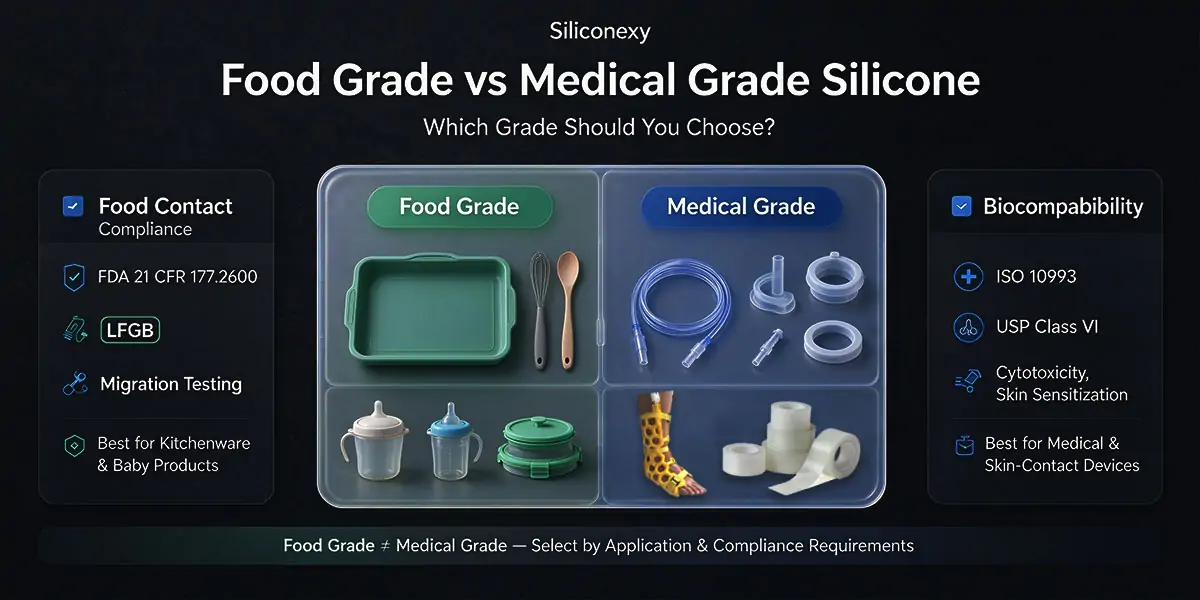
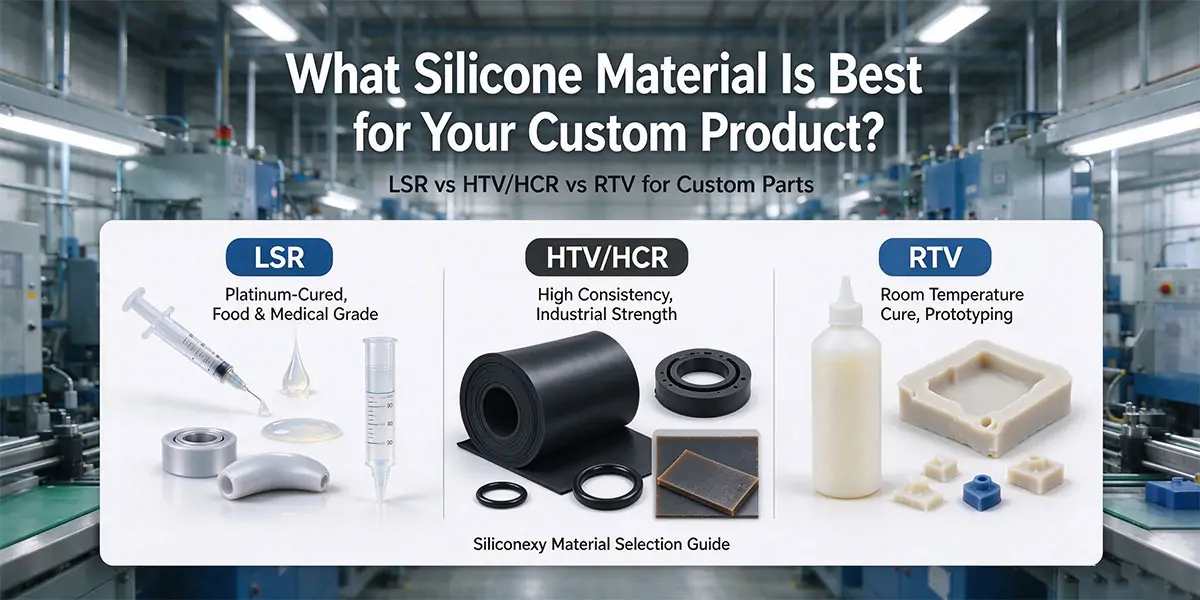
Not all silicone is manufactured to the same standards. The primary distinction businesses need to understand is between food/medical-grade silicone and industrial-grade silicone.
- Food-grade Silicone: Food-grade silicone is a high-purity material tested to ensure it does not leach harmful chemicals into food or drink. It is odorless, tasteless, non-toxic, and must comply with strict safety standards such as FDA or LFGB. This grade is designed with human safety as the central priority. Essential for kitchenware, baking molds, and food storage solutions. Always request material certifications from suppliers to verify grade compliance.
- Industrial-grade Silicone: Industrial-grade silicone, by contrast, focuses on physical durability and cost control. It may contain fillers or additives that are unsuitable for food contact. While functional for mechanical seals, shock absorbers, and industrial applications, it should never come into contact with food or consumable products. Ideal for automotive gaskets, electronic components, and industrial seals.
- Medical-grade Silicone: Medical-grade silicone represents an even more rigorous tier, requiring biocompatibility certifications such as ISO 10993 or USP Class VI. It is used for products that contact the human body, including baby pacifiers and medical tubing, but is generally unnecessary for standard kitchenware applications. Look for this grade if your business operates in healthcare, baby products, or food service.
The cost difference between grades is substantial. Industrial-grade versus food-grade silicone typically differs by 30–50% in raw material cost. This gap reflects differences in purity, production complexity, and testing requirements.
2. Verify Regulatory Compliance & Certifications (Non-Negotiable)
Certifications are the primary benchmark for silicone product safety and quality, validating adherence to international standards for material purity, toxicity, and performance.
Prioritize products with verifiable, third-party certifications tailored to your industry:
- FDA (21 CFR 177.2600): Mandatory for silicone products in food-contact applications (e.g., kitchenware, baby products) and medical devices in the U.S., ensuring no harmful substances migrate into food or biological tissues.
- LFGB: The gold standard for European markets, especially Germany, requiring rigorous testing for sensory neutrality (no odor/taste transfer) and stricter migration limits than FDA.
- ISO 10993 & USP Class VI: Critical for medical-grade silicone, verifying biocompatibility for implants, surgical tools, and patient-care devices.
- ISO 9001, ISO 13485, IATF 16949: Validate a manufacturer’s quality management systems (QMS) for consistent production, traceability, and process control.
- RoHS/REACH: Confirm compliance with EU restrictions on hazardous substances (e.g., heavy metals, phthalates) for electronics and consumer goods.
Action Tip: Request original certification documents and test reports from the manufacturer; avoid products with vague or unsubstantiated compliance claims.
3. Factory vs. Trading Company: Why It Matters?
China is a dominant global hub for silicone production with clusters in Dongguan, Huizhou, and other Guangdong cities. When sourcing from China, distinguishing between a genuine manufacturer and a trading company is essential.
A real factory maintains direct control over material sourcing, production processes, and quality assurance. Factories typically have in-house mixing lines, testing laboratories, and quality management systems. They can provide Certificates of Analysis (CoA) for each batch, maintain traceability records, and offer technical support directly from their engineering teams.
A trading company acts as an intermediary, purchasing from multiple factories. They rarely have in-house R&D or testing capabilities, cannot control material formulation directly, and often provide slower technical support since they must relay questions to the actual manufacturer.
For custom silicone products requiring specific hardness levels, colors, or performance characteristics, working directly with a factory significantly reduces quality risks and communication delays.
Vet the Manufacturer’s Production Process and Quality Control
A supplier’s manufacturing practices directly impact product quality. Prioritize partners with:
- ISO 9001 Certification: This international standard ensures consistent quality management systems and adherence to strict production protocols.
- In-House Testing Facilities: Reliable manufacturers conduct third-party lab tests for material composition, durability, and safety. Ask for test reports on batch consistency and performance.
- Customization Capabilities: If your business requires tailored silicone products (e.g., specific sizes, colors, or hardness), choose a supplier with expertise in mold design and prototyping. This ensures the final product meets your exact specifications.
- Transparent Supply Chain: Suppliers should be able to trace raw materials back to their source, minimizing the risk of contaminated or substandard inputs.

4. Evaluate Critical Mechanical & Performance Properties
Before committing to a bulk order, always test samples in your real-world environment. Silicone product performance depends on matching mechanical properties to your application’s demands. Test or verify these core metrics:
- Temperature Resistance: Check the product’s continuous operating temperature range. Premium silicone remains stable from -60°C to 250°C, with some industrial grades handling short bursts of 300°C.
- Tensile Strength & Elongation: Standard silicone typically has 4–12 MPa tensile strength and 200–1000% elongation. Higher values indicate better durability and resistance to tearing under stress.
- Chemical Resistance: Confirm the silicone is compatible with substances it will encounter, such as fuels, acids, or cleaning agents. Incompatible materials can degrade over time, leading to leaks or product failure. Ensure resistance to oils, solvents, acids, and alkalis relevant to your industry (e.g., fuel-resistant silicone for automotive, chemical-resistant grades for manufacturing).
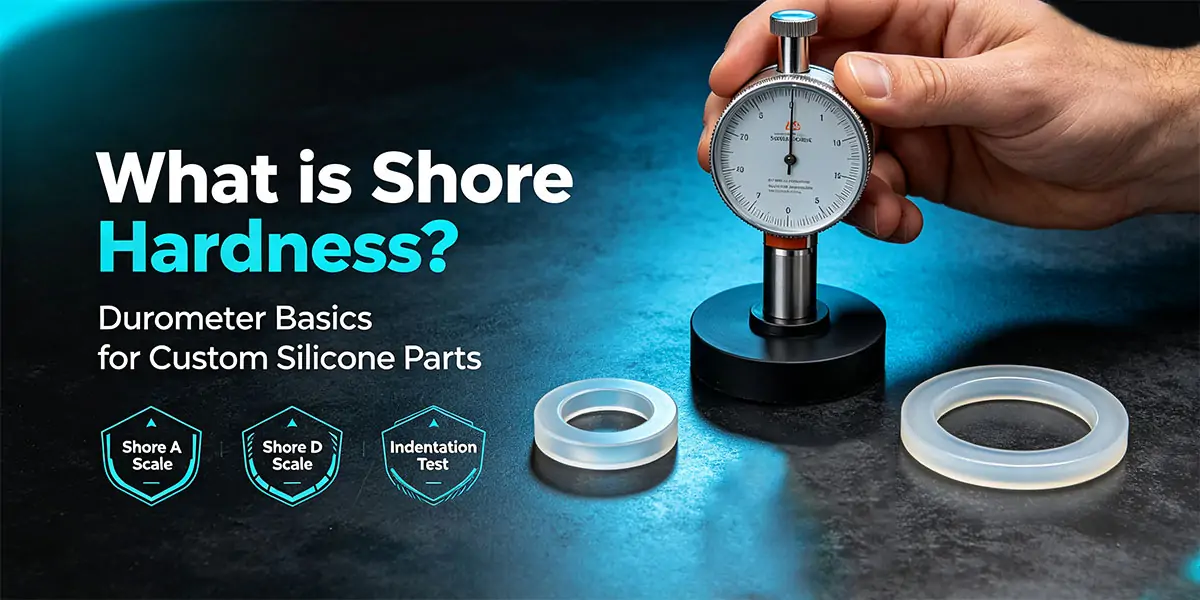
- Hardness: Rated on the Shore A scale (0-100), hardness determines flexibility. Soft silicone (10-30 Shore A) is used for seals and gaskets, while hard silicone (70-90 Shore A) suits rigid components like handles or insulators.
- Compression Set: A key indicator of sealing performance; high-quality silicone has ≤10% compression set (150°C × 22h), maintaining shape and seal integrity over time.
Visual and Physical Quality Indicators
Beyond documentation, several simple tests help evaluate silicone quality without specialized equipment.
- Visual inspection is the first step. High-quality silicone products have clean, smooth mold lines with uniform color. Uneven coloring, chalky white spots, rough edges, or visible impurities are warning signs of poor manufacturing quality, which often correlates with lower-grade raw materials.
- Odor test: Genuine food-grade silicone has almost no smell. If a product emits a strong rubbery or chemical odor, particularly after being warmed by twisting or placed in boiling water. It likely contains leftover curing agents, plasticizers, or other volatile organic compounds that indicate lower-grade material.
- Stretch and recovery test: Stretch the material and release. High-quality silicone rebounds to its original shape immediately, without permanent deformation, creases, or white stress marks. Low-grade silicone may show a chalky residue when stretched or fail to return to form.
- Heat test: Submerge the silicone in boiling water for several minutes. Premium food-grade silicone remains intact and odorless, while imitations may soften, discolor, or emit unpleasant smells.
It is worth noting that transparency is not a definitive quality indicator. Some high-quality silicone products are opaque due to added pigments or specific formulations. However, extreme clarity can sometimes indicate fewer fillers. This is a useful red flag filter rather than a perfect rule.
5. Supplier Evaluation: Beyond the Quote
When evaluating potential silicone product suppliers, consider these practical criteria:
- Request material test reports: Ask for SGS or MSDS reports with batch-specific traceability codes. A supplier that cannot provide these documents for the specific batch you intend to purchase should be treated with caution.
- Assess technical capability: Does the supplier have in-house mold-making capacity? Can they provide 2D/3D mold flow analysis reports? In-house tooling capability generally correlates with better quality control.
- Verify quality control processes: Ask about their QC workflow—how they monitor incoming raw materials, conduct mid-production inspections, and perform final checks. Reliable factories use precise measurement tools including Shore hardness testers, tensile testers, and dimensional measurement equipment.
- Check operational reliability indicators: If sourcing through B2B platforms, consider metrics such as on-time delivery rate, average response time, and reorder rate. Suppliers with documented on-time delivery rates of 95% or higher generally demonstrate stronger logistics management.
- Request product samples: Always evaluate physical samples before placing full orders. Test samples for dimensional accuracy, surface finish, material feel, and performance under intended usage conditions.
6. Verify Manufacturer Customization Capabilities & Industry Experience
For businesses requiring tailored silicone solutions, assess a manufacturer’s customization expertise:
- Design & Engineering Support: In-house R&D teams with 2D/3D modeling, prototyping, and material formulation capabilities to optimize products for your application.
- Flexible Production: Ability to scale from small-batch prototypes to large-volume orders while maintaining quality consistency.
- Material Customization: Options for custom hardness, colors, additives (e.g., conductive, flame-retardant, antimicrobial), and surface treatments (e.g., coating, printing).
A supplier’s track record reflects reliability and quality:
- Industry Expertise: Look for manufacturers with 10+ years of experience serving your target industry (e.g., medical, automotive) and a portfolio of certified products.
- Client References: Request case studies or references from global B2B clients to validate performance and consistency.
- After-Sales Support: Ensure access to technical assistance, warranty coverage, and responsive problem-solving for long-term partnerships.
7. Analyze Cost vs. Value (Avoid False Economy)
Extremely low prices often signal low-quality silicone with fillers, poor curing, or non-compliant materials—leading to premature failure, warranty costs, and reputational damage. Compare total cost of ownership (TCO): Factor in durability, lifespan, and compliance risks alongside upfront pricing. Prioritize suppliers offering transparent pricing tied to material grade, certifications, and production complexity.
Final Checklist for Selecting High-Quality Silicone Products
- Confirm valid, third-party certifications (FDA, LFGB, ISO 10993, etc.) matching your industry.
- Verify pure, traceable raw materials from reputable suppliers.
- Test or validate mechanical properties (hardness, tensile strength, temperature resistance) against your application requirements.
- Audit manufacturing processes and QC protocols for consistency and defect control.
- Evaluate customization capabilities for OEM/ODM needs.
- Balance cost with long-term value and compliance.
- Partner with experienced manufacturers with a proven industry track record.
By following these objective criteria, businesses can source silicone products that meet performance, safety, and regulatory standards, reducing risks and ensuring reliable operations across their supply chain.