Silicone is widely used in food-contact products, healthcare applications, consumer goods, and industrial components because of its flexibility, temperature resistance, and durability.
However, when sourcing custom silicone components, buyers often encounter two terms: food grade silicone and medical grade silicone. One question arises more often than any other: “Is food grade silicone the same as medical grade silicone?”
The short answer is no. While both materials are non-toxic, flexible, and heat-resistant, their regulatory scopes, manufacturing protocols, and valid application scenarios are entirely different and non-interchangeable.
Food grade silicone is selected and evaluated for its intended food-contact application, while medical-grade silicone is associated with applications requiring appropriate biological safety and medical-device requirements. For OEM and ODM projects, the correct material should therefore be selected according to the product’s intended use, type of contact, applicable regulations, testing requirements, and manufacturing process.
For B2B product engineers, brand owners, and procurement teams sourcing silicone components for consumer and healthcare manufacturing, distinguishing food grade silicone and medical grade silicone is critical for product compliance, end-user safety, and market qualification.
The Basic Definitions of Food-grade And Medical-grade Silicone
The core distinction between food grade silicone and medical grade silicone lies in their testing purposes and certified standards, not their base silicone polymer composition. Each grade follows independent global compliance systems tailored to its contact environment.
What Is Food Grade Silicone?
Food grade silicone generally refers to silicone materials intended for applications where the finished product comes into contact with food. Food grade silicone is formulated for products that come into contact with food and beverages. Its primary safety requirement is that it must not release harmful substances into food under intended use conditions.
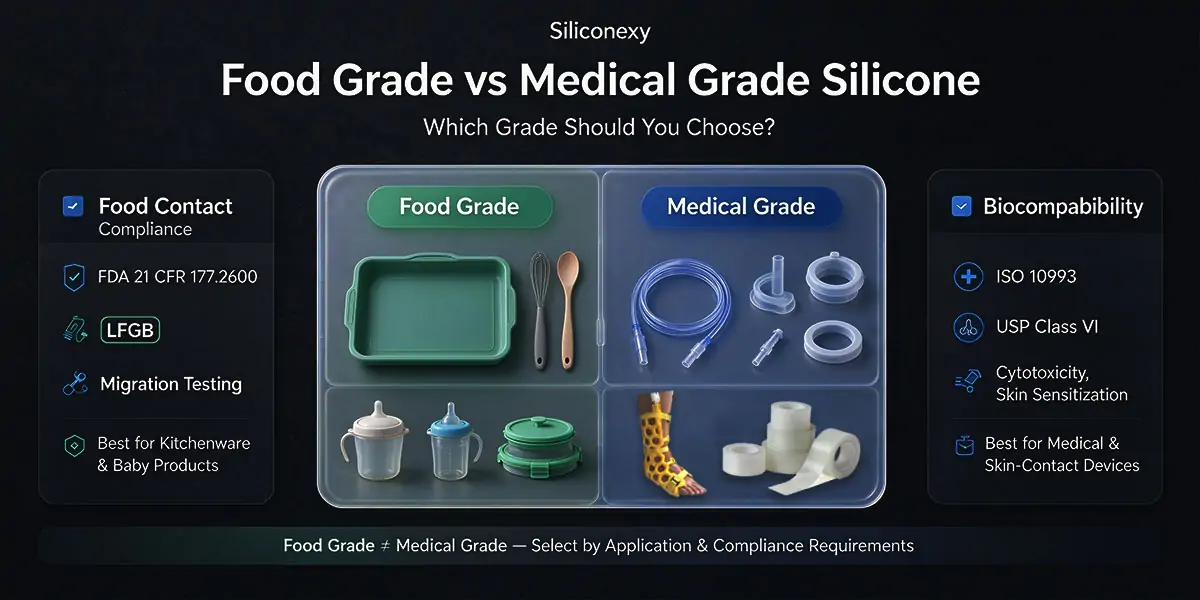
It passes mainstream global food safety certifications including FDA 21 CFR 177.2600 for US market access and LFGB for European food product sales. All testing focuses on chemical migration resistance, verifying that no toxic substances leach into food under high heat, low temperature, and long-term repeated use.
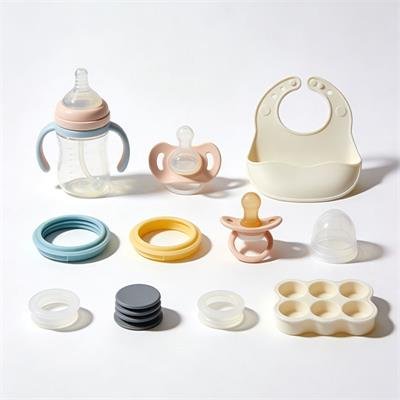
Targeting high-search-volume user demands, this material is widely adopted for custom food grade silicone kitchenware, heat-resistant food grade silicone baking accessories, and baby food grade silicone feeding products. It is the standard safe material for daily food-contact consumer goods.
Common Food Grade Silicone Products:
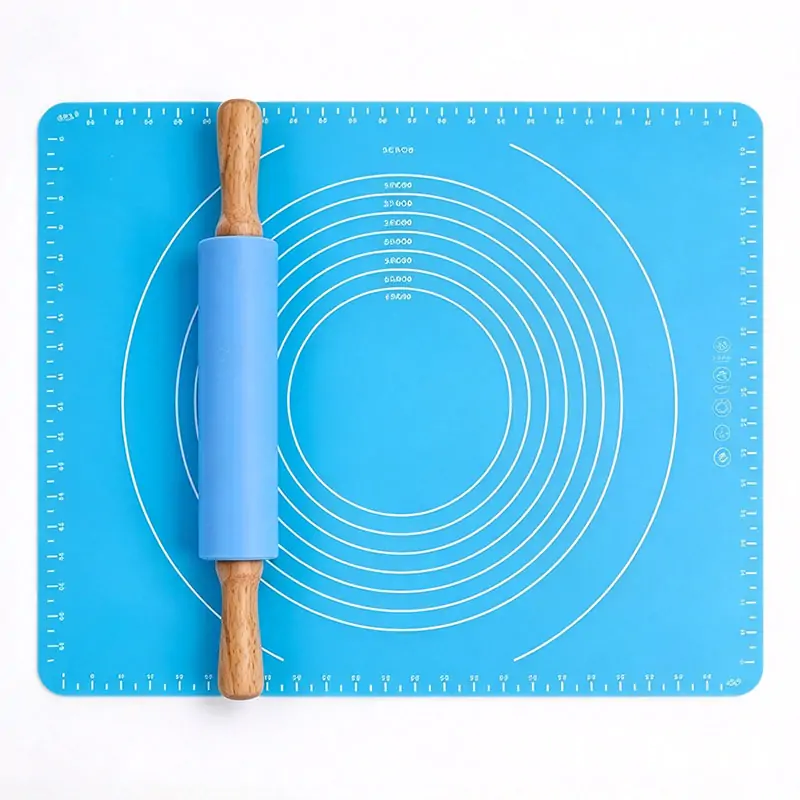
- Silicone baking mats
- Silicone baking molds
- Silicone spatulas
- Silicone kitchen utensils
- Silicone food containers
- Silicone lids
- Baby feeding products
- Other food-contact components
The exact compliance requirements depend on the destination market and intended use.
What Is Medical Grade Silicone?
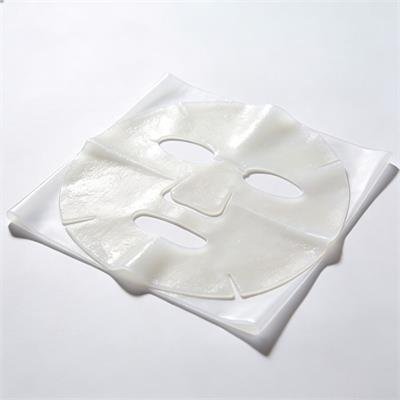
Medical grade silicone is silicone material intended for use in medical or healthcare-related applications where additional requirements for biological safety may apply. Medical grade silicone is a high-purity, platinum-cured silicone material built for short-term and long-term human body contact.
However, “medical grade silicone” should not be treated as a universal certification by itself. For medical devices, the relevant question is whether the material and finished device are appropriate for their intended use and type of body contact, and whether the applicable biological safety and regulatory requirements have been addressed.
When medical-grade silicone is used in pharmaceuticals, medical devices, and implantable components, the primary safety requirement is biocompatibility. The material must not cause adverse biological reactions when in contact with human tissue, blood, or bodily fluids.
It adheres to the strictest medical industry standards: USP Class VI biological certification and ISO 10993 biocompatibility testing, covering cytotoxicity, skin sensitization, and systemic toxicity assessments.
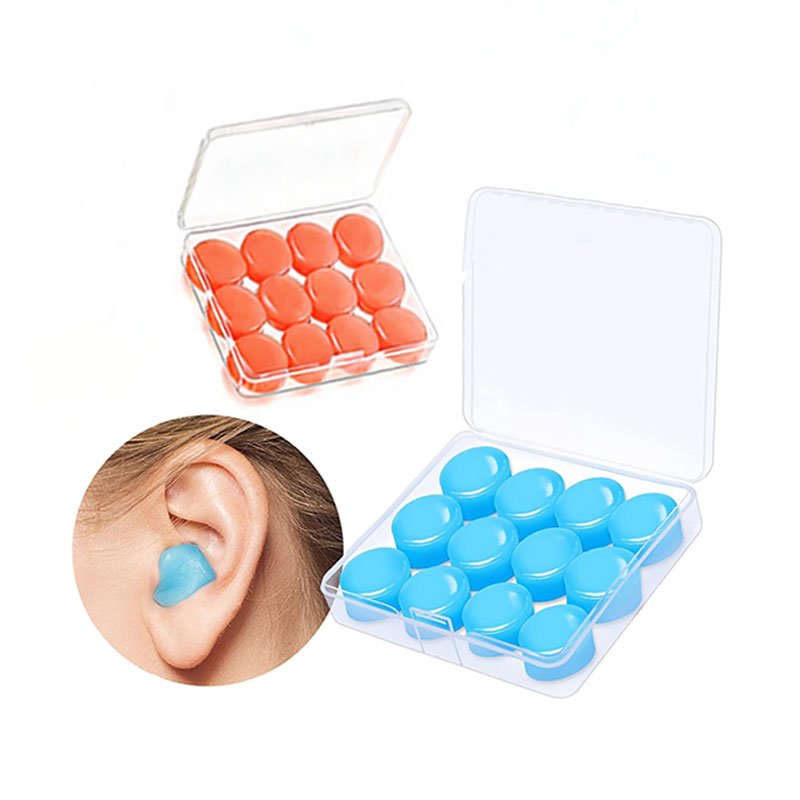
Unlike food grade silicone’s food migration tests, medical grade silicone undergoes rigorous in-vivo biological testing to ensure zero adverse reactions with human tissues and body fluids. Popular application include hypoallergenic medical grade silicone for wearable devices and precision medical silicone components for diagnostic equipment.
The Difference Between Food Grade Silicone and Medical Grade Silicone
The easiest way to understand the difference is to compare their intended applications and compliance focus.
| Factor | Food Grade Silicone | Medical Grade Silicone |
| Primary application | Food-contact products | Medical and healthcare applications |
| Main concern | Suitability for intended food contact | Suitability for intended food contact |
| Typical products | Kitchenware, baking products, food containers | Medical components, healthcare products, devices |
| Regulatory focus | Food-contact regulations | Medical-device regulations and biocompatibility |
| Biological evaluation | Depends on food-contact requirements | Often requires application-specific biological evaluation |
| Testing requirements | Depend on food type, contact conditions, market, and regulation | Depend on device type, body contact, duration, and risk |
| Material selection | Based on food-contact application | Based on medical application and biological risk |
| Is the term itself a certification? | No | No |
Manufacturing & Quality Control Gaps
- Raw Material Purity: Medical grade silicone uses 100% high-purity refined raw materials with no chemical fillers, while qualified food grade silicone allows trace food-safe additives that do not meet medical-grade purity thresholds.
- Production Environment: Medical silicone production requires dust-free cleanroom conditions and full lot-to-lot batch traceability for medical industry audit compliance. Food grade silicone is produced in standard purified workshops with conventional quality inspection protocols.
- Post-Processing Treatment: Medical grade silicone products require extended high-temperature post-curing to eliminate residual VOCs, ensuring ultra-high stability for body contact scenarios.
Performance and Processing Differences
While both grades share silicone’s inherent thermal stability and chemical inertness, several practical differences affect material selection:
- Cure system. Both food-grade and medical-grade silicones are typically platinum-cured rather than peroxide-cured. Platinum curing eliminates peroxide by-products that can create taste and odor issues, and it produces a more chemically inert final product. However, platinum-cure alone does not automatically confer food-grade or medical-grade status, the compound must still pass the applicable regulatory testing.
- Post-curing. Food-contact silicone articles are often post-cured to remove volatile by-products from crosslinking and low-molecular-weight components. Medical-grade materials are formulated to meet lower volatile and extractable limits, and some next-generation grades are designed to achieve compliance without a separate post-cure step.
- Traceability and process control. Medical-grade silicone requires stronger batch traceability, cleaner production environments, and more extensive documentation. This is the primary reason medical-grade silicone raw material costs significantly more than food-grade material that not because the base polymer is fundamentally different, but because the testing, validation, and quality system requirements are far more demanding.
Cost Difference
Medical silicone projects can involve higher development and quality-control requirements than standard food-contact products, but it would be misleading to state that medical silicone always has a specific percentage premium.
The final cost depends on:
- Silicone formulation
- Shore A hardness
- Product dimensions & weight
- Mold complexity
- Production process
- Required tolerances
- Testing requirements
- Certification or documentation
- Production volume
- Packaging and cleanliness requirements
For example, a simple food-contact silicone product may require a relatively straightforward compression-molding process, while a medical component may require tighter process control and additional documentation or testing.
Therefore, an OEM quotation should be based on the complete product specification, rather than simply the words “food grade” or “medical grade.”
Common Applications: Where Each Grade Is Used?
Food Grade Silicone Applications
Food-grade silicone is widely used in kitchenware and food processing:
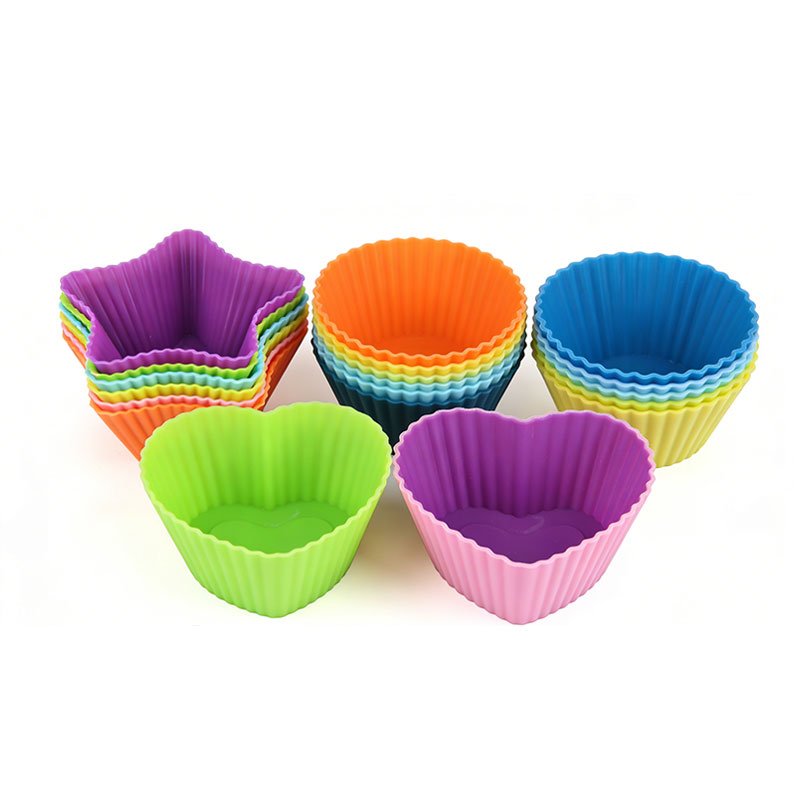
- Bakeware and cooking utensils: baking molds, spatulas, whisks, pastry scrapers, cupcake liners
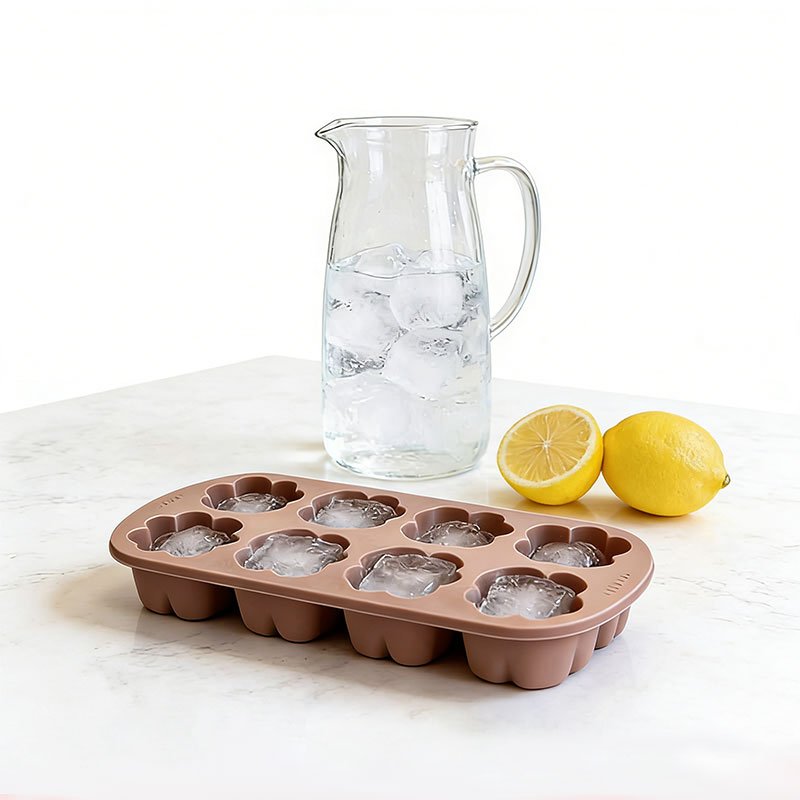
- Food storage and preparation: ice cube trays, food containers, reusable straws, collapsible lunch boxes
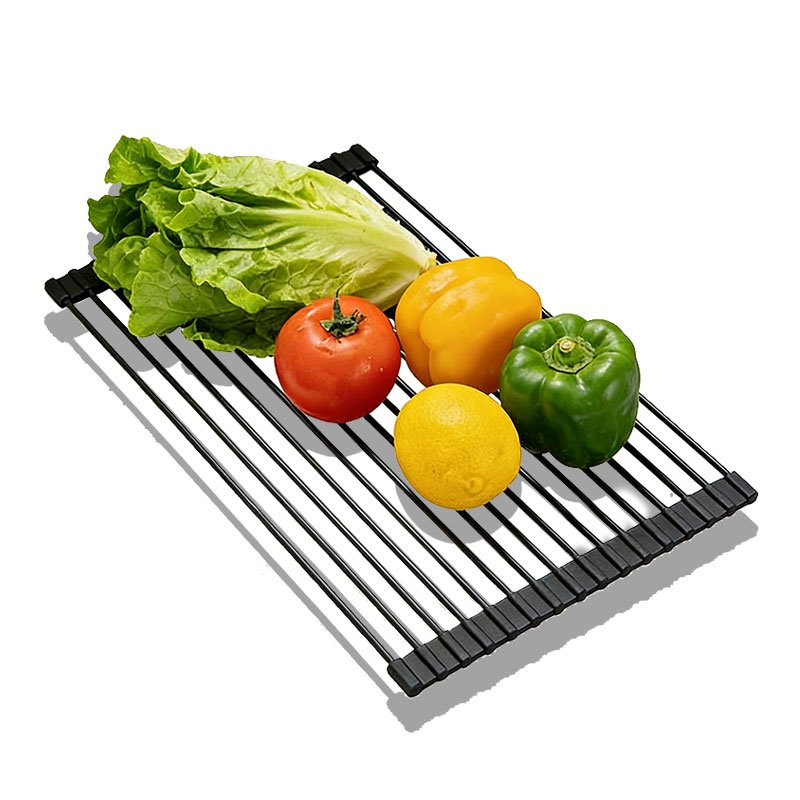
- Food processing equipment: conveyor belts, anti-leak gaskets for food vessels, internal silicone parts of food containers
- Infant feeding: silicone nipples, bottle components, and pacifiers (where biocompatibility is not the primary regulatory driver)
Medical Grade Silicone Applications
Medical-grade silicone is used across healthcare and pharmaceutical manufacturing:
- Catheters, drains, and shunts for short-term implantation and fluid management
- Peristaltic pump tubing for drug delivery and pharmaceutical processing
- Wound drain bulbs, respiratory masks, and sealing elements for medical devices
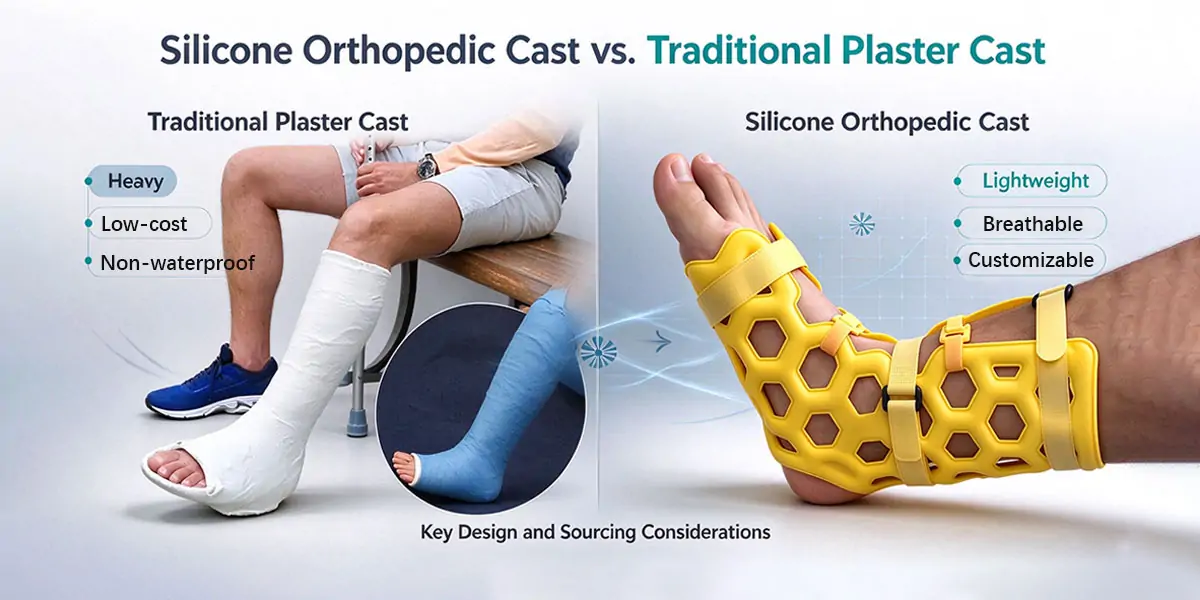
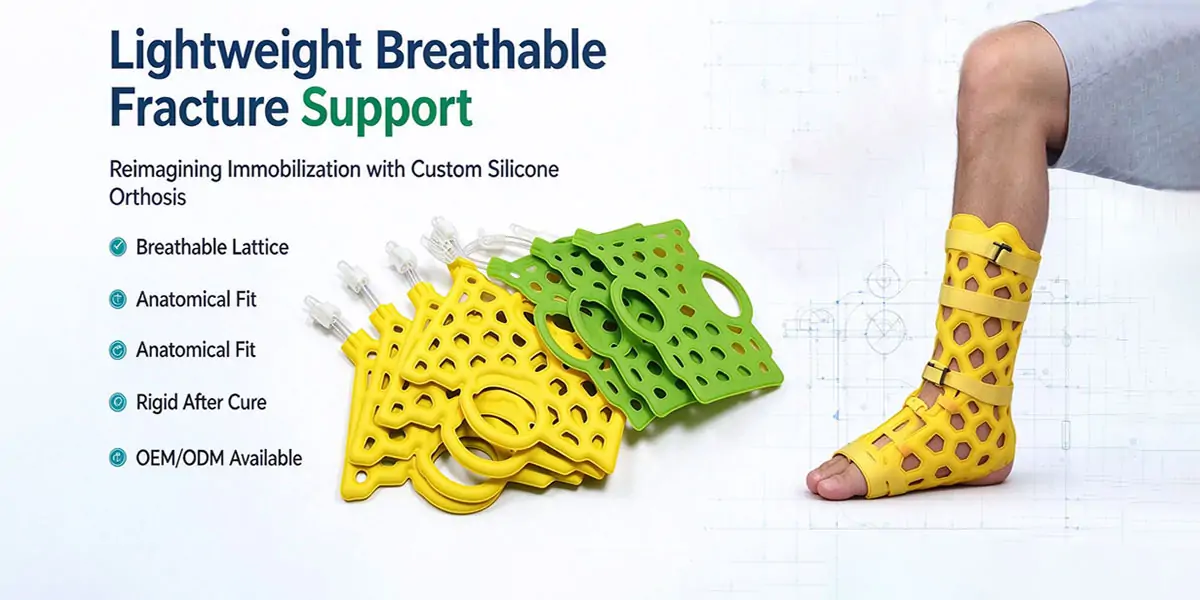
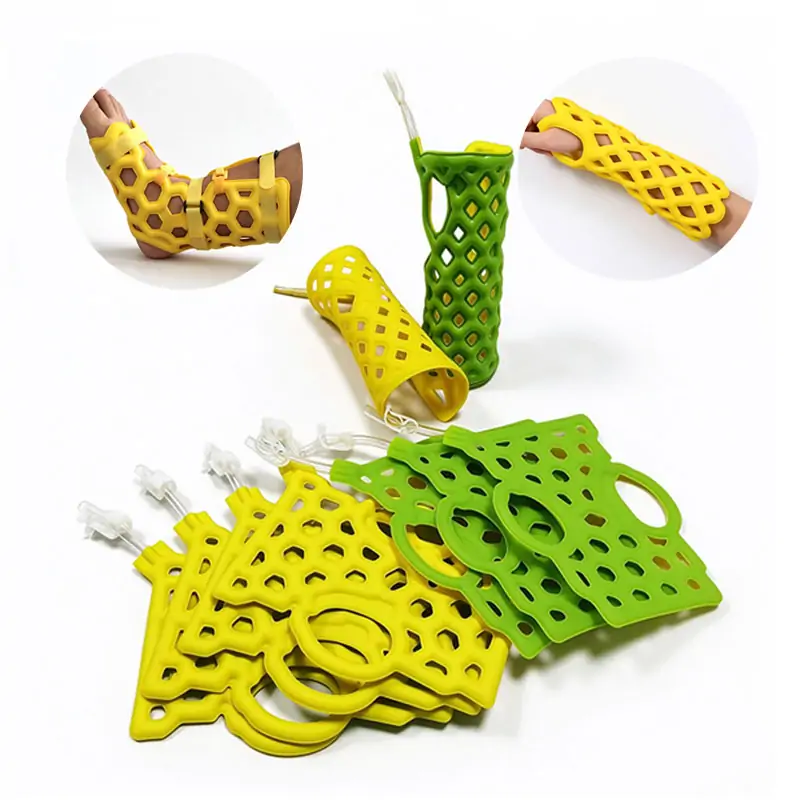
- Orthopedic and prosthetic components, including orthoses and prosthetic sockets
- Implantable devices and aesthetic implants (requiring the highest purity grades)
Is Medical Grade Silicone Safer Than Food Grade Silicone?
Not necessarily. Medical grade does not simply mean “higher quality food grade.”
A silicone material designed for a medical application is evaluated according to the requirements relevant to that application. Food-contact silicone is evaluated against the requirements applicable to its intended food-contact use.
The two categories have different performance and compliance objectives.
A silicone component intended for a medical device that contacts tissue may require a biological evaluation appropriate to the nature and duration of that contact. FDA guidance explains that biocompatibility assessment is based on the device’s intended contact with the human body and the potential for unacceptable biological responses.
A silicone spatula, on the other hand, does not need to meet medical-device biocompatibility requirements simply because it is made from a high-quality silicone material.
How to Choose the Right Grade for Your Project
Use this decision framework:
| If your application… | Required grade |
|---|---|
| Contacts food or beverages during preparation, storage, or serving | Food grade (FDA / LFGB / GB 4806) |
| Contacts skin externally with no mucosal or blood contact | Food grade or medical grade (depending on regulatory pathway) |
| Contacts mucosal membranes, blood, or bodily fluids | Medical grade (USP Class VI / ISO 10993) |
| Is implanted in the body (short- or long-term) | Medical grade, implantable-grade |
| Will be sterilized and used in a clinical environment | Medical grade |
| Is a consumer product with food contact (kitchenware, baby feeding) | Food grade |
If your product falls into a gray zone. For example, a wearable device that contacts skin but is not a medical device, please consult your regulatory team early. The cost difference between food-grade and medical-grade silicone is significant, and specifying the wrong grade late in development can trigger costly tooling and material changes.
Common Misconceptions When Buying Food or Medical Silicone Products
Misconception 1: Assuming All Silicone Is Food Grade.
Silicone itself does not automatically mean that the finished product is suitable for food contact. The specific material and intended use must be evaluated against applicable requirements.
Misconception 2: Assuming Medical Grade Means Food Grade.
Medical suitability and food-contact compliance are different questions. A medical application may require biological evaluation, while a food-contact application must meet the applicable food-contact requirements.
Misconception 3: Buying Only by Material Name.
“Silicone” is not a complete product specification. Hardness, formulation, color, geometry, manufacturing process, temperature, chemical exposure, and regulatory requirements can all affect the final product.
Misconception 4: Requesting Certification After Production.
For regulated applications, compliance requirements should be discussed before tooling and mass production. Changing the material, formulation, manufacturing process, or testing requirements after production has started can increase development time and cost.
Misconception 5: “If it’s platinum-cured, it’s medical grade.”
Platinum curing is a processing method, not a certification. Many platinum-cured silicones are food-grade only. Medical-grade status depends on the compound’s biological testing and quality system, not the catalyst type.

How Siliconexy Supports Both Compliance Pathways?
At Siliconexy (Xinyin), we manufacture custom silicone components across both food-grade and medical-grade material systems. Our capabilities include:
- Food-grade silicone in FDA 21 CFR 177.2600 and LFGB-compliant formulations for kitchenware, infant products, and food processing components.
- Medical-grade silicone meeting selected USP Class VI and selected ISO 10993 requirements for healthcare and pharmaceutical applications.
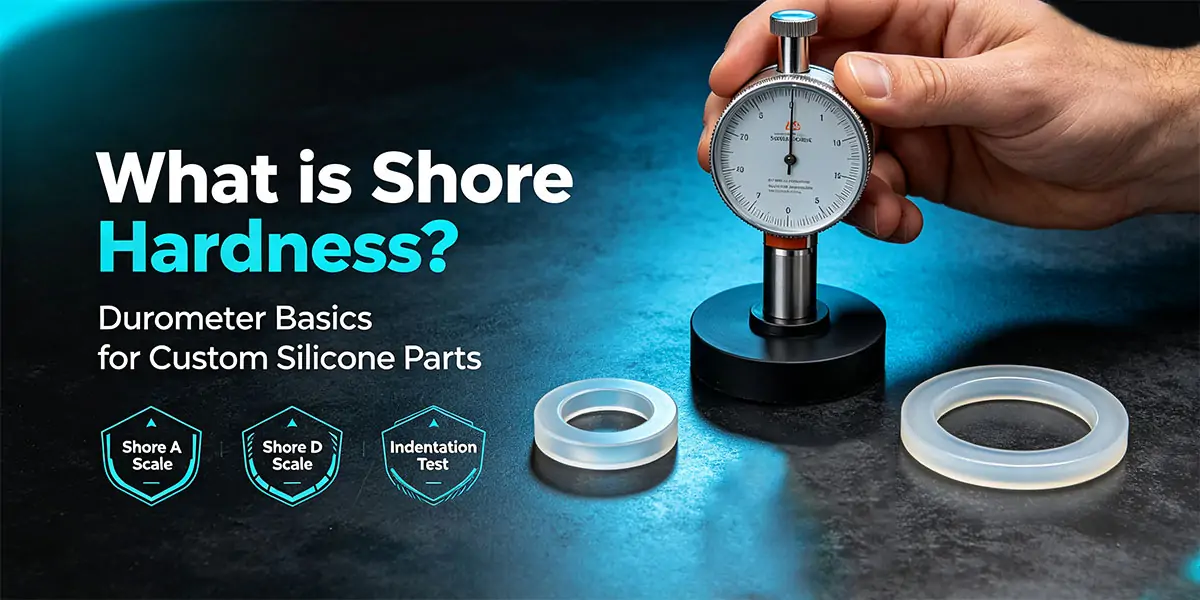
- Adjustable hardness from Shore A 10 to 85 to match your tactile and sealing requirements.
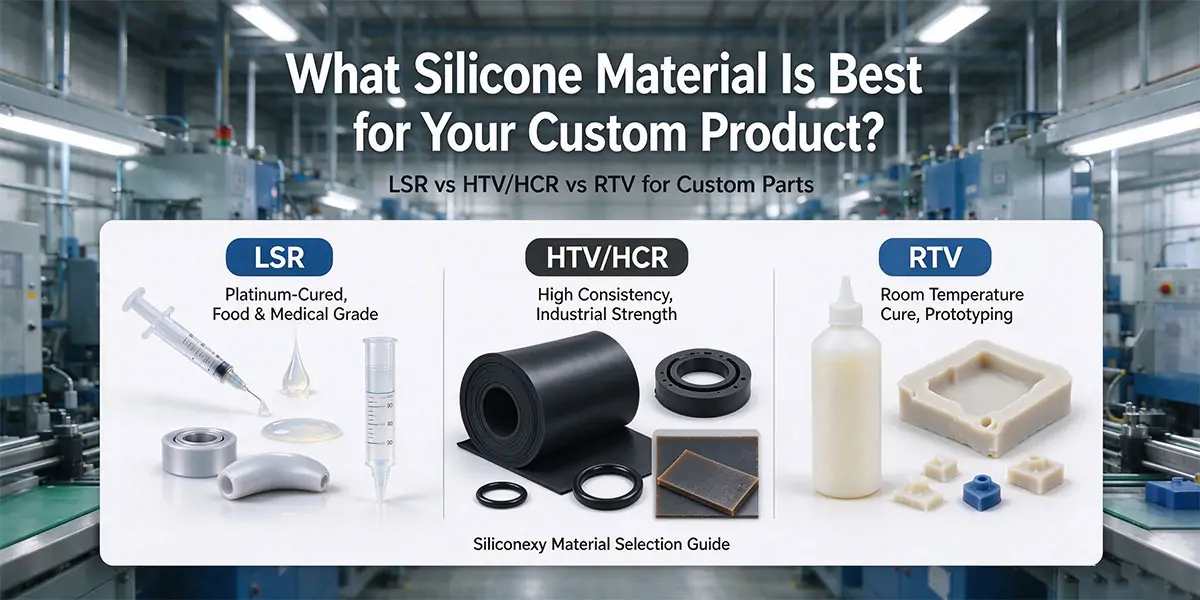
- Platinum-cure processing with post-curing options for low-volatile, low-extractable performance.
- Full documentation support, including material certifications, test reports, and declarations of compliance for your regulatory submissions.
- OEM/ODM services include customization of hardness, color, shape, and branding, and allow for rapid sample verification prior to mass production to ensure that specifications and hardness requirements are met.
Whether you are developing a new kitchenware line or a medical device component, the grade selection decision should be made before tooling investment begins. Our engineering team can help you match the right material grade to your intended use, target market, and regulatory pathway.
Ready to discuss your project? Send us your application description, target market, and compliance requirements. We will recommend the appropriate silicone grade and provide a material sample for your evaluation.
Final Takeaway
Food grade silicone and medical grade silicone are not simply two quality levels of the same material. Food grade silicone is selected for products intended for food contact and must meet the applicable requirements for that use.
Medical silicone is used in medical and healthcare applications where the material and finished device may need to satisfy application-specific biological safety and regulatory requirements.
At Siliconexy, we help overseas brands, product developers, wholesalers, and industrial buyers develop custom silicone products based on their actual application and manufacturing requirements.
Whether you need food grade silicone kitchen products, custom silicone seals, medical silicone components, LSR molded parts, or other OEM silicone products, providing your drawings, samples, application details, and regulatory requirements early in the project helps our engineering team determine the appropriate material and production process.
Have a custom silicone product in development? Contact Siliconexy to discuss your material, tooling, and OEM/ODM manufacturing requirements.