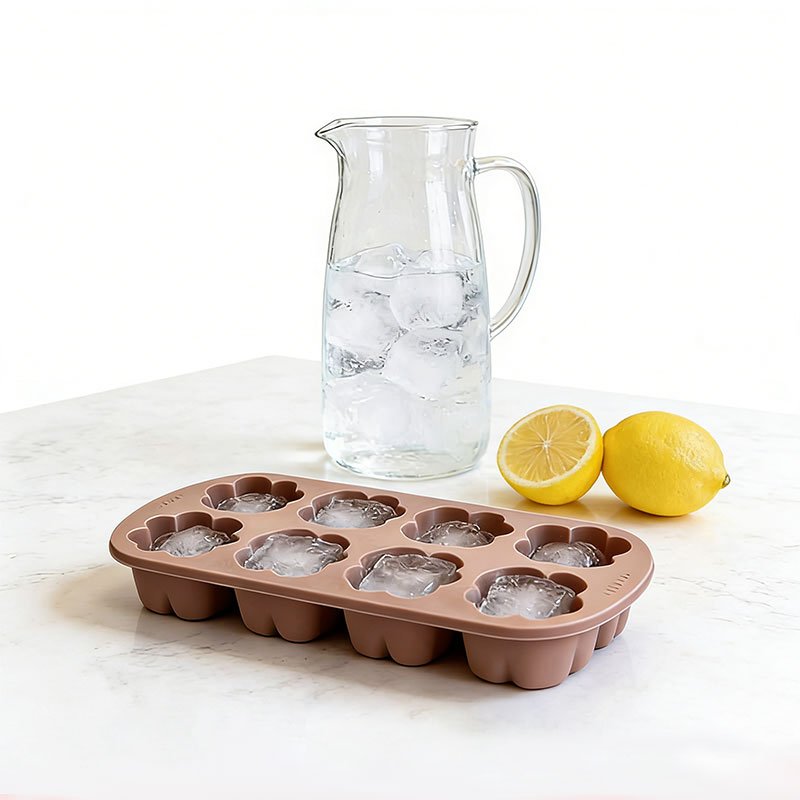
What is silicone made of? Silicone has become an essential material in modern manufacturing, ranging from kitchenware to medical devices, electronics, and custom industrial applications. But what is silicone made of, and why is it so versatile? In this article, we’ll explore the composition, types, and applications of silicone, providing professional insights for both consumers and industrial buyers.
Despite its name sounding similar to the element silicon, the two are very different. At its most fundamental level, silicone is derived from silica, one of the most abundant materials on earth. Silica is the primary component of sand and quartz.
Through a complex chemical process, this common raw material is transformed into the unique synthetic polymer we call silicone. But what exactly is that polymer made of?
What is silicone?
Silicone is a man-made polymer derived from silicon, oxygen, carbon, and hydrogen. Unlike natural rubber, silicone starts with silica (SiO₂) from sand or quartz. Through chemical processes, silica is converted into silicon, which then forms siloxanes, the fundamental building blocks of silicone.
- Temperature resistance: Withstands extreme heat and cold.
- Flexibility: Maintains shape under stretching and stress.
- Chemical resistance: Impervious to water and many chemicals.
- Biocompatibility: Safe for medical and food-grade applications.
The Chemical Building Blocks of Silicone
Silicone can come in various forms: liquid, gel, rubber, or foam. Despite the different forms, the basic composition remains the same. Silicone is a synthetic polymer consisting of four main elements:
- Silicon (Si): The second-most abundant element in the Earth’s crust, extracted from silica (sand, quartz, or rock).
- Oxygen (O): Bonds with silicon to form the backbone of the silicone molecule.
- Carbon (C): Derived from hydrocarbons (often natural gas).
- Hydrogen (H): Also derived from hydrocarbons.
- Carbon and Hydrogen: Attached to the silicon-oxygen backbone in the form of methyl (CH₃) or phenyl (C₆H₅) groups.
Optional additives are often included to enhance specific properties:
- Fillers: Improve strength, thermal stability, and wear resistance.
- Colorants: For aesthetic purposes in consumer products.
- Curing agents: Facilitate cross-linking for rubber-like consistency.
The basic repeating unit of silicone is polydimethylsiloxane (PDMS), represented by the formula (C₂H₆OSi)ₙ. This structure creates a flexible, heat-resistant chain that can be modified to achieve different properties.
In fact, for the most common silicone, polydimethylsiloxane (PDMS), approximately 60% of the material is derived from silica and water, making it surprisingly natural in origin.
This unique chemical structure gives silicone its signature properties:
- High temperature resistance (can withstand extreme heat and cold)
- Flexibility and durability (remains stable under stress and stretching)
- Non-toxicity and biocompatibility (safe for food and medical use)
- Water and chemical resistance (ideal for sealing, molding, and insulation)
These qualities explain why silicone is widely used in industries such as custom silicone products manufacturing, medical devices, electronics, and kitchenware.
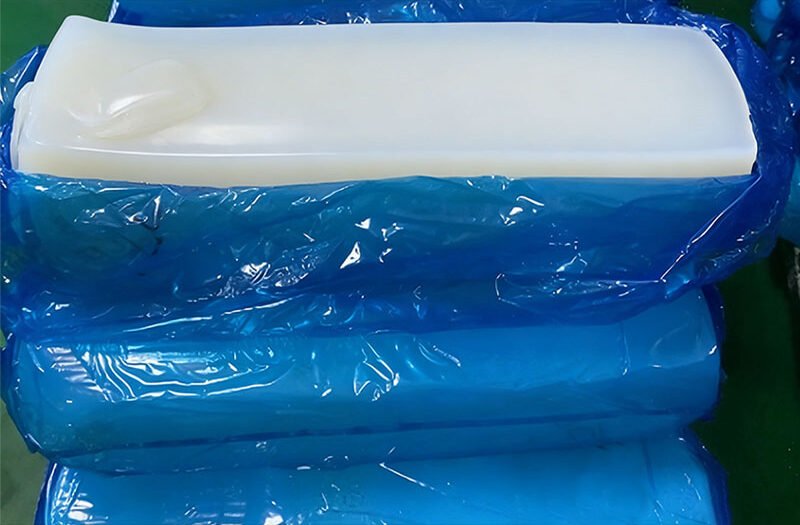
The Detailed Chemistry:
To truly understand what silicone is made of, we need to look at the molecular level. This is where silicone distinguishes itself from other materials like plastic.
The Inorganic Backbone
Most organic polymers (like plastics and natural rubber) have a backbone made of carbon-to-carbon (C-C) bonds. Silicone is different. Its backbone is made of alternating silicon and oxygen atoms, creating a structure known as a siloxane bond (Si-O-Si-O).
This is technically an “inorganic polymer” because the main chain does not contain carbon. This siloxane backbone is the secret to silicone’s legendary stability.
The Organic Side Groups
Attached to the silicon atoms along this backbone are organic groups (typically methyl, vinyl, or phenyl). In the case of polydimethylsiloxane, two methyl groups (CH3) are attached to each silicon atom.
This hybrid structure is what makes silicone so special:
- The inorganic Si-O backbone provides exceptional heat resistance and durability.
- The organic side groups provide flexibility, water repellency, and surface activity.
- As one industry expert describes it, silicone is essentially an “organically modified quartz”.
Bond Strength: The Key to Heat Resistance
Why is silicone so resistant to heat? Is It Heat And Acid Resistant? It comes down to bond energy. The silicon-oxygen (Si-O) bond has a bond energy of 121 kcal/g molecule. In comparison, the carbon-carbon (C-C) bonds found in ordinary plastics have a bond energy of only 82.6 kcal/g molecule—nearly 50% weaker.
This is why silicone remains stable from -60°C to 300°C (-76°F to 572°F), while plastics melt or degrade at much lower temperatures.
How Is Silicone Made?
From Sand to Polymer. Understanding what silicone is made of also means understanding the journey it takes. Here is a simplified step-by-step look at the silicone manufacturing process.
Step 1: Producing Elemental Silicon
It all starts with silica sand (SiO2). In an electric arc furnace, the sand is heated to extremely high temperatures with carbon. This process removes the oxygen, leaving behind metallurgical-grade silicon (a pure, crystalline solid): SiO₂ + 2C → Si + 2CO.
This results in metallurgical-grade silicon, which is then purified to 99.999% purity for silicone production.
Step 2: Creating Chlorosilanes
This solid silicon powder is then reacted with methyl chloride (CH3Cl) gas in the presence of a copper catalyst. This process, known as the Direct Synthesis Method, produces a mixture of chlorosilanes, primarily dimethyl dichlorosilane ((CH₃)₂SiCl₂): Si + 2CH₃Cl → (CH₃)₂SiCl₂.
Step 3: Hydrolysis and Polymerization
The dimethyldichlorosilane is then reacted with water. This replaces the chlorine atoms with hydroxyl (OH) groups, forming an unstable intermediate called silanol. These silanol groups then condense to form short-chain siloxane oligomers:
- (CH₃)₂SiCl₂ + 2H₂O → (CH₃)₂Si(OH)₂ + 2HCl
- (CH₃)₂Si(OH)₂ → (CH₃)₂SiOSi(CH₃)₂ + H₂O
Step 4: Polymerization to Create Silicone Polymers
Siloxane oligomers are heated with a catalyst (either an acid or a base) to polymerize into long-chain silicone polymers. The length of the chain and the presence of cross-linking agents determine the final product’s properties:
- Low molecular weight: Produces silicone oils and fluids.
- High molecular weight: Creates silicone rubbers and elastomers.
- Cross-linking: Results in silicone resins and gels.
Step 5: Compounding and Crosslinking
The raw silicone polymer is a fluid or a gum. To turn it into a useful rubber product, it must be compounded (mixed with fillers like silica for strength, pigments for color, and curing agents) and then crosslinked (vulcanized).
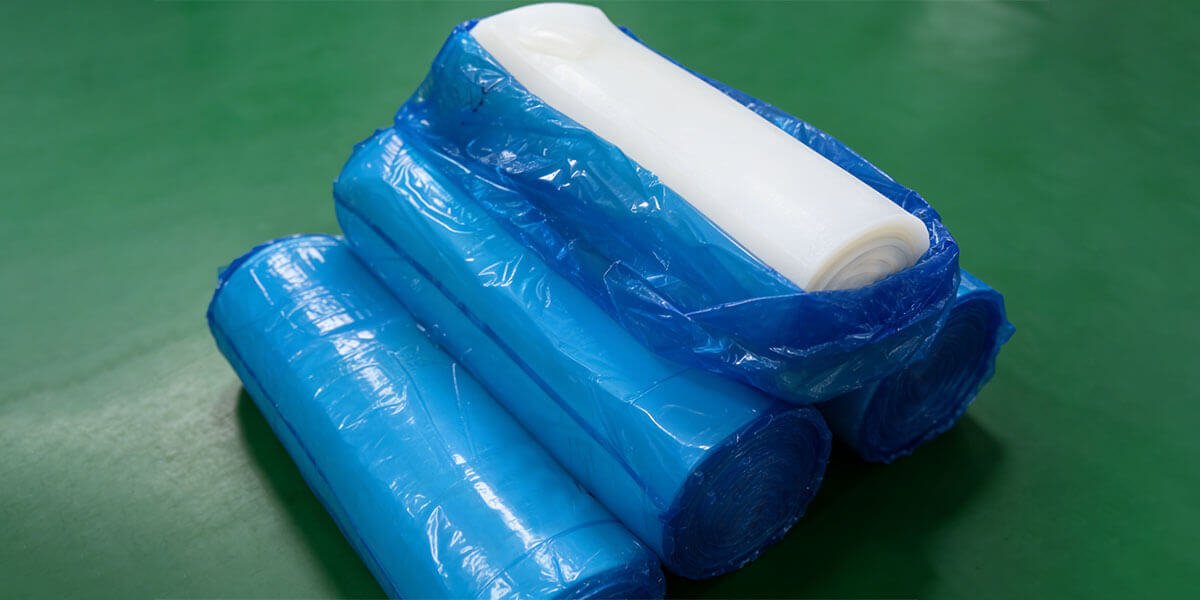
Types of Silicone:
Depending on the molecular weight and the degree of crosslinking, silicone can exist in three primary forms(Fluids, Resins, and Elastomers):
1. Silicone Fluids/Oils: Low-molecular-weight polymers. They are valued for their lubricity, water repellency, and stability. Used in hydraulic fluids, cosmetics, and polishes.
2. Silicone Resins: Highly crosslinked polymers that form three-dimensional networks. They are used in durable protective coatings and electrical varnishes.
3. Silicone Elastomers (Rubber): These are long polymer chains that are lightly crosslinked to create a flexible, rubber-like material. They are further divided into:
- High Consistency Rubber (HCR): A solid, gum-like material processed on mills and calenders, similar to traditional rubber.
- Liquid Silicone Rubber (LSR): A two-part liquid injected into molds for high-speed, high-precision manufacturing.
Tailoring Silicone Properties Through Modification
The versatility of silicone comes from its ability to be modified by altering its chemical structure. Common modifications include:
- Phenyl groups: Replacing methyl groups with phenyl groups improves low-temperature flexibility and resistance to radiation.
- Vinyl groups: Adding vinyl groups allows for cross-linking with other polymers, enhancing durability.
- Fluorinated groups: Incorporating fluorine increases chemical resistance and reduces surface tension.
Silicone vs. Silicon: A Critical Distinction
A major point of confusion we always clarify for clients is the difference between silicon and silicone.
Silicon is the element (atomic number 14). It is a hard, brittle metalloid used primarily in semiconductors, solar cells, and as an alloying agent.
Silicone is a synthetic polymer made from silicon, oxygen, carbon, and hydrogen.
Think of it this way: Silicon is the raw ingredient (like flour), while silicone is the finished product (like the cake). You cannot make silicone without silicon, but they are fundamentally different materials with different properties.
Comparing Silicone to Other Materials
How does silicone stack up against plastics and natural rubber? Here’s a quick comparison:
| Property | Silicone | Plastic (e.g., PVC) | Natural Rubber |
|---|---|---|---|
| Temperature Range | -60°C to 230°C (-76°F to 446°F) | -20°C to 80°C (-4°F to 176°F) | -50°C to 100°C (-58°F to 212°F) |
| Flexibility | Excellent, even at low temperatures | Rigid to flexible, depending on type | Good, but stiffens in cold |
| Chemical Resistance | Resistant to water, oils, and most solvents | Varies; some plastics are prone to chemical degradation | Degraded by oils and solvents |
| Biocompatibility | Non-toxic, hypoallergenic, and used in medical implants | Often contains harmful additives (e.g., phthalates) | May cause allergic reactions |
Safety Profile:
What Silicone Is Made Of (And What It Isn’t)?
For businesses and consumers alike, safety is paramount. High-purity silicone is prized for its biocompatibility and inertness. It contains:
- No latex
- No organic plasticizers (like phthalates)
- No BPA
However, the final safety of a product depends on the purity of the raw materials and the manufacturing process. Low-quality silicone may contain fillers or unreacted oligomers. This is why at Siliconexy, we strictly adhere to international standards, ensuring our materials are:
- FDA compliant for food contact
- Capable of meeting USP Class VI or ISO 10993 for medical applications
- REACH-compliant and free from restricted substances
Note: Recent studies have highlighted the importance of sourcing. While pure silicone is inert, low-quality silicone products have been found to leach additives. This underscores the need to work with reputable manufacturers who control their formulations.
Why Silicone Is Popular in Manufacturing
Custom silicone products have seen a surge in demand due to their unique combination of flexibility, durability, and safety. Manufacturers can produce:
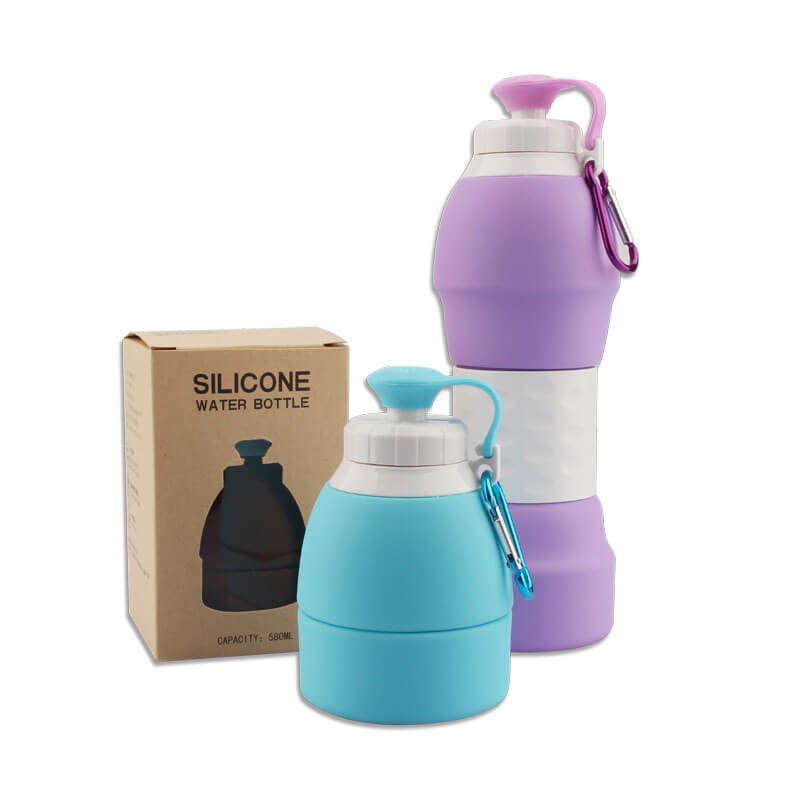
- Silicone kitchenware (baking mats, molds, utensils)
- Medical-grade silicone (catheters, implants, seals)
- Industrial silicone parts (gaskets, seals, vibration dampers)
The ability to customize silicone products for specific applications makes it a favorite material for both B2B and B2C markets.
Silicone vs. Other Polymers
Compared to traditional plastics or rubbers, silicone offers several advantages:
- Wider temperature range (-60°C to 230°C or more)
- Chemical and UV resistance
- Longevity (resists cracking, shrinking, or degrading)
These properties make silicone an ideal material for high-performance applications where safety and durability are critical.
Conclusion:
So, what is silicone made of? It is a fascinating hybrid material born from the earth’s most abundant resources—sand, water, and natural gas. Its unique silicon-oxygen backbone gives it a durability and temperature resistance that plastics can’t match, while its organic side groups provide versatility and flexibility.
Silicone is a synthetic polymer made from silicon, oxygen, carbon, and hydrogen.
Its unique chemical structure gives it heat resistance, flexibility, and durability.
The manufacturing process involves extracting silicon from silica, creating chlorosilanes, hydrolyzing to form siloxane oligomers, and polymerizing into the final product.
Silicone can be modified to achieve specific properties, making it suitable for a wide range of applications.