Silicone Injection Molding vs Compression Molding: Which Is Better for Your Project? What liquid silicone and solid silicone are? When it comes to silicone manufacturing, choosing the right molding process can make or break your project’s efficiency, cost, and final quality. Two of the most widely used techniques are silicone injection molding and compression molding. While both produce high-quality silicone parts, they differ fundamentally in how the material is handled, the complexity of parts they can produce, the production volumes they suit, and the associated costs. Selecting the wrong method can lead to unnecessary costs, production delays, or inconsistent quality.
This article presents an objective, fact-based comparison of silicone injection molding and compression molding, aiming to assist you in selecting the appropriate molding method based on your project’s production volume, budget, design requirements, and timeline. Our objective is not to assert that either method is inherently “superior,” but rather to to help you determine which is better suited for your project.
What Is Silicone Compression Molding?
Silicone compression molding is a more traditional process where a pre-measured amount of solid silicone rubber (HTV or RTV) is placed into an open mold cavity. The mold is then closed, and pressure (10–100 tons) is applied to compress the material into the desired shape. Through the process of vulcanization, the heat causes the material to cure, transforming it into a solid rubber component.
Compression molding typically uses high-consistency rubber (HCR) silicone—a solid, gum-like elastomer with high molecular weight. HCR is known for its durability, toughness, and versatility, though it requires manual material handling and longer cure cycles compared to liquid silicone.
Process Overview:
Silicone Compression Molding Process Explained Step by Step.
- Pre-measured solid silicone is manually placed into an open, heated mold cavity.
- The mold closes under controlled pressure (typically 10–20 MPa), forcing the material to fill the cavity.
- Heat and pressure are maintained until the silicone vulcanizes (cures) into a solid part.
- The mold opens, and the part is removed—often requiring manual trimming of excess flash.
Key Advantages:
- Lower upfront tooling cost: Simpler mold designs reduce initial investment.
- Fast setup for small runs: Ideal for prototypes, low-volume production, or quick replacement parts.
- Excellent for large/thick parts: Handles oversized components or thick cross-sections efficiently.
- Versatile material compatibility: Works with most solid silicone grades, including FDA/LFGB-certified materials.
- More manual operation involved.
Key Limitations:
- Longer cycle times: Typically 1–10 minutes per cycle, slower than injection molding.
- Higher labor dependency: Manual material loading/unloading and flash trimming increase labor costs.
- Moderate precision: Tighter tolerances (±0.1 mm or better) are harder to achieve consistently.
- Higher material waste: Flash cannot be recycled, leading to material inefficiency.
Common Applications of Compression Molding:
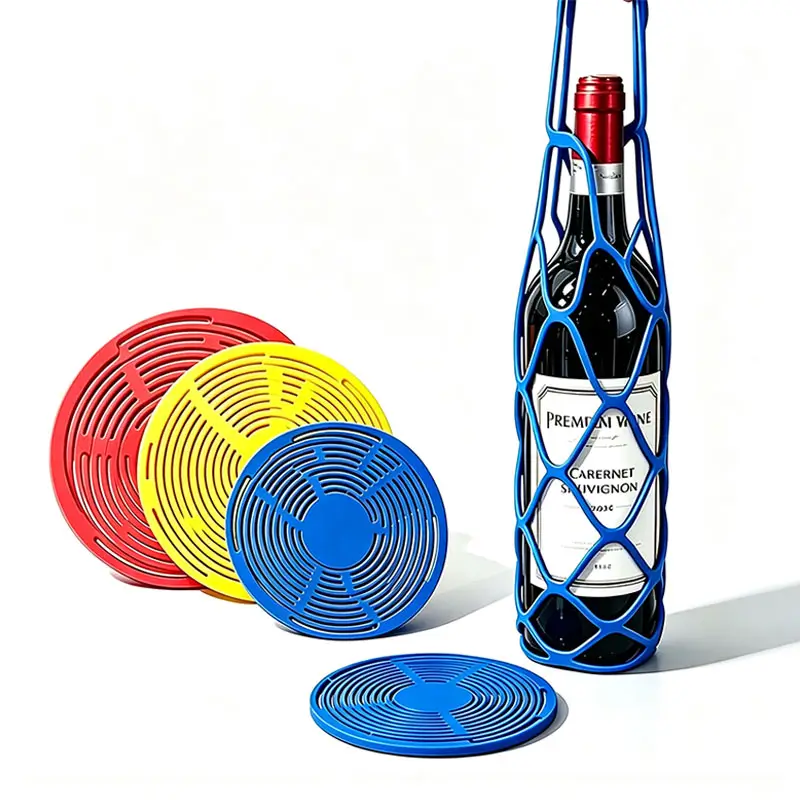
Silicone compression molding remains a widely used method in custom silicone manufacturing, especially for medium-volume production. Typical applications include:
- Industrial gaskets and seals
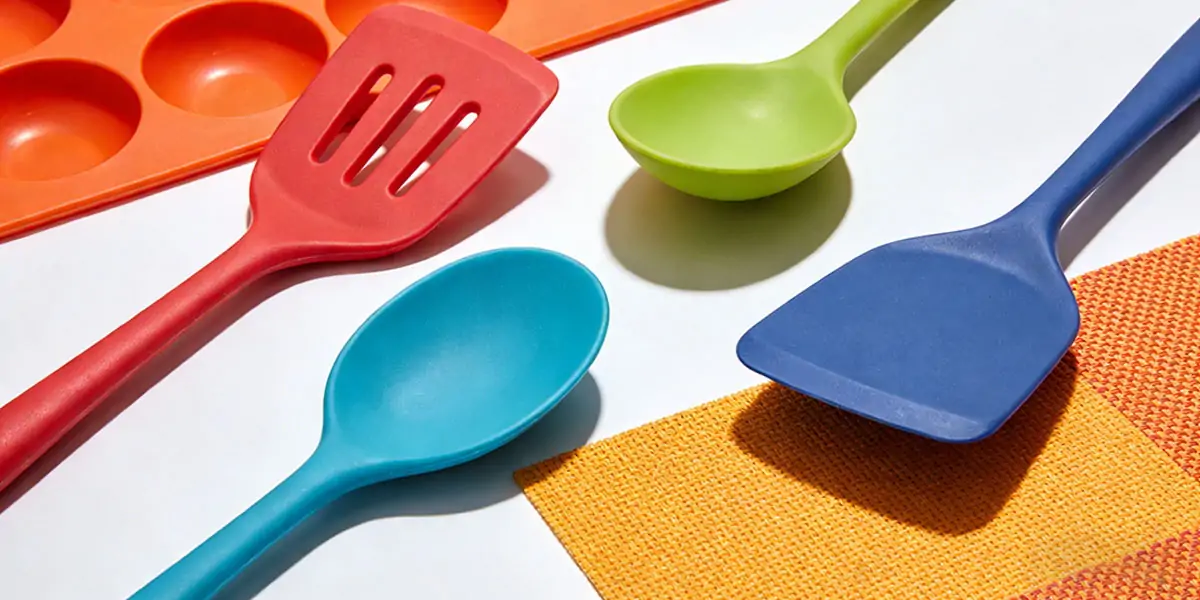
- Kitchenware (e.g., baking mats, spatulas)
- Automotive bumpers and panels
- Custom silicone molds for crafts or casting
What Is Silicone Injection Molding?
Silicone injection molding is a high-volume manufacturing process where liquid silicone rubber (LSR) is injected under high pressure into a precision-engineered mold cavity. The mold is typically heated, causing the silicone to cure and take the shape of the cavity.
Silicone injection molding (primarily liquid silicone rubber (LSR) injection molding) is a high-precision, automated process for manufacturing complex silicone components at scale.
Because LSR has a much lower viscosity than HCR. It flows readily into even the smallest mold features, enabling the production of highly intricate geometries, thin walls, and tight tolerances. Injection molding is fully automated, from material feeding to part ejection, making it highly repeatable and efficient at scale.
Process Overview:
How Silicone Injection Molding Works for Mass Production?
- Two-part LSR (platinum-cured) is precisely metered, mixed, and degassed.
- The liquid silicone is injected under high pressure into a closed, heated steel mold.
- The material cures rapidly in the mold, with cycle times often under 60 seconds.
- Automated ejection systems remove finished parts with minimal post-processing.
Key Advantages:
- Ultra-fast production: Short cycle times enable high-volume output (hundreds to thousands of parts per hour).
- Exceptional precision & consistency: Tight tolerances (±0.05 mm) and minimal part-to-part variation.
- Complex geometry capability: Produces thin walls, undercuts, micro-features, and multi-component parts.
- Low labor & waste: Fully automated with minimal flash; material waste is drastically reduced.
- Cleanroom compatibility: Sealed process ideal for medical, food, and infant-grade applications.
Key Limitations:
- Higher upfront tooling cost: Complex steel molds with hot runners and gating systems require significant investment.
- Longer mold lead times: Precision tooling takes more time to design and fabricate.
- Less economical for small runs: High tooling costs are hard to offset with low production volumes.
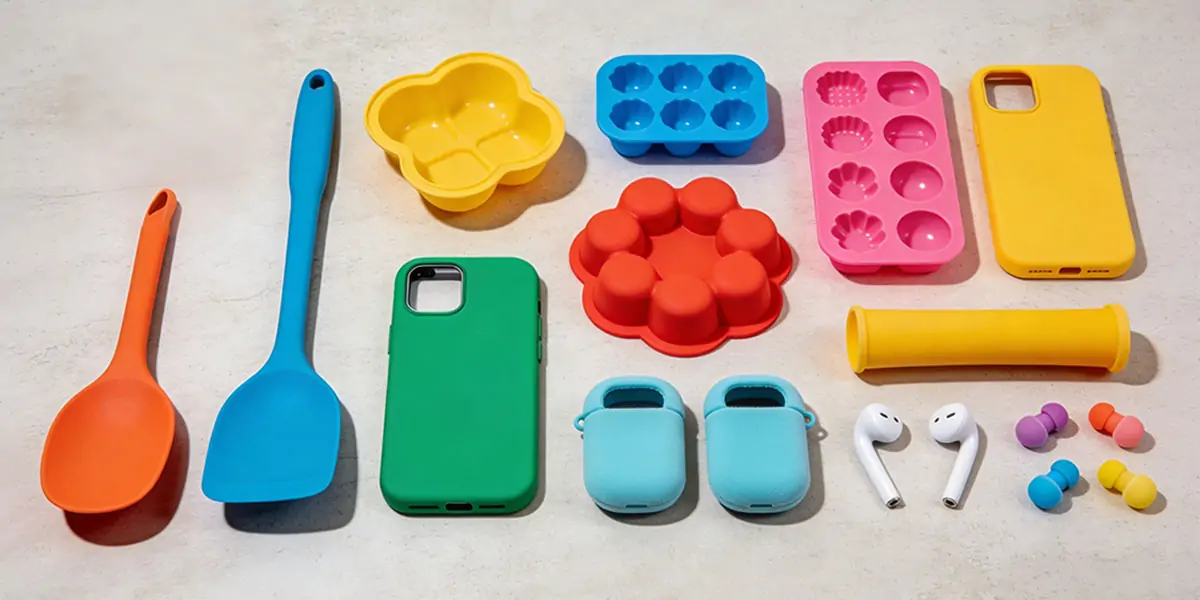
Common Applications of LSR Injection Molding:
LSR injection molding is the process of choice for precision silicone components across demanding industries:
- Medical devices: Medical-grade silicone products, septums, actuators, dosing valves, catheters, hearing aids.
- Automotive components: gaskets, seals, O-rings, electrical connectors.
- Consumer electronics: keypads, cushioning pads, wearables, device housings.
- Baby products: bottle nipples and pacifiers.
- Overmolding: adding silicone grips or seals to plastic or metal substrates.
This process is commonly used by advanced silicone manufacturers for high-volume and high-precision production.
Not sure which silicone molding method is right for your product? Send us your design requirements, and our engineering team will recommend the best solution for your project.
Key Differences at a Glance
The table below summarizes the most critical differences between silicone compression molding and injection molding.
| Parameter | Silicone Compression Molding | Silicone Injection Molding (LSR) |
|---|---|---|
| Best For | Small–medium volumes, prototypes, large/thick parts | High-volume production, complex designs, tight tolerances |
| Tooling Cost | Low (simple molds, aluminum feasible) | High (precision steel molds, hot runners) |
| Cycle Time | 1–10 minutes (slow) | 20–60 seconds (fast) |
| Design Complexity | Simple to moderate geometries | Complex, thin-walled, micro-featured parts |
| Precision/Tolerances | Moderate (±0.1–0.3 mm) | High (±0.05 mm or better) |
| Automation Level | Manual/semi-automated | Fully automated (lights-out manufacturing) |
| Material Waste | Higher (flash, non-recyclable) | Minimal (precise dosing, low flash) |
| Labor Cost | Higher (manual labor) | Lower (minimal operator oversight) |
| Ideal Applications | Gaskets, seals, industrial pads, large silicone sheets | Medical devices, electronics seals, automotive components, baby products |
If your product requires fine details or complex structures, injection molding is generally the better option. For startups or low-volume orders, compression molding may be more cost-effective initially.
Material Considerations: LSR vs. HCR
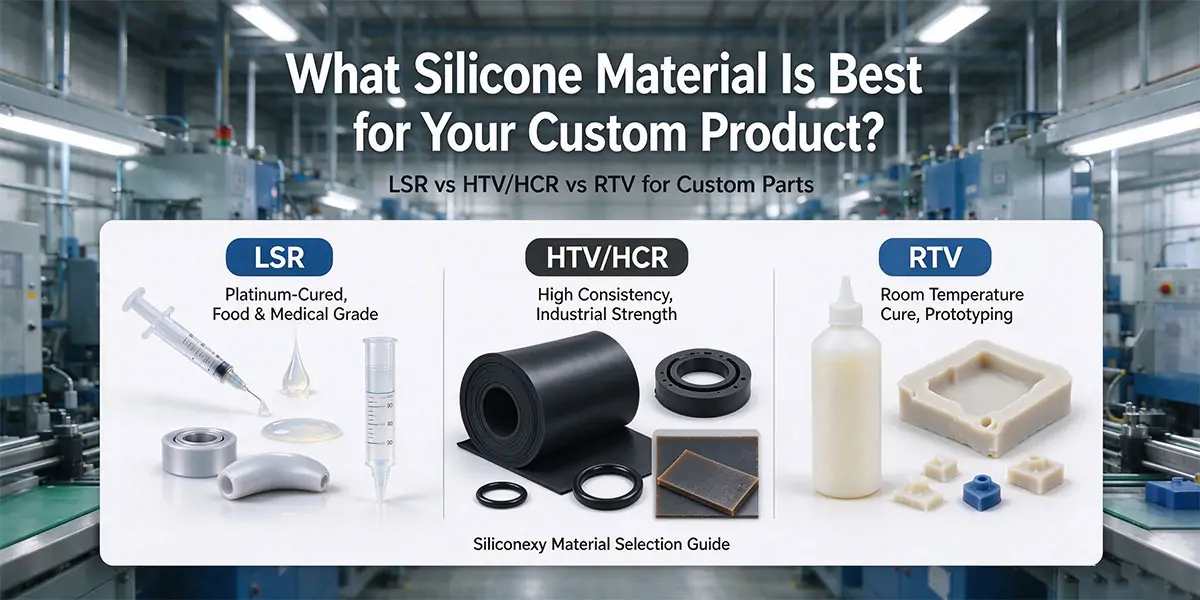
Liquid Silicone vs Solid Silicone. A complete understanding of silicone molding methods requires recognizing that the material itself often dictates which process is appropriate. Two primary types of silicone are used in manufacturing:
- Liquid Silicone Rubber (LSR) has low viscosity, flows readily, and is specifically formulated for injection molding. LSR enables complex geometries, tight tolerances, and high-volume automated production. It is widely used in medical, automotive, and electronics applications where precision and consistency are paramount.
- High-Consistency Rubber (HCR) has high viscosity and a gum-like consistency. It requires manual handling and is typically processed via compression or transfer molding. HCR offers excellent durability and toughness, making it suitable for applications where mechanical resilience is more important than intricate detail. It is also the material of choice for extruded silicone tubing and profiles.
The choice between LSR and HCR is often as important as the choice between injection and compression molding. For high-volume precision parts with complex geometries, LSR injection molding is the logical choice. For simpler parts, lower volumes, or applications requiring HCR’s particular toughness, compression molding may be the better fit.
How to Choose the Right Process for Your Project?
The decision between injection and compression molding depends on several critical factors:
- Project Volume:
Choose injection molding if you need 10,000+ units, as the higher tooling costs are offset by lower per-unit costs at scale.
Choose compression molding for small runs (10–1,000 units) or prototyping, where tooling cost and lead time are more important. - Part Design Complexity:
If your part has intricate features, thin walls, or tight tolerances, injection molding is the better choice.
For large, flat, or thick-walled parts, compression molding offers a more cost-effective solution. - Budget and Lead Time:
Compression molding has lower upfront tooling costs and shorter lead times (often 2–4 weeks for tooling).
Injection molding requires higher initial investment, but tooling lead times can be 4–8 weeks or more. - Material Requirements:
Injection molding works best with liquid silicone rubber (LSR), which offers superior flow and precision.
Compression molding is compatible with solid silicone rubber (HTV/RTV), which is often more cost-effective for simple parts.
Industry-Specific Recommendations:
- Medical & Healthcare: Injection molding (LSR) is preferred for sterile, biocompatible parts (catheters, seals, implants) requiring ISO 10993 compliance.
- Automotive & Industrial: Compression for large gaskets and seals; injection for precision connectors, grommets, and high-volume components.
- Electronics & Consumer Goods: Injection molding for thin-walled seals, keypads, and complex wearable components.
- Food & Kitchen: Both processes work, but injection offers cleaner production for high-volume baby products and food-contact parts.
Conclusion
Neither silicone injection molding nor compression molding is universally “better.” Each method has distinct strengths, and the right choice depends entirely on your project’s specific requirements. Such as volume, part complexity, budget, material properties, and timeline.
- Choose compression molding if: you are producing low-to-medium volumes of relatively simple parts, need to minimize upfront tooling investment, or are prototyping a new design with uncertain production forecasts.
- Choose injection molding if: you are producing high volumes, require complex geometries with tight tolerances, need consistent repeatability across large production runs, or plan to use LSR for its flowability and precision.
The most reliable way to determine the optimal process for your custom silicone part is to consult with an experienced silicone molding manufacturer. A qualified partner can review your part design, discuss your production goals, and recommend the process that balances cost, quality, and lead time for your specific application.
Need Help Choosing the Right Silicone Manufacturing Process?
Choosing between silicone compression molding and injection molding can significantly impact your product quality, production cost, lead time, and overall success. At Siliconexy, we help global brands, startups, and OEM buyers select the most suitable silicone manufacturing solution based on product design, material requirements, production volume, and budget.
With professional experience in custom silicone product manufacturing, our team provides complete OEM solutions, including product design support, silicone mold development, prototyping, mass production, and quality inspection.
Whether you need a small-batch custom silicone product or large-scale production, Siliconexy can help turn your ideas into reliable, high-quality silicone products.
Contact Siliconexy today to discuss your silicone project and get a customized manufacturing solution from our experienced silicone product factory.