Silicone is one of the most versatile elastomers in manufacturing, prized for its flexibility, temperature resistance, and durability. However, not all silicone is created equal. When it comes to sourcing silicone products, one of the most common questions buyers ask is: “What’s the difference between food-grade silicone and industrial silicone?” The answer might seem straightforward, but choosing the wrong grade can have serious consequences.
Food-grade silicone and industrial-grade silicone are two distinct categories with critical differences in purity, safety certifications, performance, and intended use. Choosing the wrong grade can lead to safety risks, regulatory non-compliance, or premature product failure. This guide breaks down the key differences to help you make an informed purchasing decision.
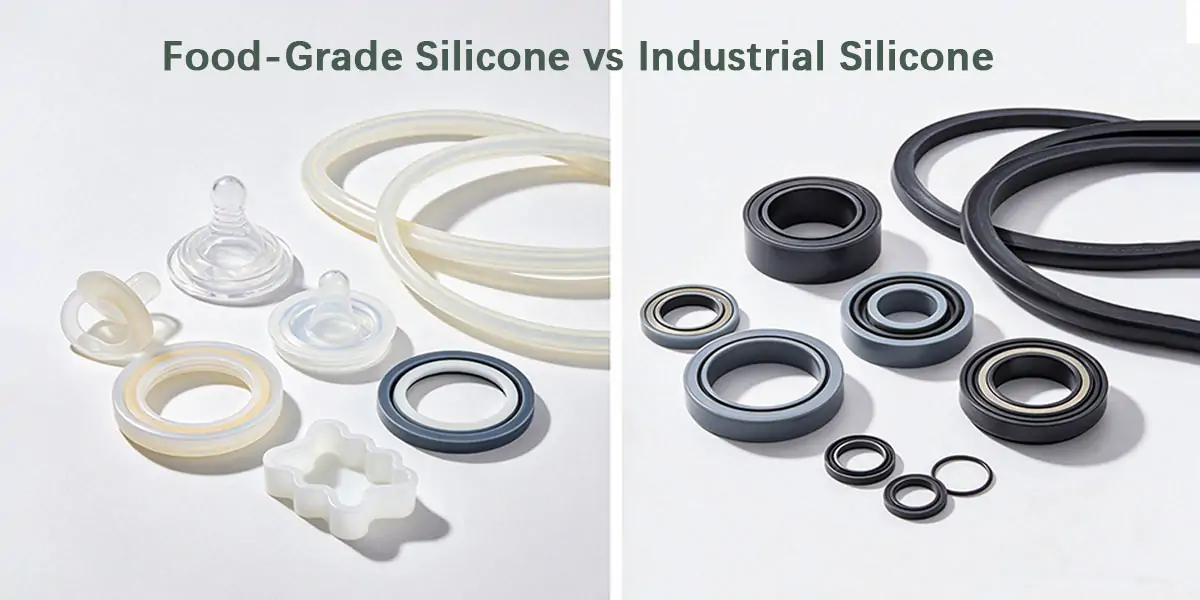
Food-Grade Silicone vs Industrial Silicone:
What Is Food-Grade Silicone?
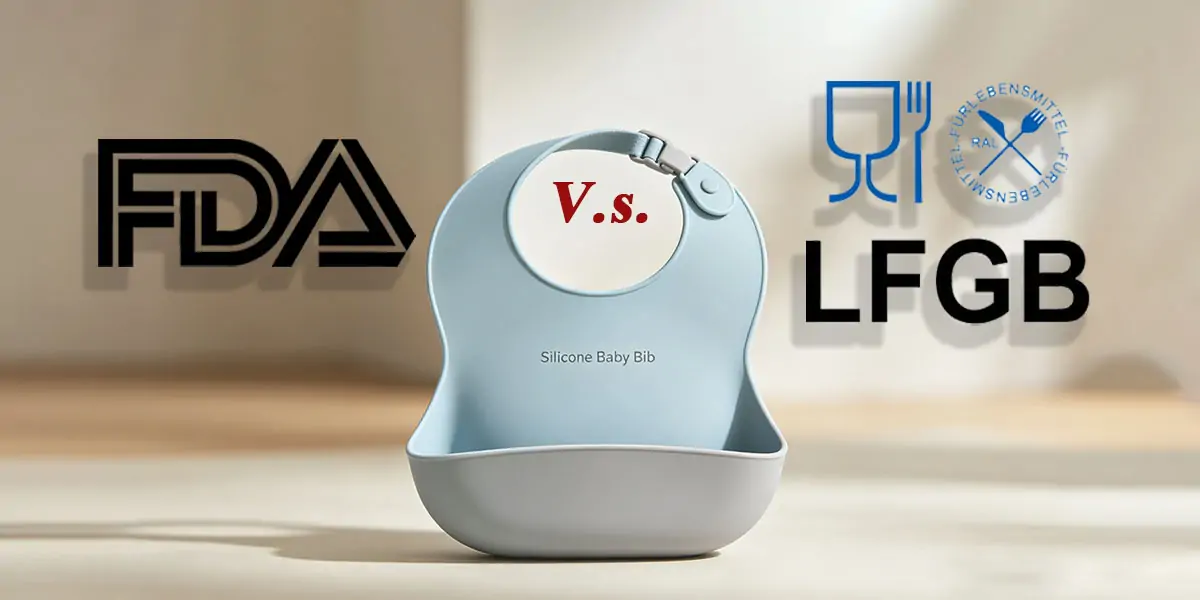
Food-grade silicone is a specially formulated elastomer designed for applications involving direct or indirect contact with food and beverages. It is manufactured under strict quality controls to eliminate harmful substances and meet global food safety standards. It is made from high-quality raw materials and is processed to meet strict safety standards set by regulatory agencies such as the FDA (Food and Drug Administration) in the United States and the EU (European Union).
Key Features of Food-Grade Silicone
- Non-toxic: Food-grade silicone does not contain harmful chemicals such as BPA, phthalates, or lead, which can leach into food and cause health problems.
- Excellent thermal stability: Typically withstands -60°C to 250°C (some grades up to 300°C) without degradation.
- Flexible: Food-grade silicone is soft and flexible, making it easy to mold into different shapes and sizes. It is also resistant to tearing and cracking, which ensures its durability.
- Non-porous & hygienic: Resists bacteria growth, odor absorption, and staining.
- Easy to clean: Food-grade silicone is non-stick and easy to clean. It can be washed in the dishwasher or by hand with soap and water.
- Regulatory compliance: Mandatorily certified to FDA (US), LFGB (EU/Germany) and EU 1935/2004 standards.
Common Uses of Food-Grade Silicone
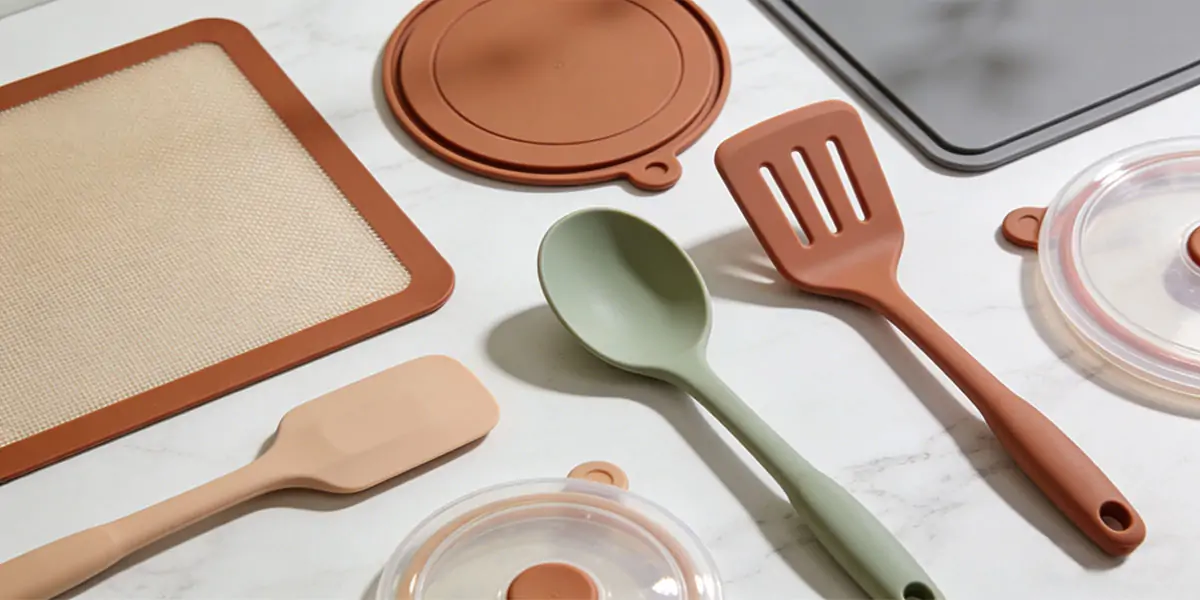
- Kitchenware: Food-grade silicone is used to make a wide range of kitchenware such as baking mats, spatulas, mixing bowls, and food storage containers.
- Baby products: Food-grade silicone is used to make baby bottles, nipples, pacifiers, and teething toys because it is safe and non-toxic.
- Medical devices: Food-grade silicone is used in medical devices such as catheters, syringes, and implants because it is biocompatible and does not cause any adverse reactions in the body.
Food-Grade Silicone Is Used For:
- Baking molds, mats, and utensils
- Food storage containers and lids
- Baby bottle nipples and pacifiers
- Seals and gaskets in food processing equipment
- Tubing for beverage and dairy transfer
- Food-grade labels and stickers for direct contact with food items
- Kitchenware (spatulas, pastry boards, ice cube trays)
What is Industrial Silicone?
Industrial silicone is a type of silicone specifically designed for industrial applications; it refers to silicone materials intended for non-food uses that do not require food safety certification. It is manufactured using raw materials that may contain harmful chemicals, and its processing does not adhere to the safety standards required for food-grade silicone. Furthermore, the design of industrial silicone prioritizes mechanical properties, durability, and cost-effectiveness over purity.
Unlike food-grade silicone, industrial-grade silicone typically uses a peroxide curing process, an older and less expensive method that uses organic peroxides as crosslinking agents. While this curing method is suitable for many applications, it can leave residues. Industrial silicone may also contain various fillers, which are low-cost materials that increase the volume of the silicone, thus reducing raw material costs, but may decrease purity.
Key Features of Industrial Silicone
- Lower purity: Often cured with peroxide catalysts, which can leave residual byproducts (sulfur, solvents) and chemical odors.
- May contain fillers: Added to reduce cost or improve hardness, but these fillers are not food-safe.
- Temperature resistance: Generally 150°C to 200°C, with reduced stability at high heat (risk of yellowing and harmful volatiles).
- Durable: Industrial silicone is highly durable and can withstand harsh conditions such as extreme temperatures, chemicals, and UV radiation. This makes it ideal for use in industrial settings such as factories, construction sites, and automotive workshops.
- High strength: Industrial silicone has high tensile strength and is resistant to tearing and stretching. This makes it suitable for use in applications where strength and durability are essential.
- Cost-effective: Industrial silicone is generally less expensive than food-grade silicone because it is made from lower-quality raw materials and does not require the same level of processing.
- No food safety certifications: Meets only general industrial standards (e.g., ISO 9001, UL) for mechanical performance.
Common Uses of Industrial Silicone
- Sealants and adhesives: Industrial silicone is used as a sealant and adhesive in a wide range of applications such as construction, automotive, and aerospace. It is used to seal gaps, bond materials, and prevent leaks.
- Electrical insulation: Industrial silicone is used as an electrical insulator in electrical and electronic devices. It is used to protect wires and cables from moisture, dust, and other contaminants.
- Mold making: Industrial silicone is used to make molds for casting metal, plastic, and other materials. It is ideal for this application because it is flexible and can be easily removed from the mold.
Industrial Silicone Is Used For:
- Engine gaskets, hoses, and O-rings in automotive applications
- Sealants for windows and bathrooms
- Electrical insulation and protective coatings
- Molds for casting non-food items (resin, concrete, plaster)
- Mechanical seals and vibration dampeners
- Industrial labels and decals for equipment and product identification
Critical Safety Note: Never Mix Grades
Industrial-grade silicone must never be used for food contact applications. Its impurities and chemical residues can leach into food, posing serious health risks—especially under heat or with acidic/fatty foods. Conversely, food-grade silicone is over-engineered and costly for most industrial uses, making it economically inefficient.
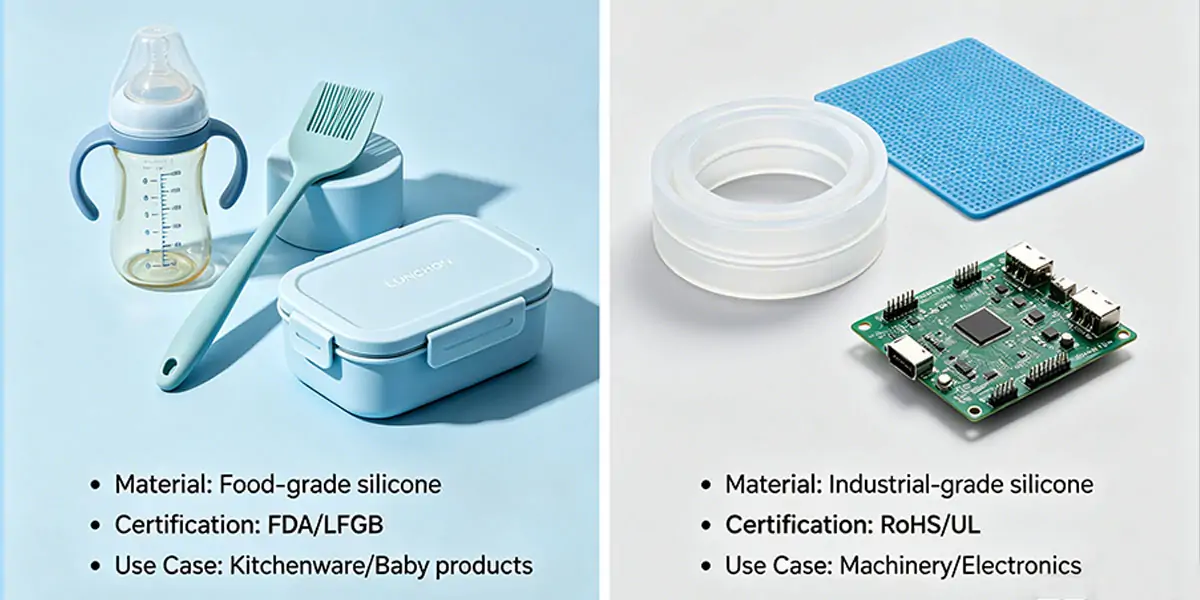
Key Comparison: Food-Grade vs Industrial Silicone
| Feature | Food-Grade Silicone | Industrial-Grade Silicone |
|---|---|---|
| Purity & Catalyst | Ultra-high purity; platinum-catalyzed (addition cure) | Lower purity; peroxide-catalyzed (condensation cure) |
| Safety | Non-toxic, BPA-free, phthalate-free; safe for food contact | May contain heavy metals, fillers, and chemical residues; unsafe for food |
| Odor & VOCs | Odorless; extremely low VOC emissions | Noticeable chemical/rubber odor; higher VOCs when heated |
| Certifications | FDA, LFGB, EU 1935/2004, BfR, USP Class VI (medical/food) | No food safety certifications; only industrial performance standards |
| Temperature Range | -60°C to 250°C (stable, no degradation) | 150°C to 200°C (degrades, yellows, and releases volatiles at high heat) |
| Chemical Stability | Inert; does not react with food, acids, or fats | May react with certain chemicals; prone to staining and odor retention |
| Appearance | Translucent/clear; uniform color; smooth finish | Opaque/milky; may have impurities; rougher texture |
| Cost | Higher (due to purity and certification) | Lower (economical for industrial use) |
| Typical Applications | Baking molds, kitchen utensils, baby products, food processing seals, medical tubing | Automotive gaskets, electrical insulation, industrial seals, general machinery parts |
How to Verify Food-Grade Silicone?
To ensure you’re purchasing genuine food-grade silicone:
- Check certifications: Look for explicit FDA, LFGB, or EU 1935/2004 compliance statements.
- Request test reports: Reputable suppliers provide third-party lab reports (e.g., SGS) confirming purity and safety.
- Physical inspection: Food-grade silicone is odorless, translucent, and smooth; industrial silicone often has a chemical smell and opaque appearance.
- Heat test: Heat a sample to 200°C—food-grade remains stable; industrial-grade may yellow or emit fumes.
Which One Should You Buy?
The choice between food-grade silicone and industrial silicone depends on your specific needs and application. Here are some factors to consider when making your decision:
- Intended use: If you are using silicone in contact with food or beverages, you must use food-grade silicone. Industrial silicone is not safe for this purpose and can cause health problems if it comes into contact with food.
- Temperature requirements: If you need silicone that can withstand high temperatures, both food-grade and industrial silicone can meet your needs. However, industrial silicone can generally withstand higher temperatures than food-grade silicone.
- Flexibility: If you need silicone that is soft and flexible, food-grade silicone is a better choice. Industrial silicone may be stiffer and less flexible, which can make it difficult to mold into different shapes and sizes.
- Cost: If cost is a major concern, industrial silicone is generally less expensive than food-grade silicone. However, it is important to remember that you get what you pay for. Food-grade silicone is made from higher-quality raw materials and is processed to meet strict safety standards, which makes it more expensive but also safer and more durable.
- Regulatory compliance: If you are operating in a regulated industry such as food and beverage or medical devices, you must use food-grade silicone that meets the safety standards set by regulatory agencies such as the FDA and the EU. Industrial silicone may not meet these standards and can result in fines or legal action if it is used in non-compliant applications.
⚠️ Important Note: Industrial-grade silicone should never be used as a substitute for food-grade silicone in food contact applications. Using industrial-grade silicone in food contact scenarios, even with only indirect or accidental contact, poses a risk of chemical migration. This not only violates relevant regulations and standards but also endangers consumer safety.
Conclusion
In conclusion, food-grade silicone and industrial silicone are two different types of silicone with different properties and uses. Food-grade silicone is safe for use in contact with food and beverages and is ideal for applications such as kitchenware, baby products, and medical devices.
Industrial silicone is designed for use in industrial applications such as sealants, adhesives, and electrical insulation. When choosing between these two types of silicone, it is important to consider your specific needs and application to ensure that you are using the right type of silicone for the job.
If you need help determining which type of silicone is right for your needs, please contact us. We are a professional manufacturer of custom stickers and silicone products and can provide you with expert advice and high-quality products.
Why Choose Siliconexy for Your Silicone Needs?
At Siliconexy, we specialize in custom silicone manufacturing with both food-grade and industrial-grade solutions. As a trusted OEM/ODM partner, we offer:
- FDA/LFGB-certified food-grade silicone for safe, compliant food and medical products.
- High-performance industrial silicone engineered for durability in harsh environments.
- Full customization: Tailor hardness, color, texture, and design to your exact specifications.
- 20+ years of expertise and rigorous quality control to ensure consistency and compliance.
Whether you need food-safe baking molds, industrial gaskets, or custom silicone components, we deliver materials that match your performance, safety, and budget requirements.