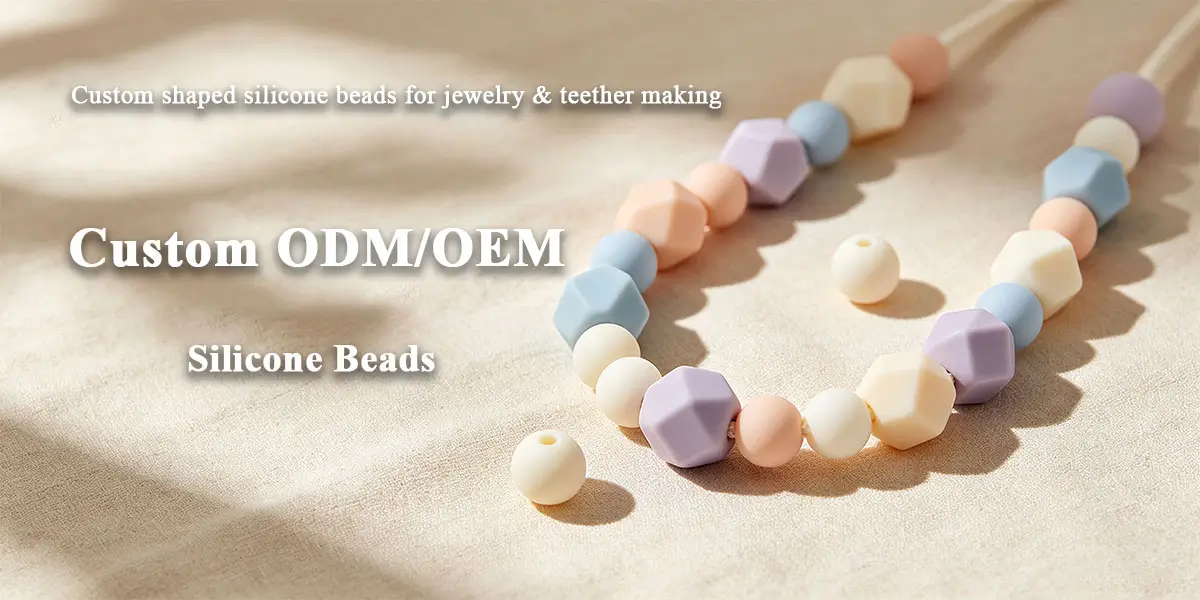
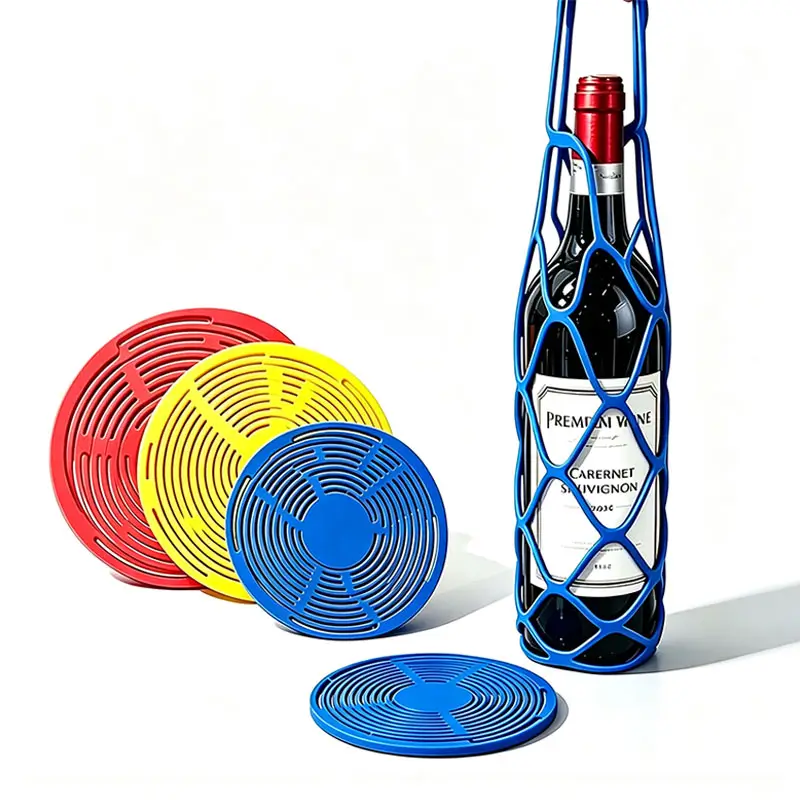
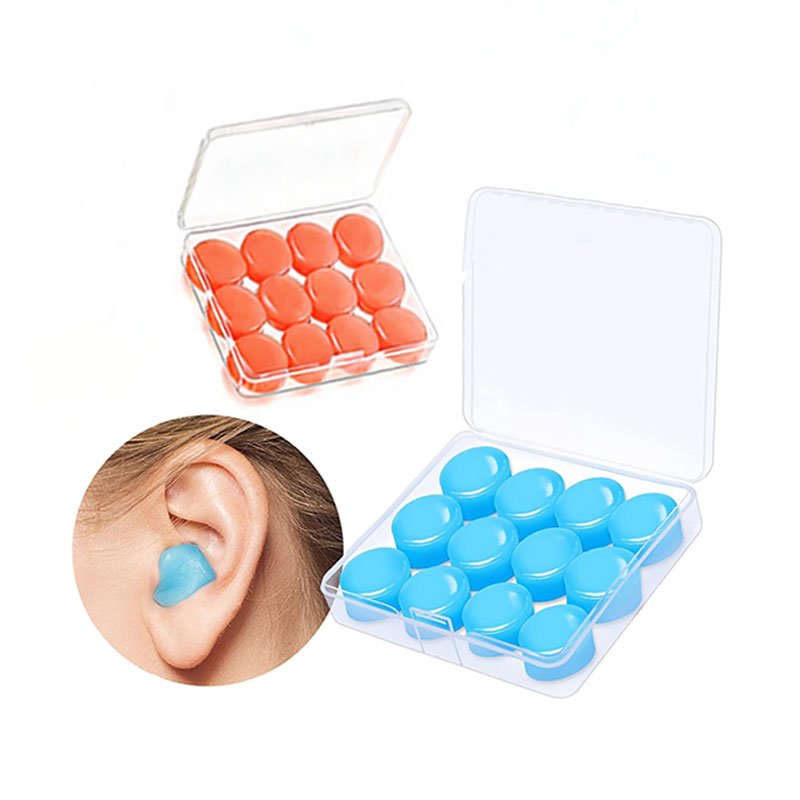
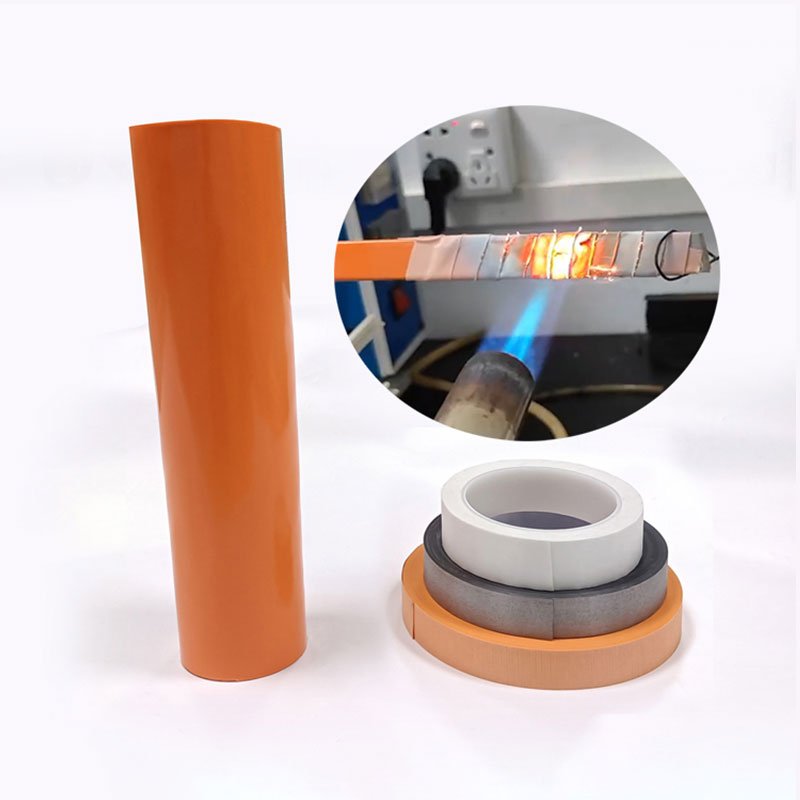
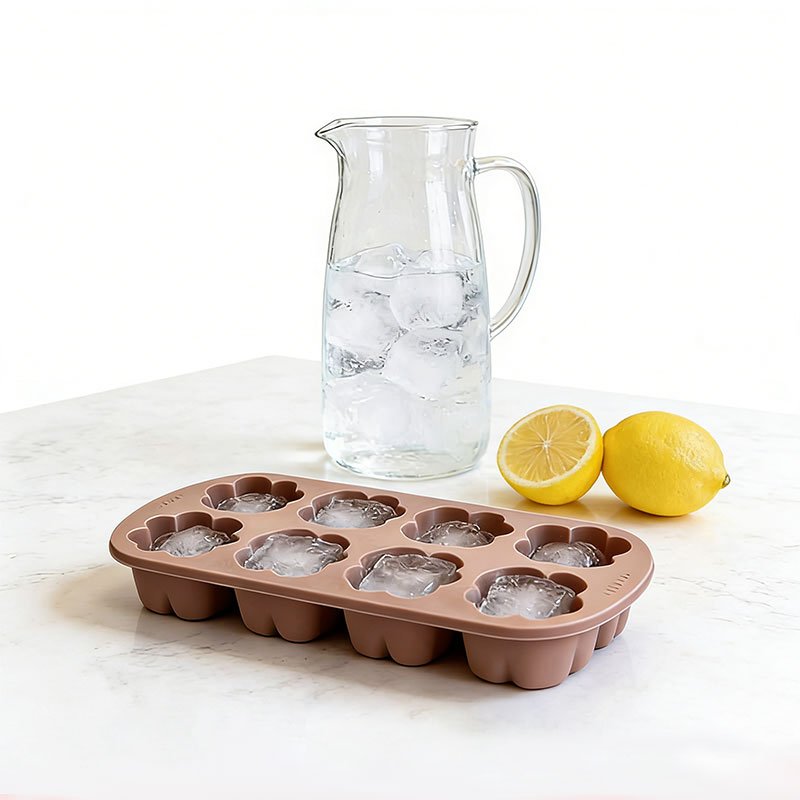
Silicone has become one of the most versatile materials in modern product design. From medical devices and baby products to automotive components and kitchenware, silicone products are everywhere. Silicone offers exceptional flexibility, durability, heat resistance, and biocompatibility that few other materials can match.
For product designers, selecting the right silicone molding method is critical to balancing design feasibility, production cost, lead time, and final product performance.
What are the methods of silicone molding? In this guide, we’ll explore the most common silicone molding methods used by custom silicone products manufacturers like Siliconexy – a professional manufacturer providing OEM and ODM solutions for custom silicone products with factory pricing, along with their advantages, limitations, and ideal applications.
Silicone Molding Methods You Should Know:
1. Silicone Compression Molding
Compression molding is one of the oldest and most widely used methods for manufacturing silicone parts. The compression molding process is straightforward: a pre-measured amount of uncured silicone material is placed into a heated and open mold cavity, then using hydraulic press heat and pressure to compress, flow, and vulcanize the silicone into shape. This method is commonly used for producing durable silicone products with consistent mechanical properties.
This technique supports single-color, multi-color, and multi-hardness silicone manufacturing, and can encapsulate metal, plastic, and other embedded components perfectly. It is widely applied in dailysilicone products such as silicone kitchen utensils, silicone wristbands, protective silicone cases, and industrial silicone gaskets.
For designers with low-to-medium batch custom needs, compression molding offers lower mold opening costs and flexible design customization, making it a cost-efficient solution from reliablecustom silicone products manufacturers.
Key Benefits:
- High Production Efficiency: Suitable for large-volume production runs.
- Excellent Material Utilization: Minimal waste compared to other molding methods.
- Flexibility with materials. Handles a wide variety of silicone grades, including those with colorants or fillers.
- Cost-Effective: Lower tooling costs compared to injection molding for certain applications.
- Consistent Quality: Produces parts with uniform thickness and mechanical properties.
Limitations to consider:
- Longer cycle times (typically 2–3 minutes per cycle) compared to other methods.
- Lower precision and less suitable for complex geometries.
- More labor-intensive, often requiring manual loading and trimming of flash.
Design tip:
Compression molding is an excellent choice for custom silicone products with simpler designs or when you’re working with a tight budget for initial tooling. If you’re a product designer developing a new line of silicone seals or industrial components, this method offers a cost-effective entry point.
Ideal Applications:
- Custom silicone gaskets, seals, and O-rings for industrial applications.
- High-wear components like keypads, handles, and grips.
- Silicone parts requiring resistance to extreme temperatures and chemicals.
Compression molding is ideal for low to medium production volumes, large or thick parts with simple geometries, and applications where tight tolerances aren’t critical. Common applications include gaskets, seals, vibration dampeners, keypads, and silicone kitchenware.

2. Silicone Liquid Injection Molding (LIM/LSR): Precision for Complex Geometries
Liquid Injection Molding (LIM), also known as Liquid Silicone Rubber (LSR) Injection Molding, is a highly automated process. It is the most advanced and high-efficiency molding process for premium silicone products, widely used for high-precision, high-volume production.
This liquid injection molding process involves pumping the liquid silicone rubber through a sealed drum to a mixing device, and then injecting it under high pressure into a closed and heated mold. The low-viscosity liquid silicone flows easily into intricate mold cavities, capturing fine details and textures before curing rapidly at high temperatures (≈130–180°C) to form finished parts. This method is ideal for producing complex silicone products with tight tolerances and consistent quality.
Ideal for intricate, thin-walled, and tight-tolerance silicone components, LSR injection molding delivers consistent product quality, zero bubble defects, and excellent dimensional stability. It is the top choice for manufacturing medical-grade silicone parts, baby silicone products, automotive silicone seals, and electronic silicone accessories.
As an experienced custom silicone products manufacturer, Siliconexy leverages automated LSR injection lines to support clients’ high-volume custom orders with strict quality standards and fast turnaround times.
Key Benefits:
- High Precision: Achieves tight tolerances and complex geometries with ease
- Fast Production Cycle: Short cycle times enable high-volume production
- Material Versatility: Compatible with a wide range of silicone materials with varying properties
- Clean, closed system. Minimizes contamination risk, ideal for medical and food-grade applications
- Highly automated. Reduces labor costs and ensures consistent quality at scale
Limitations to consider:
- Higher initial tooling costs. Injection molds require high-precision steel tooling, cooling systems, and advanced machinery.
- Best suited for high volumes. The tooling investment typically requires large production runs to justify.
- Less design flexibility. Design changes are more expensive and time-consuming once tooling is made.
Design tip:
If your project involves complex geometries, micro-features, or high-volume production, liquid injection molding is the method that delivers custom silicone products manufacturer-level precision and efficiency. Many silicone products in the medical and consumer electronics industries rely on this process for good reason.
Ideal Applications:
- Custom silicone products with intricate designs and thin walls
- High-volume production of components like medical implants, automotive parts, and consumer goods
- Silicone parts requiring consistent dimensions and mechanical properties
Liquid injection molding is the go-to choice for high-volume production of complex, precision parts with tight tolerances. Typical applications include medical devices, silicone baby products, automotive components, and wearable electronics. LSR molds routinely achieve tolerances of ±0.05–0.1 mm or better.

3. Silicone Extrusion
Silicone extrusion is fundamentally different from the molding methods we’ve covered so far. While compression molding , liquid injection molding, and transfer molding all produce discrete parts in individual cycles, extrusion is a continuous process. Silicone is forced through a shaped die to create endless profiles that can be cut to any length.
Think of it like squeezing toothpaste from a tube: the extruder head shapes the silicone into a constant cross-section, much like the toothpaste’s round profile, but with far greater precision and complexity. The material then passes through a heated curing oven to vulcanize into its final elastic form.
Key advantages:
- High production efficiency. The continuous nature of extrusion enables rapid, large-volume production at low per-unit cost.
- Low tooling costs. Extrusion dies are significantly cheaper than injection or compression molds, making it an accessible entry point for many projects.
- Unlimited lengths. Products can be produced in virtually any length and cut to specification.
- Minimal material waste. The continuous process generates very little scrap compared to molding methods that require flash trimming.
- Material versatility. A wide range of silicone formulations can be extruded, including different hardnesses, colors, and specialty grades (FDA-compliant, flame-retardant, high-temperature, etc.).
Limitations to consider:
- Limited to constant cross-sections. Extrusion cannot produce complex 3D shapes, undercuts, or parts with varying geometry along their length.
- Moderate dimensional accuracy. Tolerances are generally lower than injection molding; for silicone tubes under 5mm diameter.
- Surface finish. Extruded profiles may have slight extrusion marks and don’t achieve the same smooth finish as molded parts.
- Limited design flexibility. Changing the profile requires a new die, which is less flexible than mold adjustments.
When to use it:
Extrusion is the method of choice for any product with a constant cross-sectional geometry that runs continuously. Typical applications include:
- Silicone tubing and hoses. Medical-grade tubing, food-grade piping, automotive coolant hoses.
- Sealing strips and gaskets. Oven door seals, refrigeration gaskets, HVAC seals, outdoor lighting gaskets.
- Wire and cable insulation. Electrical sheathing for appliances and electronics.
- Profiles and custom shapes. U-profiles, P-profiles, hollow profiles, and complex co-extruded multi-layer structures.
- Sponge extrusions. Closed-cell foam profiles for dust and moisture sealing in enclosures and outdoor equipment.
Design tip:
If your silicone products require long, uniform cross-sections extrusion offers the most cost-effective path to production, whether it’s tubing for medical devices, sealing strips for industrial enclosures, or custom profiles for appliances. Many custom silicone products manufacturer solutions start with extrusion for the base profile, then add secondary operations like cutting, splicing, or overmolding to achieve the final design.

4. Silicone Calendering (Calender Molding)
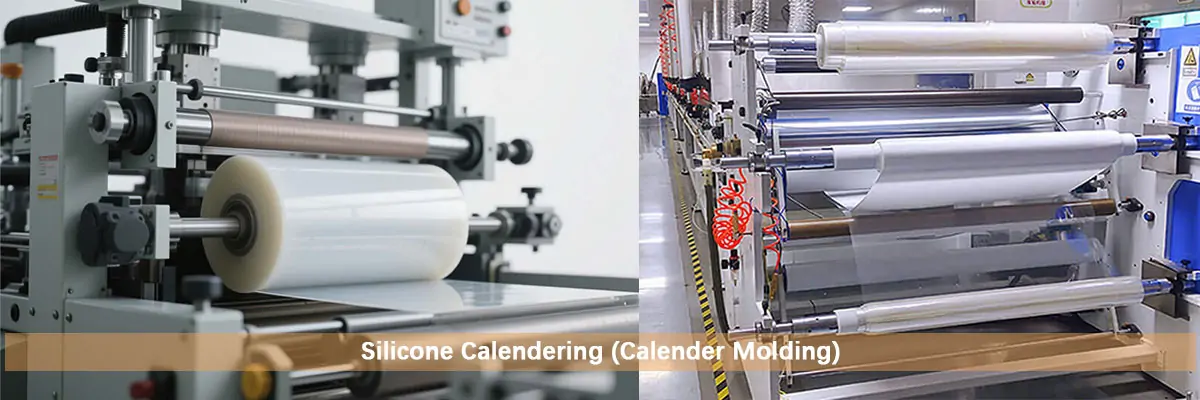
The Sheet and Film Production Specialist. Calendering is one of the three primary methods for fabricating silicone rubber products. While molding produces discrete 3D parts and extrusion creates continuous profiles with specific cross-sections, calendering specializes in producing long, continuous sheets and films of uniform thickness.
Raw silicone material is fed through a series of rotating rollers that compress, smooth, and stretch it into a flat, consistent sheet. It has higher precision and better control ability in terms of thickness, surface smoothness and texture.
How the calendering process works?
The calendering process begins with raw silicone polymer, typically in the form of a High Consistency Rubber (HCR), which also known as heat-cured rubber or high-temperature vulcanizing (HTV) silicone. HCR is the material of choice for calendering because its high molecular weight and gum-like consistency provide the mechanical strength and processability needed for this method. Liquid Silicone Rubber (LSR) is rarely used in calendering because it is too fluid for the process.
[Reference: Liquid Silicone Rubber (LSR) v.s. Solid Silicone Rubber (HTV/HCR)]
The silicone compound is fed into a calendering machine equipped with two or more hardened steel rollers that revolve in opposite directions. As the material passes through the gaps between these rollers (typically arranged in vertical three-roll or four-roll configurations) it is compressed and stretched to the desired thickness. The distance between the rollers determines the final sheet thickness, while the roll temperature and speed are carefully controlled to achieve the required surface finish (shiny, matte, smooth, adherent, or embossed).
After calendering, the sheet may undergo vulcanization (curing) using tunnel kilns, ovens, autoclaves, or rotocure conveyors, and can be further processed through cutting, slitting, or adhesive application.
Key advantages of calendering:
- High-volume, cost-effective production. The continuous nature of the process enables large-scale manufacturing at low per-unit cost.
- Exceptional thickness uniformity. Produces sheets with consistent thickness across the entire width and length.
- Versatile surface finishes. Can produce shiny, matte, smooth, adherent, or embossed surfaces.
- Substrate lamination capability. Can bond silicone directly to fabrics, glass, plastics, and other materials in a single pass.
- Material flexibility. Compatible with a wide range of HCR formulations, including food-grade, medical-grade, flame-retardant, and thermally conductive grades.
Limitations to consider:
- Limited to flat geometries. Calendering cannot produce 3D shapes, profiles, or parts with varying cross-sections.
- Calendering effect. Sheets produced by calendering exhibit different physical and mechanical properties in the longitudinal (machine) direction versus the transverse direction. Specifically, longitudinal tensile strength is greater than transverse, while transverse elongation at break is greater than longitudinal. Designers should account for this directional anisotropy when specifying cut parts.
- Higher setup complexity. Roll temperature, speed, and gap must be precisely controlled to avoid issues like sticking, scorching, or air bubbles
Applications of calendered silicone:
Thanks to its versatility and cost-effectiveness, calendered silicone finds applications across a wide range of industries:
- Automotive. Seals, gaskets, thermal management pads for electric vehicles
- Electronics. Electrical insulation for wires and cables, thermal interface materials, flexible printed circuit boards
- Medical devices. Biocompatible sheets for medical equipment and devices
- Renewable energy. Solar panel encapsulation and protection
- Industrial. Conveyor belts, silicone gaskets, die-cut seals, vibration dampening pads
- Textile coating. Waterproof, heat-resistant, and chemical-resistant fabric coatings
- Construction. Weatherstripping, wall and floor coverings
- Aerospace and rail. Gangways, bellows, interior linings
Design tip: Calendering offers the most efficient and cost-effective path to production whether for gaskets, insulation pads, flexible circuits, or coated textiles. When working with a custom silicone products manufacturer, consider the calendering effect (directional anisotropy) in your design, and specify whether you need unsupported sheets or lamination onto a substrate. For many applications, calendered silicone sheets serve as the starting point for secondary operations like die-cutting, slitting, or adhesive application.
5. Transfer Molding
Transfer molding is a hybrid process that combines elements of both compression and injection molding. In this method, pre-heated silicone material is placed into a “pot” or vacuum chamber, then forced by a plunger through a sprue and runner system into the mold cavities.
Key advantages:
- Better material flow control. Reduces air entrapment and improves part quality.
- Excellent for insert molding/overmolding. Enables encapsulation of other components.
- Moderate tooling costs.More expensive than compression but less costly than liquid injection molding.
- Faster cycle times than compression. Approximately 30–45 seconds per cycle.
Limitations to consider:
- Not as fast or automated as liquid injection molding
- Moderate precision: better than compression but not as precise as injection molding
- Moderate tooling costs: higher than compression but lower than liquid injection molding
When to use it:
Transfer molding is ideal for medium-volume production runs, parts with more complex geometries than compression molding can handle, and applications requiring insert molding or overmolding. Such as encapsulating electronics or bonding silicone to metal inserts.
Design tip:
Transfer molding is particularly valuable when your design requires silicone products with embedded components or multi-material assemblies. If you’re working with a custom silicone products manufacturer on overmolded parts, transfer molding is often the most practical and cost-effective solution.
6. Silicone Overmolding
Silicone overmolding is an advanced secondary molding process that integrates flexible silicone with rigid substrates to create multifunctional composite structures. Such as plastics, metals, or glass. The result is a single, unified part that combines the best properties of both materials: the softness, grip, and sealing ability of silicone with the structural strength of the rigid substrate.
Overmolding is often used interchangeably with insert molding, but there’s a key distinction:
- Insert molding involves placing a pre-existing component (metal insert, plastic part, or electronic component) into the mold, then molding silicone around it.
- Overmolding (also called two-shot molding) produces the substrate and the silicone overmold in two sequential steps, with the second material molded directly over the first.
Overmolding is a two-shot process where the substrate is created first, then the silicone is molded over it. Insert molding is a single-shot process where an already-existing component is placed into the mold and encapsulated.
Key advantages:
- Enhanced ergonomics. Adds soft-touch, anti-slip surfaces to rigid substrates.
- Superior sealing and protection. Creates waterproof, dustproof seals for electronics and enclosures.
- Vibration dampening. Absorbs shock and reduces noise in automotive and industrial applications.
- Streamlined assembly. Eliminates secondary operations like adhesive bonding or welding.
- Design flexibility. Supports different colors, hardnesses, and material combinations in a single part.
Critical design considerations:
Achieving a strong bond between silicone and the substrate is the single most important factor in overmolding success. Here’s what you need to know:
- Mechanical interlocking. Design undercuts or holes in the substrate that silicone can flow through and lock into place.
- Primers and adhesion promoters. Chemical treatments that create “anchor points” on the substrate surface, boosting bond strength by 3–5×.
- Surface treatments. Plasma, corona, or particulate blasting increases surface area and changes surface chemistry to enhance bonding.
- Self-adhesive LSR materials. Special liquid silicone rubber grades that bond directly to plastics like PC, PBT, PEEK, and Nylon without primers.
- Temperature compatibility. LSR molding temperatures range from 120–150°C, while HCR requires 170–180°C, ensure your substrate can withstand these temperatures.
When to use it:
Silicone overmolding is the go-to choice when your design requires multi-material integration. Typical applications include:
- Medical devices. Soft-touch grips, seals, and biocompatible enclosures.
- Consumer electronics. Waterproof seals, shock-absorbing bumpers, and ergonomic grips.
- Automotive components. Vibration-dampening mounts, seals, and soft-touch interior parts.
- Industrial tools. Anti-slip handles, overmolded connectors, and encapsulated electronics.
Design tip:
When working with a custom silicone products manufacturer on overmolded designs, involve them early in the process. Substrate material selection, surface preparation, and mold design all directly impact bond strength and part quality. With the right approach, silicone overmolding can transform a simple rigid component into a high-performance, multi-functional silicone product that stands out in the market.
7. Silicone Insert Molding: Embedding Functionality into Silicone Parts
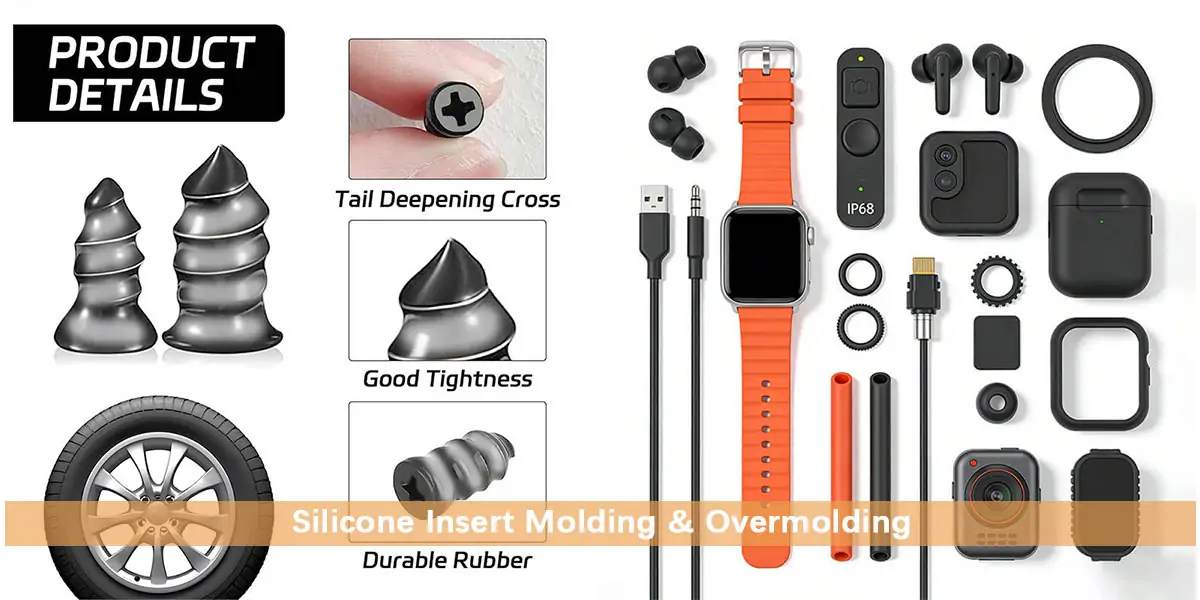
Insert molding is often misunderstood or conflated with overmolding. While both processes involve molding silicone around another component, insert molding is fundamentally about embedding a pre-existing part into a silicone structure to create a single, unified component.
Think of it this way: instead of molding a silicone part and then assembling it with a metal bracket or threaded nut, insert molding encapsulates that component during the molding process itself. The result is a finished part that requires no secondary assembly, thus saving time, reducing costs, and eliminating potential points of failure.
How the insert molding process works?
The process begins with a preformed insert, typically made of metal, plastic, or even another silicone component. This insert is produced separately (through machining, stamping, laser cutting, or prior molding) and then carefully preloaded into the mold cavity. Once the insert is precisely positioned, liquid silicone rubber (LSR) or high-consistency rubber (HCR) is injected or compression-molded around it. The silicone flows around and through the insert, and during curing, it bonds either mechanically (through undercuts and geometry) or chemically (through primers and adhesion promoters).
Key advantages of insert molding:
- Eliminates secondary assembly. Reduces the bill of materials (BOM) and eliminates labor-intensive assembly steps.
- Creates stronger, more durable parts. The integrated design eliminates potential failure points at joints or adhesive bonds.
- Enables multi-material functionality. Combines the best properties of silicone (flexibility, sealing, biocompatibility) with metals (strength, conductivity, wear resistance) or plastics (rigidity, cost-effectiveness).
- Improves sealing performance. Rigid inserts can act as compression stops, preventing gasket failure from over-compression.
- Design flexibility. Supports a wide variety of insert materials, geometries, and silicone formulations.
When to use insert molding:
Insert molding shines in applications where you need to combine silicone’s flexibility, sealing, and biocompatibility with the structural strength of metal or the rigidity of plastic. Typical applications include:
- Threaded inserts. Embedding metal nuts or threaded bushings into silicone or plastic parts to enable secure fastening, especially over repeated assembly cycles.
- Compression stops. Overmolding a gasket with a rigid insert that limits deflection and prevents over-compression, ensuring optimal sealing performance.
- Medical devices. Catheters, syringe plunger tips, hearing aid shells, and other components that combine silicone with metal or plastic inserts.
- Electronics. Encapsulating sensors, connectors, or LED components within silicone for waterproofing and shock protection.
- Automotive components. Seals with integrated stiffeners, vibration-dampening mounts with metal cores.
- Light-blocking applications. Using insert molding to isolate light and prevent it from transferring between compartments.
Design tip:
If your silicone products require threaded fasteners, rigid compression stops, or encapsulated electronic components, insert molding is the most efficient and reliable manufacturing method available. When working with a custom silicone products manufacturer, bring them in before you finalize your insert design, because their DFM (Design for Manufacturing) feedback can save you from costly bonding failures down the road.
How to Choose the Right Silicone Manufacturing Process?
The right choice depends on your part’s complexity, required precision, annual volume, budget for tooling, and quality requirements.
As a rule of thumb:
- Embedding a pre-existing component into silicone → Please Choose Insert Molding
- Molding a soft silicone layer over a plastic base part (two-shot) → Please Choose Overmolding
- Complex 3D parts, high volume → Please Choose Liquid Injection Molding
- Continuous profiles → Please Choose Extrusion
- Flat sheets and films → Please Choose Calendering
| Factor | Compression Molding | Liquid Injection Molding | Transfer Molding | Extrusion | Overmolding | Calendering | Insert Molding |
| Best for | Low-medium volume, simple parts | High volume, complex parts | Medium volume, overmolding | Continuous profiles, tubing | Soft-touch layers on plastic substrates | Continuous sheets, films | Embedding metal/plastic components into silicone |
| Tooling cost | Lowest | Highest | Moderate | Low (dies) | Moderate-High | Low (rollers/dies) | Moderate-High |
| Precision | Low-moderate | High (±0.05–0.1mm) | Moderate | Moderate (±0.1–0.3mm) | High | Good | High (insert positioning critical) |
| Geometry | Simple 3D | Complex 3D | Moderate 3D | Constant 2D cross-section | Multi-material 3D | Flat 2D sheets | 3D with embedded components |
| Ideal applications | Gaskets, seals | Medical devices, electronics | Overmolding, inserts | Tubing, sealing strips | Ergonomic grips, waterproofing | Gaskets, insulation, coated textiles | Threaded inserts, compression stops, encapsulated electronics |
Partnering with the Right Silicone Manufacturer
Understanding these manufacturing methods is only half the equation. The other half is working with a custom silicone products manufacturer who can guide you through material selection, design for manufacturability, and process optimization.
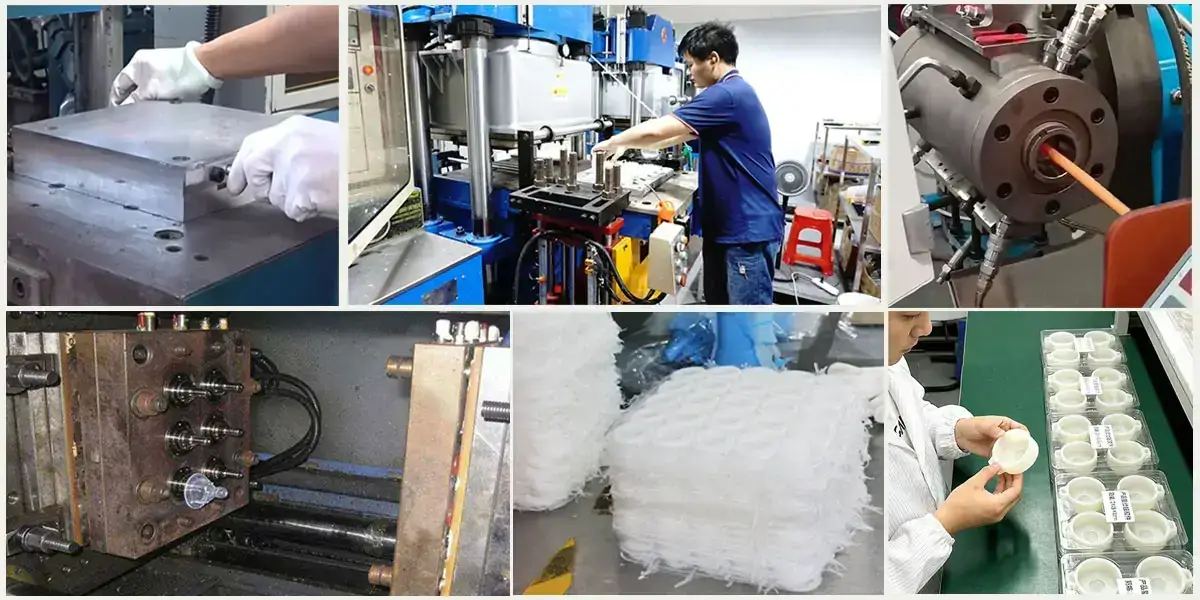
At Siliconexy, we specialize in providing OEM/ODM solutions for custom silicone products with factory-direct pricing. Whether you need compression molding for industrial seals, liquid injection molding for precision medical components, transfer molding for overmolded assemblies, extrusion for continuous tubing and profiles, overmolding for soft-touch layers, calendering for high-volume sheet production, or insert molding for embedding metal and plastic components. Our team of experienced engineers and technicians can help you select the optimal silicone molding method based on your project’s complexity, volume, and budget.
From prototyping to full-scale production, we’re here to ensure your silicone products meet the highest standards of quality, performance, and compliance.
Why Partner with Siliconexy?
- Expertise: 20 Years of experience in silicone molding for various industries
- Quality Assurance: Strict quality control processes ensure consistent product quality
- Competitive Pricing: Cost-effective solutions for both small and large production runs
- Fast Turnaround: Efficient production processes minimize lead times
Whether you’re developing prototypes or full-scale production runs, Siliconexy is your trusted partner for high-quality custom silicone products. Contact us today to discuss your project requirements and receive a free quote.
Final Thoughts
Understanding mainstream silicone molding methods is the foundation of successful silicone product development, helping designers avoid production risks, optimize product structures, and control overall costs.
As a trustworthy custom silicone products manufacturer, Siliconexy provides full-cycle services from design consultation, mold development, custom molding to mass production for global clients. Whether you need customized prototype silicone parts or bulk silicone products manufacturing, we tailor the most suitable molding solution for your unique design needs.