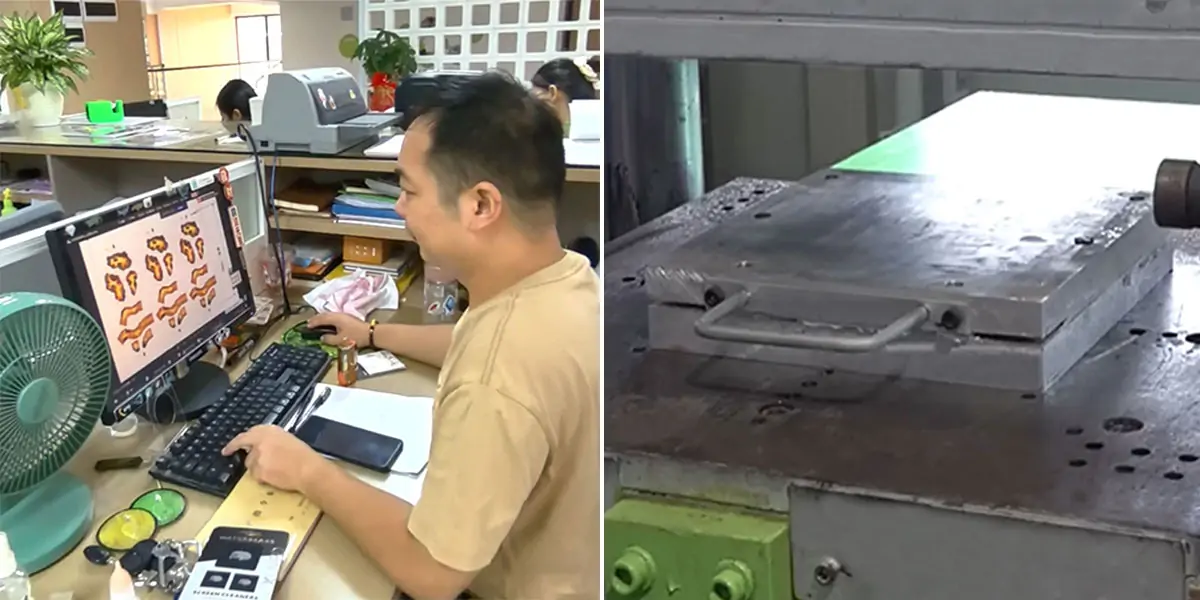
5 Common Custom Silicone Products Mistakes That Delay Production & How to Avoid Them? The silicone consumer products industry continues to expand as brands launch custom silicone products across kitchenware, baby care, pet supplies, and promotional goods. But while market demand is growing, many custom silicone projects face the same bottleneck: avoidable design flaws that push out delivery dates and drive up costs.
According to industry data, a significant share of silicone product complaints stems from product quality failures, and many brands have reported supplier delivery delays and quality issues. Even minor design oversights can trigger mold rework, repeated sampling, and production halts, which costing brands time and budget. The good news is that most of these delays are preventable.
As a professional bulk custom silicone consumer goods factory with 20+ years of industry experience, Siliconexy have witnessed firsthand how seemingly minor design oversights can cause costly production delays, increased costs, and frustrated customers. So that, we’ve summarized the 5 most frequent silicone design mistakes that cause production delays, paired with actionable solutions aligned with DFM (Design for Manufacturability) principles. This guide helps you optimize designs for silicone’s unique material properties, avoid unnecessary delays, and accelerate time-to-market.
Before We Start: Understanding Silicone as an Engineering Material
Silicone is not plastic. Its elastic modulus, tear strength, compression set, and thermal behavior must be considered before a mold is cut. It can flow into gaps as small as 0.005mm, meaning that a lack of precision in design translates directly into flash (excess material) on finished parts. At the same time, silicone’s flexibility allows designers to achieve shapes that would be impossible with rigid materials. But only when design rules are followed properly.
This dual nature of flexibility and stringent requirements is precisely why certain design errors repeatedly appear at our DFM review table, a situation that is common in every project.
Custom Silicone Products: 5 Common Mistakes That Delay Production & Avoid Methods
Mistake 1: Skipping DFM Analysis Before Mold Building
A great product design on paper can fail miserably in production if it is not optimized for silicone molding. We have seen brands spend tens of thousands on tooling, only to discover that the designed part cannot be ejected from the mold, that silicone cannot flow into a sharp corner, or that the part warps due to uneven wall thickness.
Skipping DFM (Design for Manufacturing) leads to stuck parts, uneven flow, high scrap rates, and costly mold modifications. A single mold modification can add two to three weeks to a project timeline. And if the design is too flawed to fix through tooling adjustments, the mold must be started over entirely.
Why It Happens?
Designers often focus on aesthetics and functionality without understanding silicone’s unique flow behavior. Many product developers assume that “if it looks good, it can be made”, but silicone molding has its own physics.
Another contributing factor is the lack of early communication between the brand and the factory. When the designer and manufacturer do not collaborate during the design phase, issues that could have been caught in a 3D file review instead emerge as production-stopping problems.
How to Avoid It?
Submit your 3D CAD files to your manufacturer for a DFM review before any tooling work begins. An experienced silicone factory will evaluate your design for wall thickness, draft angles, parting line placement, gate locations, venting, and undercut handling. Be open to design adjustments that improve moldability without compromising your product’s core functionality. A 48-hour DFM investment at the front end can save weeks of delays and thousands in mold rework costs.
Mistake 2: Incorrect Material Selection
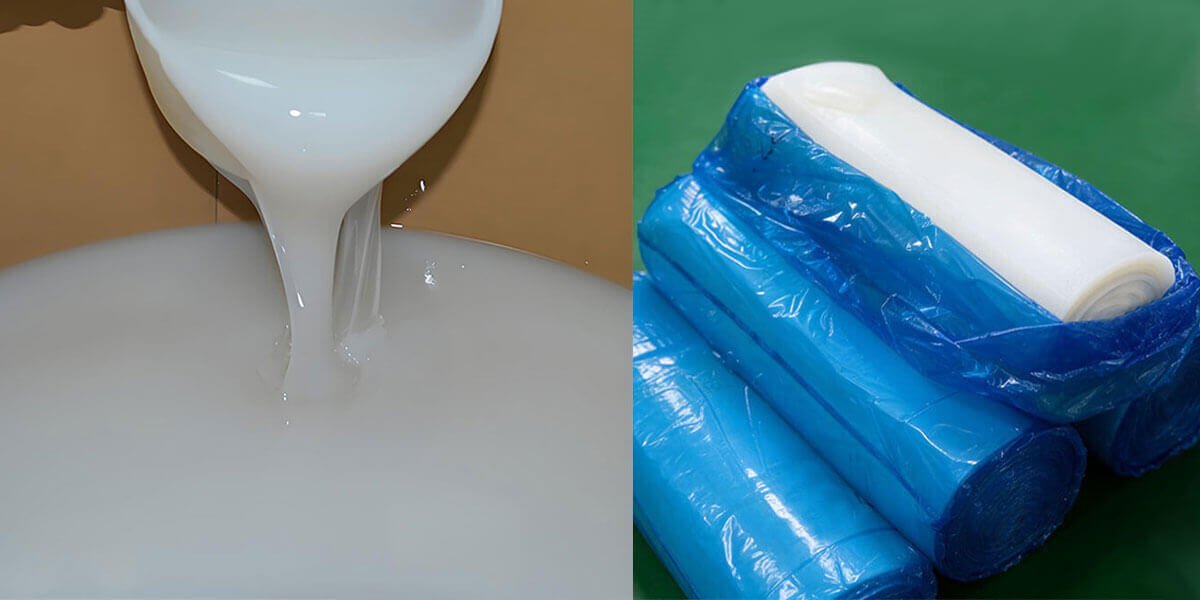
Choosing the wrong silicone grade or hardness is one of the most costly mistakes in custom silicone products manufacturing. Many brands select materials based on price alone, without considering end-use environment, regulatory requirements, or performance needs.
The consequences can be severe. A product that fails temperature resistance standards may melt in a dishwasher. A material without proper UV stability may degrade after weeks of sunlight exposure. Inferior silicone may contain harmful additives that fail food-contact safety tests, putting your brand at risk of recalls or legal action.
Why It Happens?
There is a lack of understanding about the differences between silicone types: liquid silicone rubber (LSR) versus solid silicone (Liquid Silicone rubber vs Solid Silicone), food-grade versus medical-grade, platinum-cured versus industrial-cured. Hardness (Shore A) is often selected based on guesswork rather than functional testing. Moreover, regulatory requirements such as the FDA 21 CFR 177.2600 for food contact in the United States and the more stringent LFGB standards in the European market are often not clearly stated at the outset.
How to Avoid It?
Define your application’s full material requirements upfront: operating temperature range, contact with food or human skin, exposure to chemicals, and UV exposure. Work with a manufacturer that can provide material testing reports and regulatory certification documentation. For applications involving contact with food, please specify whether FDA, LFGB, or both are required. LFGB requires more comprehensive testing for odor and flavor migration and is mandatory for products entering the German and other European markets.
Material samples should be tested under real-world conditions before committing to full production. And while price matters, selecting a lower-cost but unverified material almost always costs more in the long run.
Mistake 3: Ignoring Silicone-Specific Geometry Rules
Designers often apply the rules of plastic injection molding to silicone materials, or similarly. They assume that because silicone is elastic, any shape is acceptable. However, both approaches are incorrect.
The consequences include:
- Uneven wall thickness leading to uneven curing, air traps, and structural weakness.
- Insufficient draft angles causing parts to stick in the mold, leading to tear marks or ejection failure.
- Undercuts that are too deep or too sharp, making removal impossible without mold damage.
- Ribs that are too thick, causing cosmetic sink marks or incomplete vulcanization.
Why It Happens?
Many CAD designers treat silicone modeling as a purely geometric exercise, unaware of how material behavior interacts with mold design. Others assume that “silicone is soft, so it will just pop out” without understanding the forces involved in demolding. Especially in high-cavitation production runs where consistency matters.
How to Avoid It?
Follow these silicone-specific geometry guidelines:
- Wall Thickness. Maintain a nominal wall thickness between 1.5mm and 3.0mm for most applications. Minimum wall thickness can go down to 0.25mm for parts with short flow lengths, but this requires careful process control. For sections thicker than 5mm, curing may become uneven, potentially requiring extended cure times.
- Draft Angles. While silicone’s flexibility allows for zero-draft designs on many shallow features, deep cavities should include draft of 0.5° to 2° to prevent the part from gripping the mold core due to vacuum effects. For textured surfaces, additional draft is required.
- Undercuts. Undercuts are one area where silicone actually outperforms plastic. Because silicone parts can stretch over mold cores (a method called “bump-off”). For thin walls, flexible tabs, and small snaps, undercuts with lead angles of 30° to 45° can be demolded without mechanical slides. However, avoid ribs, sharp corners, or thick zones. And always calculate ejection space to prevent overstretching.
- Ribs. Keep rib width at 0.5 to 1.0 times the adjoining wall thickness to minimize surface sink marks.
When in doubt, submit your geometry to a silicone factory’s engineering team for a detailed review. The best design is one where the CAD file has been optimized for the actual molding process.
Mistake 4: No Prototype Before Production Tooling
A brand approves a design, pays for a production mold, and then discovers during the first sample run that the fit is wrong, the feel is off, or the function doesn’t work as intended. Now the mold needs modification or complete replacement. So that, the project timeline extends by weeks. We see this pattern repeatedly. The root cause is simple: skipping the prototype phase.
Why It Happens?
Some brands rush to production tooling to save time, believing that “going straight to steel” will accelerate their go-to-market timeline. Others underestimate the value of physical validation, assuming that their 3D renderings are sufficient.
But a rendering can’t tell you how a part feels in hand, how it assembles with other components, or whether the designed thickness yields the right flexibility. These insights come from holding a physical sample.
How to Avoid It?
Before committing to production tooling, produce functional prototypes. Several methods are available:
- 3D-printed prototypes are fast and cost-effective for form and fit validation.
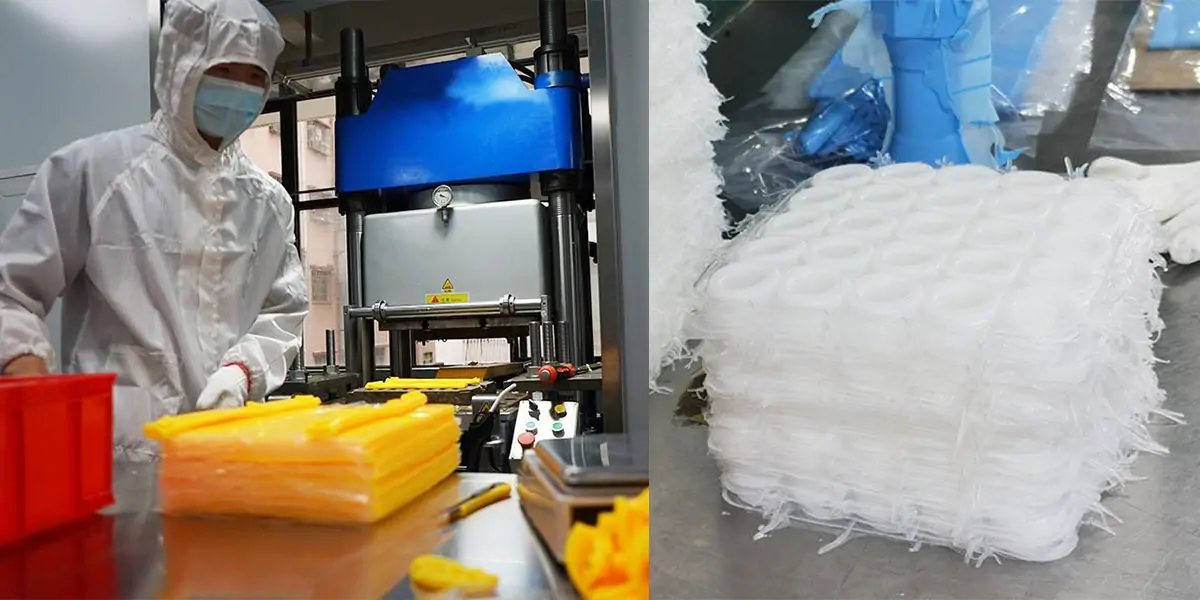
- Soft tooling (aluminum or resin molds) can produce small batches of actual silicone parts for functional testing. Soft tooling typically takes 1–2 weeks and costs a fraction of hardened steel tooling. It is ideal for testing but not for long-term mass production.
- Single-cavity production molds represent a middle ground, which allowing you to validate the design with actual production processes before scaling to multi-cavity tooling.
- Prototypes help verify dimensions, feel, fit, and function before substantial tooling investment. They reduce costly revisions and speed up product validation. A few hundred dollars and a couple of weeks spent on prototyping can prevent months of delays and tens of thousands in rework later.
Mistake 5: Failing to Clarify Quality and Compliance Standards Upfront
A shipment arrives, but the products fail customs inspection because they don’t meet the destination country’s regulatory requirements. Alternatively, the product may have passed inspection, but failed internal quality testing, such as excessive dimensional tolerances, inconsistent surface finish, or differences in hardness between batches.
These issues almost always trace back to one cause: undefined specifications before production began.
Why It Happens?
Quality requirements and compliance standards are not always discussed in detail during the quoting phase. A buyer might assume that “food grade” means the same everywhere, when in fact FDA and LFGB have different scopes and testing criteria. Tolerances might be assumed rather than documented on drawings. Hardness specifications might be listed without confirming the testing method.
How to Avoid It?
Establish all quality and compliance requirements in writing before sampling begins:
- Regulatory certifications. For food-contact products, clarify which certifications are required: FDA 21 CFR 177.2600 for the U.S. market, LFGB for Germany and the EU, or both. For baby products, LFGB is often mandatory. For medical applications, biocompatibility standards such as ISO 10993 may apply. Ensure that not only the silicone raw material but also any colorants used in the formulation comply with the relevant regulations.
- Material hardness. Silicone hardness is measured on the Shore A scale, with typical custom grades ranging from 10A to 80A. Specify the target hardness and acceptable tolerance range. Typically, it is ±2 to ±5 Shore A hardness, depending on the grade.
- Dimensional tolerances. For silicone molded parts, typical tolerances are larger than for machined components. Define critical dimensions and acceptable ranges on your engineering drawing.
- Surface finish and visual standards. Define acceptable limits for flash (excess material), part lines, sink marks, and color consistency. Agree on a sample standard that will be used for batch-to-batch comparison.
- For testing and documentation. Please confirm which test reports will be provided. These include material batch traceability reports, hardness verification reports, dimensional inspection reports, and any third-party certified test results.
When these specifications are clearly defined in writing before tooling begins, the production process proceeds with clear targets, and the risk of surprise at final inspection drops significantly.
A Quick Checklist for Your Next Custom Silicone Project
Before submitting your design to a custom silicone manufacturer, run through this checklist:
| Design Area | Check Item |
|---|---|
| DFM review | Have CAD files been submitted for manufacturability analysis before mold tooling began? |
| Wall thickness | Is the nominal wall thickness between 1.5mm and 3.0mm? Are transitions between thicknesses gradual? |
| Draft angles | Have deep features received at least 0.5° to 2° of draft? |
| Undercuts | Are undercuts designed with lead angles of 30–45° for bump-off? Are ribs kept at 0.5–1.0× adjoining wall thickness? |
| Material selection | Has hardness (Shore A) and grade (food-grade, medical-grade, industrial-grade) been confirmed for the intended use and market? |
| Prototyping | Has a functional prototype been produced and validated before production tooling? |
| Quality standards | Are regulatory certifications (FDA, LFGB, etc.) clearly specified in writing? Are dimensional tolerances, hardness range, and surface finish standards documented? |
Final Thoughts:
Avoid Delays with Proactive Design & Manufacturer Collaboration.
Most silicone production delays stem from design decisions made without understanding silicone’s unique manufacturing constraints. Delays in custom silicone production are rarely inevitable. Most can be traced back to one of the five design mistakes above. At our factory, we help brands avoid these pitfalls by offering free DFM reviews, material selection guidance, and prototype support before any tooling begins.
Whether you are developing silicone kitchenware, baby products, promotional items, or consumer goods requiring regulatory certifications like FDA or LFGB, getting the design right early makes every subsequent step smoother.
Contact our engineering team to discuss your custom silicone project. Upload your 3D CAD file or share your product concept, and we will provide a manufacturability assessment and material recommendation.