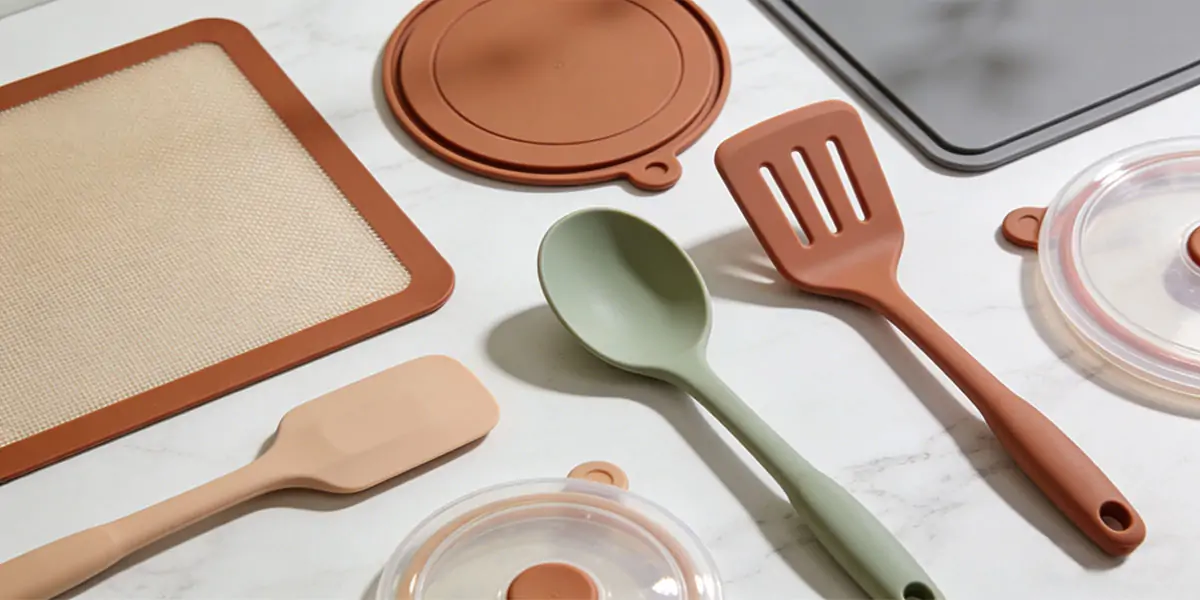
Silicone vs Polycarbonate: Which is better for your products? When designing custom silicone consumer goods (from kitchenware and baby products to protective gear and electronics casings) the choice between silicone and polycarbonate (PC) is one of the most critical decisions for manufacturers, product designers, and buyers. Both materials are widely used in high-volume consumer production, but their core properties, safety profiles, durability, and ideal applications differ dramatically.
This guide provides an objective comparative analysis of silicone and polycarbonate, covering their chemical structure, safety, durability, and other aspects. Whether you’re choosing materials for custom silicone kitchen tools, polycarbonate protective cases, or hybrid consumer products, this analysis will help you make data-driven decisions that align with quality, safety, and performance objectives.
Silicone vs Polycarbonate: Material Composition
Silicone is a synthetic polymer made from silicon, oxygen, carbon, and hydrogen, known for its unique rubber-like elasticity and thermal stability. Polycarbonate is a thermoplastic polymer valued for its exceptional impact resistance and optical clarity.
What is silicone?
Silicone is an inorganic-organic polymer with a backbone of alternating silicon and oxygen atoms (Si-O-Si), rather than the carbon-carbon backbone of conventional plastics. This structure gives it flexibility over a wide temperature range and excellent chemical stability.
Silicone is an elastomer (it stretches and returns to shape) and is widely used in kitchen utensils, bakeware, baby feeding products, seals, gaskets, and medical components. High-end grades (platinum-cured silicone) are certified for food and medical contact.
What is Polycarbonate?
Polycarbonate (PC) is a rigid thermoplastic formed with carbonate linkages in its molecular chain. It is known for high impact strength, optical clarity, and dimensional stability. Polycarbonate is used in protective gear, electronics housings, eyewear lenses, water bottles, and automotive components. Unlike silicone, PC is a hard plastic that does not flex.
Core Chemical Structure: Inorganic vs Organic Polymer
The fundamental difference between silicone and polycarbonate lies in their molecular backbones, which define all their key characteristics.
Silicone:
- Chemical Identity: An inorganic elastomer (siloxane polymer) with a repeating silicon-oxygen (Si-O) backbone, often with organic side groups (e.g., methyl).
- Raw Material: Derived from silica (sand), making it a mineral-based polymer.
- Key Trait: The Si-O bond is extremely stable (bond energy ~452 kJ/mol), delivering exceptional heat, UV, and chemical resistance.
Polycarbonate (PC)
- Chemical Identity: An organic thermoplastic with a carbon-carbon (C-C) backbone, formed by polymerizing bisphenol A (BPA) and phosgene (or BPA-free alternatives).
- Raw Material: Petroleum-based resin, classified as a conventional plastic.
- Key Trait: The C-C bond is flexible but less stable under extreme heat or UV exposure, limiting long-term durability in harsh environments.
Silicone vs Polycarbonate: Property Comparison at a Glance
|
Property |
Silicone Rubber |
Polycarbonate (PC) |
| Flexibility | Very flexible, Shore A 10–90, elongation 100–1,100% | Rigid, Rockwell R 100–120, elongation ~120–130% |
| Operating Temperature | −50°C to +230°C (some grades up to +300°C) | Standard: −20°C to +120°C; high temp up to +140°C |
| Impact Resistance | Absorbs shocks through elasticity | Very high; Charpy notched 55–65 kJ/m² |
| Transparency | Usually translucent or opaque | Highly transparent, 89–90% light transmittance |
| Chemical Resistance | Excellent; inert to most solvents, oils, water | Good; resists water, alcohol, weak acids; sensitive to acetone, ketones, strong alkalis |
| UV & Aging Resistance | Excellent, does not yellow | Requires UV stabilizers; may discolor over time |
| Biocompatibility | Very high; FDA and medical-grade available | Good; BPA-free grades are food-safe |
| Recyclability | Limited; downcycling only | Widely recyclable |
| Processing Difficulty | Multi-step: mixing, molding, curing | Simple; injection molding or extrusion |
| Typical Uses | Seals, gaskets, kitchenware, medical tubing, flexible components | Lenses, housings, protective shields, enclosures |
| Cost | Higher; complex processing | Lower; commodity resin |
Silicone vs Polycarbonate: Core Properties
1. Physical Properties: Flexibility, Strength, and Heat Resistance
Physical performance directly impacts product functionality, from grip and durability to temperature range. Below is a side-by-side comparison of critical metrics:
| Property | Silicone | Polycarbonate |
|---|---|---|
| Flexibility | Highly flexible (Shore A 50–60), elastic, stretchable, and returns to original shape | Rigid (Shore R 115), brittle under extreme bending, minimal flexibility |
| Tensile Strength | Moderate (5–10 MPa), tear-resistant but prone to ripping with overstretching | High (60–70 MPa), excellent impact resistance (virtually shatterproof) |
| Heat Resistance | -40°C to 230°C (freezer-to-oven safe), no degradation at high temperatures | -20°C to 120°C; softens above 130°C, risks warping or melting |
| UV Stability | Excellent—resists yellowing, cracking, or degradation under prolonged sunlight | Poor—UV exposure causes yellowing, brittleness, and surface cracking over time |
| Transparency | Translucent to opaque (customizable clarity); matte or glossy finish | Crystal clear (90% light transmittance), glass-like optical clarity |
| Density | ~1.05–1.2 g/cm³ (lightweight, soft feel) | ~1.19–1.2 g/cm³ (slightly heavier, rigid feel) |
Key Takeaways
- Silicone: Dominates in flexibility, elasticity, and extreme temperature resistance. Ideal for soft, grippy, or heat-exposed products (e.g., baking mats, baby bottle nipples, non-slip grips).
- Polycarbonate: Excels in rigidity, impact strength, and optical clarity. Perfect for hard, protective, or transparent products (e.g., safety goggles, food containers, phone cases).
2. Temperature Performance
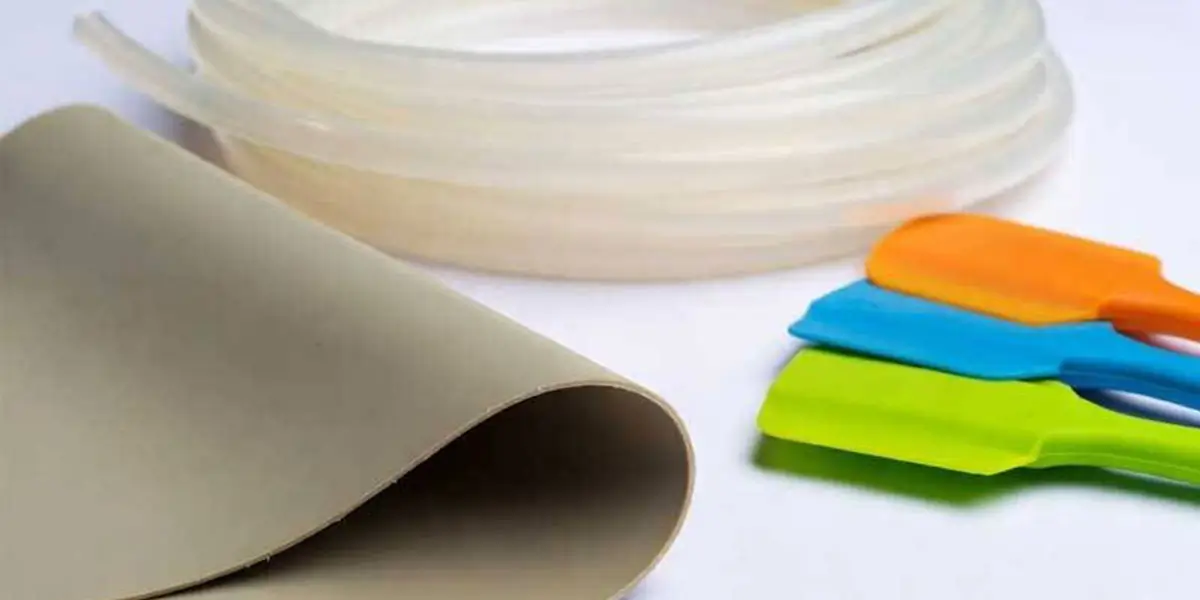
The two materials differ significantly in their temperature performance.
Silicone (What Is Silicone? Is It Heat and Acid Resistant?)
In standard grades, silicone maintains its elastic properties within a temperature range of -50°C to +230°C, and some special formulations can even withstand temperatures up to +300°C. It remains flexible and does not become brittle in extremely cold environments. This makes it ideal for applications such as baking mats, frozen storage, and repeated sterilization by boiling or dishwashers. High-quality silicone baking pans are dishwasher safe and non-stick, although they may absorb grease over time and may require additional cleaning.
Polycarbonate
Polycarbonate has a glass transition temperature of approximately 300°F (148°C) and can be used in a range of -40°C to +120°C. It exhibits high impact strength and excellent mechanical stability within this range. However, prolonged exposure to UV light can cause polycarbonate to yellow, and it lacks the abrasion resistance of some other materials. Although sometimes a silicone-based hard coating is applied to the surface of polycarbonate to improve durability.
3. Safety & Biocompatibility: Food-Grade and Medical Use
For consumer goods (especially kitchenware, baby products, and medical devices), safety is non-negotiable. Both materials can be food-grade, but their safety profiles differ significantly.
Silicone
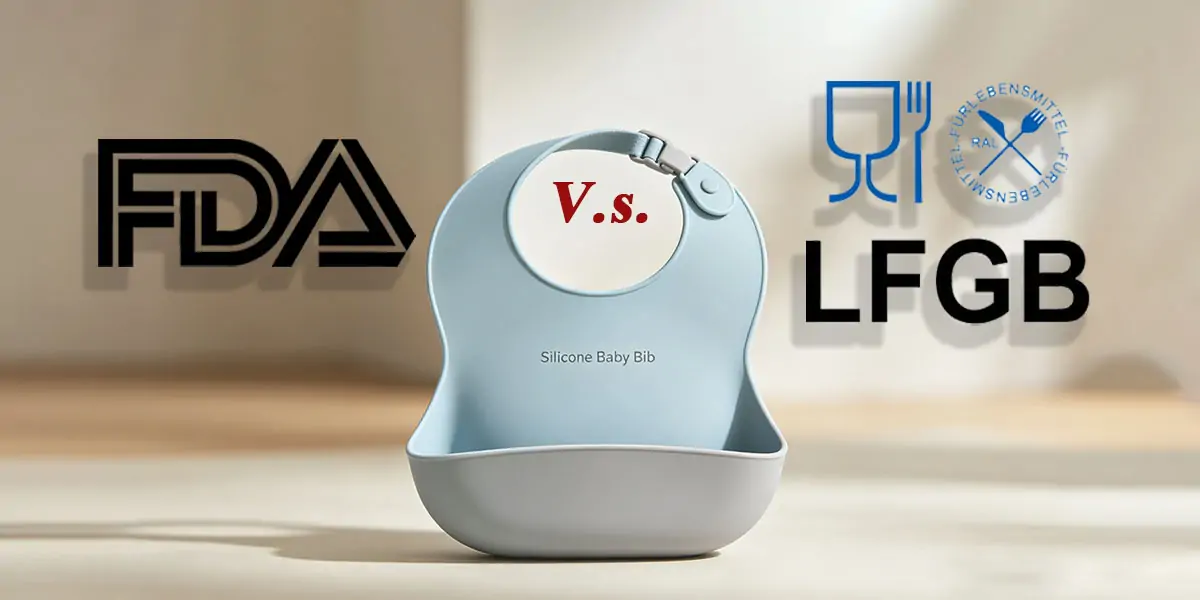
- Biocompatibility: Top-tier. FDA-approved, LFGB-compliant, and medical-grade available.
- Chemical Leaching: Non-toxic, non-leaching. No BPA, phthalates, or heavy metals. Stable in contact with acidic, fatty, or high-temperature foods.
- Allergy Risk (Is Silicone Hypoallergenic? You Need to Know About Silicone Allergy): Hypoallergenic. Rarely causes skin irritation, suitable for sensitive skin (e.g., baby products, medical implants).
- Certifications: Food-grade, medical-grade, and cosmetic-grade certifications widely available for custom manufacturing.
Polycarbonate
- Biocompatibility: Good. BPA-free grades meet food safety standards; standard PC contains BPA (an endocrine disruptor).
- Chemical Leaching: Risk of BPA leaching under heat or repeated use (e.g., hot beverages, dishwashing). BPA-free PC uses alternative bisphenols (e.g., BPS) with limited long-term safety data.
- Allergy Risk: Low. No direct skin irritation, but additives may trigger reactions in sensitive individuals.
- Certifications: BPA-free food-grade certifications common; medical-grade PC available but less widely used than silicone.
Key Takeaways
- Silicone: The safer choice for high-safety applications (baby products, baking tools, medical devices) due to non-toxicity and hypoallergenic properties.
- Polycarbonate: Suitable for cold or low-heat food contact (e.g., water bottles, storage containers) only if BPA-free; avoid for high-temperature use.
4. Durability & Lifespan: Long-Term Performance
Durability directly impacts product lifespan, replacement costs, and sustainability.
Silicone
- Wear Resistance: Excellent. Resists abrasion, fading, and deformation. Withstands thousands of uses without degradation.
- Fatigue Resistance: Elastic memory. Returns to original shape after stretching or compression (e.g., silicone seals, stretchable lids).
- Lifespan: 10–65 years (depending on grade); outdoor use (UV-exposed) lasts decades without yellowing.
- Failure Mode: Tears only with extreme overstretching; no cracking under normal use.
Polycarbonate
- Wear Resistance: Good. Scratch-resistant but prone to surface scuffs; requires coating for long-term clarity.
- Fatigue Resistance: Poor. Rrepeated bending or impact causes micro-cracks, leading to sudden breakage.
- Lifespan: 5–10 years (indoor use); outdoor use yellows and becomes brittle in 2–3 years.
- Failure Mode: Cracks or shatters under extreme impact or UV exposure.
Key Takeaways
- Silicone: Longer lifespan and better resistance to wear, UV, and temperature, which ideal for reusable, long-lasting products.
- Polycarbonate: Durable for short-to-medium-term use but prone to aging and cracking in harsh conditions.
5. Manufacturing & Cost: Production Feasibility for Bulk Customization
For bulk custom consumer goods, manufacturing complexity, scalability, and cost are critical factors.
Silicone
- Processing Method: Multi-step. Compression molding, injection molding, or extrusion; requires curing (heat or room-temperature vulcanization). [Silicone Injection Molding vs Compression Molding: Which Is Better for Your Project?]
- Customization: Highly customizable. Complex shapes, textures, colors, and hardness levels (Shore A 30–90) achievable.
- Scalability: Suitable for medium-to-high volume production; mold setup costs moderate, per-unit costs higher than PC.
- Cost: Higher upfront cost. Raw material (silica-to-silicone conversion: Silicone Vs Silica; What Is Silicone Made Of? ) and processing are more expensive.
Polycarbonate
- Processing Method: Simple. Injection molding or extrusion; thermoplastic (melts when heated, solidifies when cooled, no curing needed).
- Customization: Limited to rigid shapes; clear or colored options available, but complex textures or flexible designs are challenging.
- Scalability: Ideal for high-volume mass production; low mold setup costs, per-unit costs 30–50% lower than silicone.
- Cost: Lower upfront cost. Petroleum-based resin is cheaper, and processing is faster.
Key Takeaways
- Silicone: Best for custom, flexible, or high-safety products where quality and performance outweigh cost.
- Polycarbonate: Ideal for low-cost, high-volume rigid products with simple designs and moderate safety requirements.
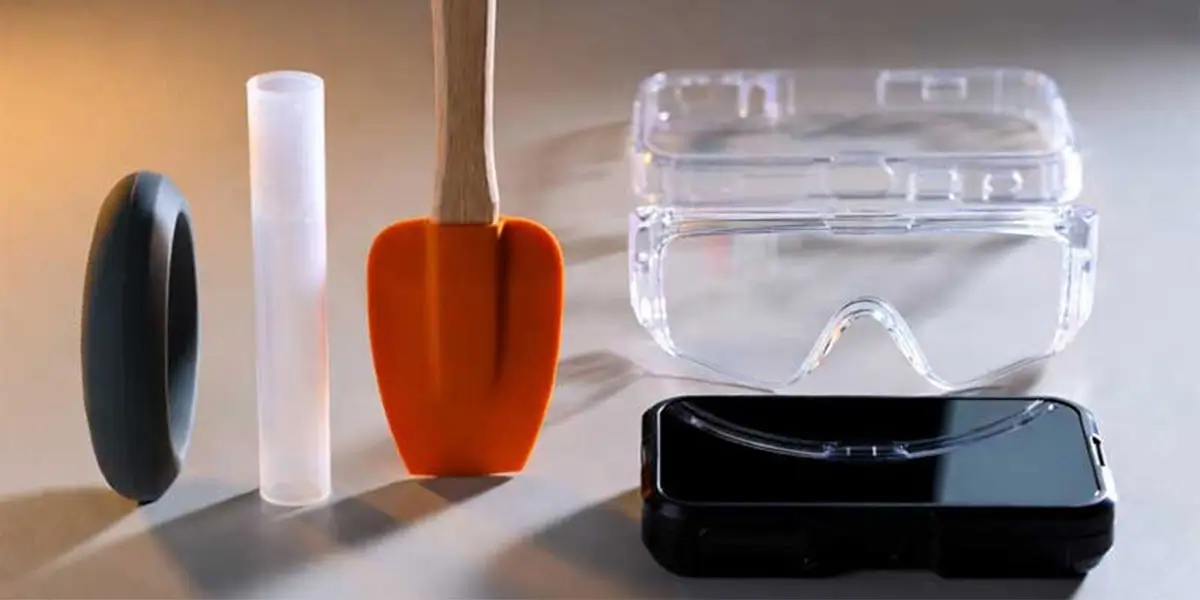
6. Environmental Impact: Sustainability & Recycling
Sustainability is a growing priority for consumers and brands. Below is a factual comparison of eco-friendly attributes:
Silicone
- Recyclability: Only downcycling (recycled silicone loses quality and can’t be reused for high-grade products).
- Biodegradability (Is Silicone Biodegradable?): Non-biodegradable in soil (takes centuries to break down); industrial recycling (chemical depolymerization) is possible but not widely available.
- Carbon Footprint: 6.3 kg CO₂e per kg (higher than PC due to energy-intensive silica-to-silicone processing).
- Lifecycle Sustainability: Long lifespan reduces waste. The reusable silicone products replace single-use plastics, lowering overall environmental impact.
Polycarbonate
- Recyclability: Widely recyclable; mechanical recycling preserves quality for reuse in low-to-medium grade products.
- Biodegradability: Non-biodegradable (persists in landfills for centuries); incineration releases toxic fumes (including BPA).
- Carbon Footprint: 2.15–2.73 kg CO₂e per kg (lower than silicone due to simpler petroleum-based processing).
- Lifecycle Sustainability: Shorter lifespan increases waste. And disposable or short-lived PC products contribute to plastic pollution.
Key Takeaways
- Silicone: Better for circular economy via reusability; higher carbon footprint but lower waste over time.
- Polycarbonate: Better for mechanical recycling; lower carbon footprint but higher waste from short lifespan.
Product‑Specific Comparisons
Kitchen Utensils & Bakeware:
- Silicone is widely preferred for baking mats, spatulas, and non‑stick cookware tools because it withstands high oven temperatures (up to 230°C) without warping, is gentle on non‑stick coatings, and releases food easily.
- Polycarbonate is rarely used directly in high‑heat cooking tools due to its lower heat tolerance, but PC is used in food storage containers and bottle bodies where rigidity and transparency matter.
Baby Bottles & Feeding Products:
In the European Union, PC has been banned in baby feeding bottles since 2011. Silicone nipples and feeding accessories are preferred because they are heat‑tolerant, BPA‑free, flexible, and safe for repeated sterilization. For parents, the safer habit is to verify claims and use limits instead of trusting broad labels, and silicone is often the more reliable choice for parts that contact hot liquid or formula.
Phone Cases:
- PC cases are rigid, offer strong impact protection, and are lightweight, making them a common choice for hard‑shell protective cases.
- Silicone cases are flexible, highly grippy, and provide good shock absorption, but they are softer and offer less structural protection than PC. Some studies suggest PC shelters phones against sudden impact more effectively than silicone rubber due to its higher modulus of elasticity.
Molds (Ice, Chocolate & Candy):
- Polycarbonate molds produce professional‑quality chocolate with glossy surfaces and a clean snap, but they require properly tempered chocolate.
- Silicone molds are more forgiving, naturally non‑stick, easier to unmold, and work well for beginners. Silicone molds also resist temperatures from −55°C to +230°C and are dishwasher‑friendly.
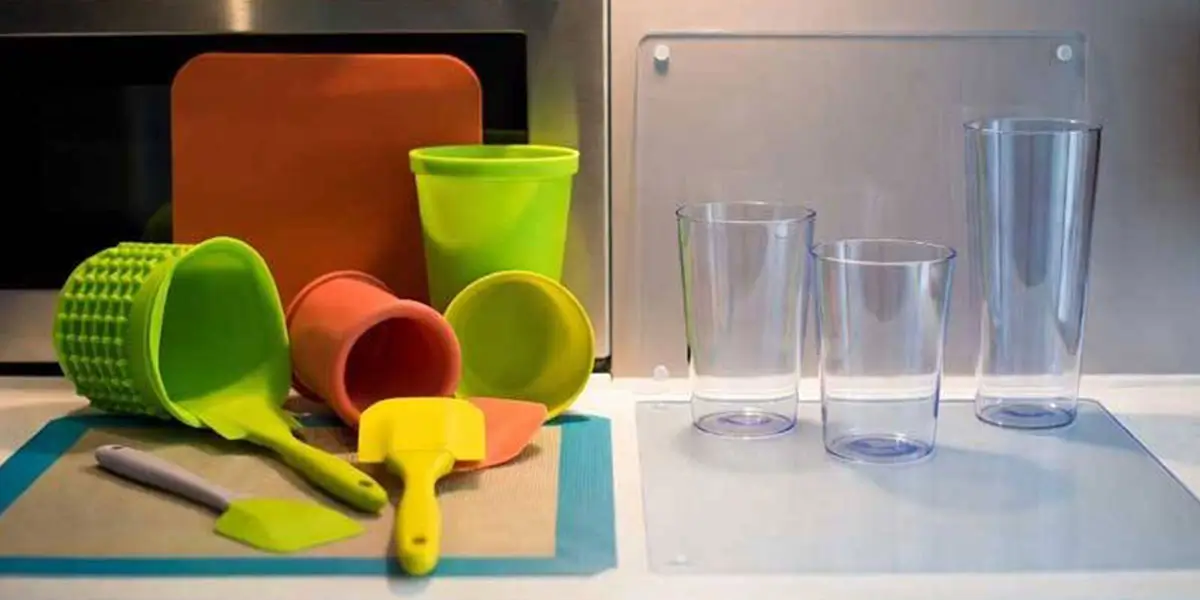
Silicone vs Polycarbonate: Which Material Fits Your Product?
Neither material is universally “better.” The choice depends entirely on your product requirements.
Silicone or Polycarbonate?
The choice between silicone and polycarbonate depends on your product priorities:
Choose Silicone If:
- You need flexibility, elasticity, or a grippy texture.
- The product requires extreme heat resistance (-40°C to 230°C).
- Safety is critical (baby products, kitchenware, medical devices).
- You want long-term durability (10+ years) and UV resistance.
- Custom shapes, textures, or softness levels are required.
Choose Polycarbonate If:
- You need rigidity, impact strength, or crystal clarity.
- The product is for cold or low-heat use (no high-temperature exposure).
- Cost is a top priority (high-volume mass production).
- Simple, rigid designs with minimal customization are acceptable.
- Mechanical recyclability is required.
Silicone vs Polycarbonate: Applications (Best For)
Silicone
- Kitchenware: Baking mats, food storage lids, spatulas, and oven mitts (heat-resistant, non-toxic).
- Baby Products: Bottle nipples, teething toys, and food feeders (hypoallergenic, BPA-free).
- Protective Gear: Non-slip grips, phone case liners, and shock-absorbing pads (flexible, grippy).
- Medical Devices: Catheters, seals, and implantable components (biocompatible, sterile).
- Outdoor Products: Garden hoses, waterproof seals, and outdoor mats (UV-resistant, durable).
Polycarbonate
- Food Containers: Clear storage boxes, water bottles, and salad bowls (transparent, impact-resistant).
- Protective Cases: Hard phone cases, laptop shells, and safety goggles (rigid, shatterproof).
- Optical Products: Eyeglass lenses, camera lenses, and display screens (crystal clear, lightweight).
- Industrial Components: Machine housings, safety shields, and automotive parts (high strength, durable).
This article is intended as a general guide. Always verify material specifications and certifications (e.g., FDA, LFGB, RoHS) with your supplier before manufacturing. Specific product requirements may vary by application, regulatory market, and intended use.
FAQ
Q1: Is silicone safer than polycarbonate for food contact?
A: Yes. Food-grade silicone is BPA-free, non-leaching, and hypoallergenic, making it safer for high-temperature or acidic food contact. BPA-free polycarbonate is safe for cold use but may leach additives under heat.
Q2: Can silicone be recycled?
A: Silicone is limitedly recyclable (downcycling only). It cannot be mechanically recycled like polycarbonate, but industrial chemical recycling is available for high-volume waste.
Q3: Why is silicone more expensive than polycarbonate?
A: Silicone’s higher cost stems from energy-intensive silica-to-silicone processing and multi-step manufacturing (mixing, molding, curing). Polycarbonate is a low-cost petroleum resin with simple thermoplastic processing.
Q4: Does polycarbonate yellow over time?
A: Yes. UV exposure causes polycarbonate to yellow and become brittle within 2–3 years of outdoor use. Silicone resists yellowing and degradation under UV light.
Q5: Can you mix silicone and polycarbonate in one product?
A: Yes. Hybrid products (e.g., polycarbonate phone cases with silicone liners, or PC food containers with silicone seals) combine the rigidity of PC with the flexibility and safety of silicone for optimal performance.
About the author:
Shenzhen Xinyin Environment Rubber Products Co., Ltd. (Siliconexy) is a professional custom silicone products manufacturer based in China, specializing in OEM and ODM services for kitchenware, baby feeding products, and consumer goods. We offer platinum‑cured food‑grade silicone, full certification support, and end‑to‑end manufacturing solutions. Contact us today to discuss your custom silicone product needs and receive a free quote!