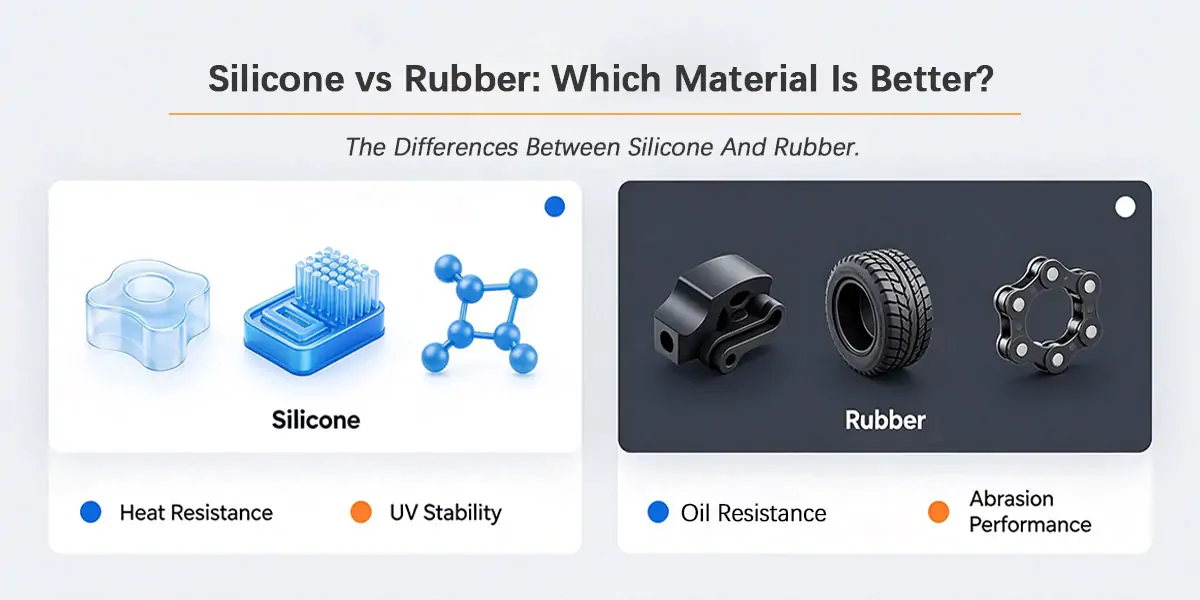
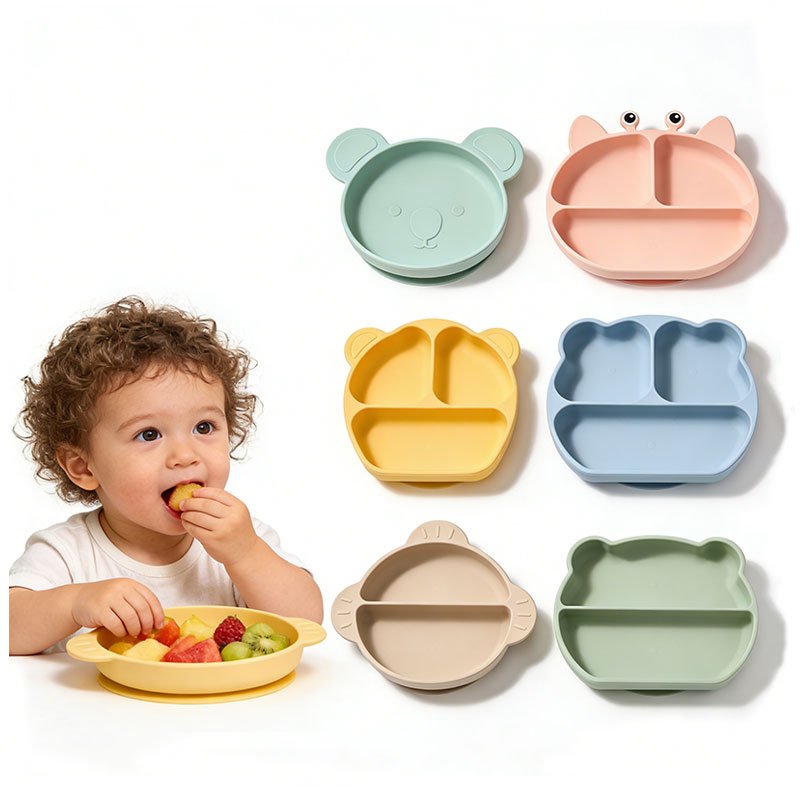
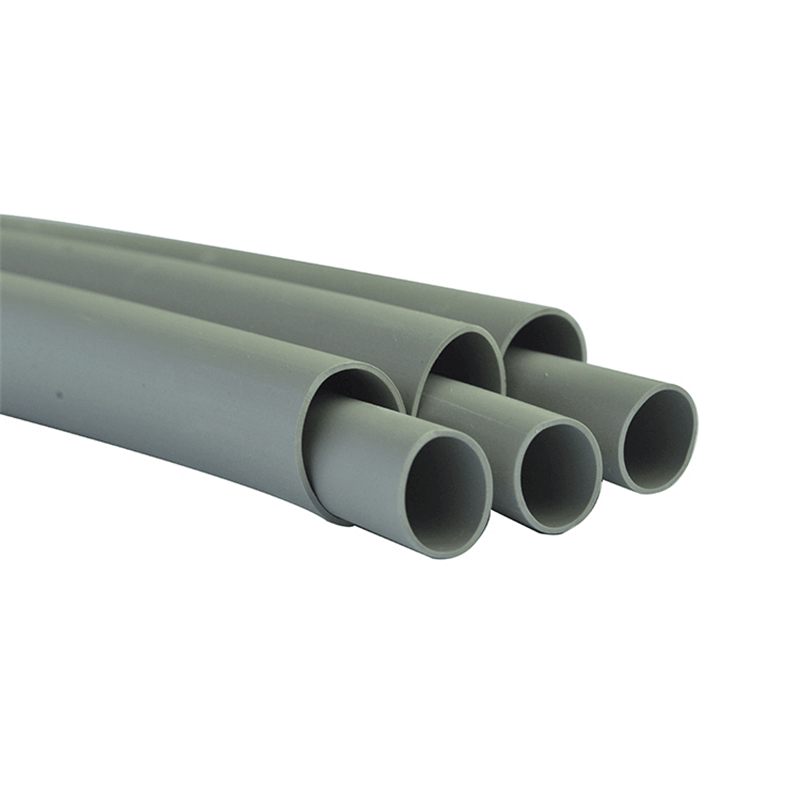
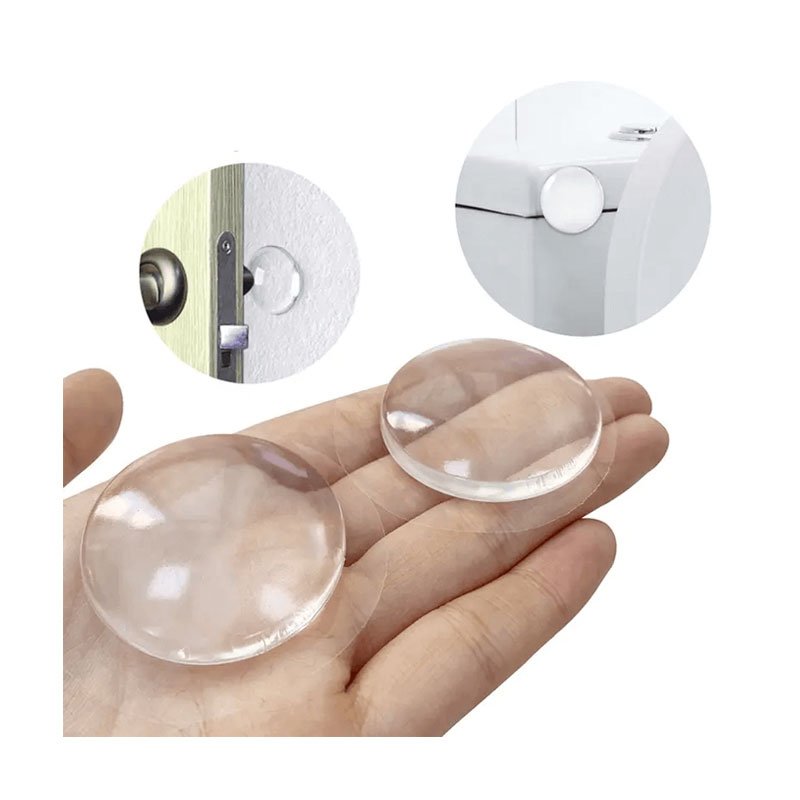
When you source custom molded elastomer parts for consumer goods, industrial seals, medical accessories or kitchenware, one critical question frequently appears: silicone vs rubber, which material fits your project best and what are the differences between silicone and rubber?
Many product designers and wholesale buyers confuse silicone and conventional rubber, because silicone is technically a special‑form synthetic rubber, yet its molecular structure and real‑world performance separate it significantly from natural rubber, EPDM, NBR and SBR rubber compounds. Making the wrong material selection leads to premature cracking, safety non‑compliance, higher replacement cost, and failed mass production.
So, silicone vs rubber: which material is better? The short answer: it depends entirely on your application. Neither material is universally “better.” The right choice comes down to your specific operating environment, performance requirements, and budget constraints.
This article walks you through core distinctions, pros and cons, typical use‑cases, and practical guidance for ordering custom silicone rubber parts or custom rubber components.
As a professional custom silicone products manufacturer, Siliconexy helps global brands select suitable silicone materials and develop reliable OEM silicone products based on their specific needs.
Understanding the Terminology: What’s the Difference?
First, a clarification: silicone is rubber. The term “rubber” is a broad category that includes any elastomer, a polymer with viscoelasticity that allows it to stretch and return to its original shape. Silicone is one member of that family.
The distinction lies in chemistry. Traditional rubbers (natural rubber, EPDM rubber, Nitrile rubber, FKM) are organic polymers built on a backbone of carbon-to-carbon bonds. Silicone, by contrast, is a synthetic elastomer with a backbone of alternating silicon and oxygen atoms, which is known as a siloxane backbone.
This single chemical difference is why these materials behave so differently in real-world applications.
Core Molecular Difference:
Traditional rubber (natural rubber, EPDM, nitrile rubber) builds on carbon‑carbon organic polymer chains sourced from tree latex or petrochemical feedstock. Silicone rubber features an inorganic silicon‑oxygen backbone derived from silica sand. This fundamental chemical gap explains most performance gaps between the two families of elastomers.
Carbon‑based rubbers, particularly those with unsaturated backbones like natural rubber and nitrile, tend to oxidize under UV, ozone, and sustained high heat. Silicon‑oxygen bonds inside silicone remain stable under extreme thermal and weather exposure, even after long‑term outdoor service.
What Is Silicone Material?
Silicone is a synthetic elastomer made from silicon, oxygen, carbon, and hydrogen elements. Unlike traditional rubber materials, silicone offers excellent stability under extreme temperatures and demanding environments.
Common silicone advantages include:
- High temperature resistance
- Excellent flexibility
- Long-term durability
- Weather resistance
- Chemical stability
- Good electrical insulation properties
Because of these advantages, silicone is widely used in:
- Silicone kitchen products
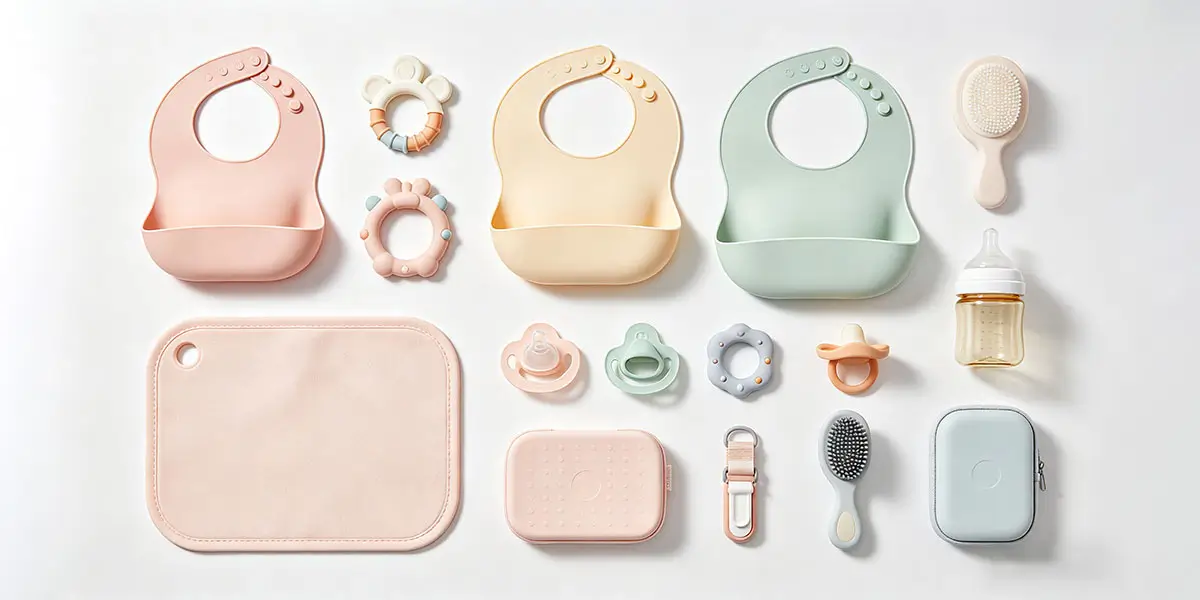
- Silicone baby products
- Silicone electronic accessories
- Silicone medical components
- Industrial products
For businesses requiring custom silicone products, silicone provides excellent design flexibility and reliable performance.
Reference:
- Silicon vs. Silicone: What’s the Difference?
- What is Silicone Made Of?
- What Is Silicone? Is It Heat and Acid Resistant?
- Liquid Silicone vs Solid Silicone
What Is Rubber Material?
Rubber is a flexible material commonly made from natural rubber or synthetic rubber compounds.
Traditional rubber materials are widely used because of their:
- Good elasticity
- High abrasion resistance
- Strong mechanical performance
- Cost efficiency
Common rubber applications include:
- Automotive components
- Industrial seals
- Machinery parts
- Vibration control products
Rubber remains an excellent choice for applications requiring strong mechanical resistance and cost-effective solutions.
Silicone vs Rubber: Key Differences
1. Temperature Resistance
One of the biggest differences between silicone and rubber is temperature performance. Silicone’s most significant advantage is its exceptionally wide operating temperature range. Silicone generally maintains stable properties across a wider temperature range, making it suitable for applications exposed to heat or cold environments.
Custom silicone products handle continuous operating temperature ranging from‑60 °C up to 230 °C; selected high‑grade silicone can survive short‑term peaks near 260 °C. It keeps elasticity both in deep‑freeze cold and high‑heat sterilization environments.
Most conventional rubber grades work reliably between‑30 °C to 120 °C. Above 120 ℃, organic rubber will harden, crack or suffer permanent compression set, which makes it unsuitable for high‑temperature gaskets, oven accessories or heat‑exposed electronic components.
In contrast:
- NBR (Nitrile) operates between –40°C and +121°C
- EPDM functions from –57°C to +149°C
- Natural rubber has limited heat resistance and degrades above ~120°C
At 200°C, silicone retains its elasticity and sealing force, whereas natural rubber would turn into sticky tar, and Nitrile would harden into brittle plastic.
- Choose silicone when: Your application involves extreme heat (ovens, engines, sterilization) or extreme cold (freezers, aerospace, cold-room equipment).
- Choose traditional rubber when: Operating temperatures stay within moderate ranges and cost is a priority.
2. Chemical, Oil, and Fuel Resistance
This is where traditional rubbers often outperform silicone. Silicone performs well against water, mild acids and alkalis, yet most standard silicone grades show poor resistance to concentrated hydrocarbon oils and certain solvents. Nitrile rubber (NBR) takes the lead for oil‑exposed industrial sealing parts. Fluorosilicone variants improve oil resistance for silicone but bring substantially higher raw‑material cost.
Silicone is chemically inert and non-reactive to many substances, resisting water and common fluids without leaching or degrading. It does not impart taste or odor, making it popular for food and beverage uses. However, silicone has vulnerabilities: it has poor resistance to strong acids and alkalis, especially at high temperatures. More critically, silicone’s open molecular structure absorbs hydrocarbons like a sponge, leading to swelling and structural failure when exposed to petroleum-based fluids.
NBR (Nitrile) offers excellent resistance to petroleum-based oils, fuels, and greases, making it the go-to for automotive and oil & gas industries. EPDM provides strong resistance to water, steam, and weathering but performs poorly when exposed to oils and fuels. FKM offers aggressive chemical and high-heat resistance.
- Choose silicone when: Your application involves water, ozone, UV exposure, or food/medical contact and no petroleum exposure.
- Choose traditional rubber when: Your application involves fuels, mineral oils, greases, or aggressive solvents.
3. Durability and Lifespan
Conventional rubber outperforms standard silicone on abrasion resistance, dynamic fatigue and raw tensile strength. That is why natural rubber dominates tire production and heavy‑duty dynamic belts where repeated mechanical stress occurs.
Physical durability (resistance to wear, tear, and abrasion):
- General‑purpose silicone shows moderate tensile and tear strength compared with EPDM or natural rubber at ambient temperature. Modified high‑tear silicone compounds narrow this gap for custom molded silicone toys, keypads and protective sleeves.
- Traditional rubber wins. NBR, EPDM, and FKM offer superior tear and abrasion resistance, making them the preferred choice for dynamic applications involving moving parts, such as pistons, pumps and conveyor belts.
Aging durability (resistance to time and elements):
- Silicone wins. Silicone offers outstanding UV and ozone resistance. Custom silicone molded parts maintain physical properties for years outdoors without surface chalking or cracking. A rubber hose might last 5 years outdoors before cracking; a silicone hose might last 15. Silicone lasts approximately four times longer than rubber.
- Standard natural rubber ages quickly under sunlight. Even EPDM, though weather‑resistant, cannot match silicone’s multi‑decade outdoor service lifespan in hot‑sun continuous exposure scenarios.
This makes silicone preferred for outdoor lighting seals, solar accessory components and exterior consumer gadgets.
4. Flexibility & Elasticity
Lower compression set is another silicone advantage. It maintains its shape under constant pressure better than many traditional rubbers. Maintains its flexibility even at low temperatures, unlike rubber which can become brittle.
Silicone usually has: Softer touch, better elasticity retention and more comfortable surface feel. Rubber often provides stronger grip and mechanical resistance, making it suitable for industrial applications.
- Choose silicone when: Long-term reliability, outdoor weathering resistance, and minimal replacement frequency matter most.
- Choose traditional rubber when: The application involves repeated flexing, mechanical stress, or high abrasion.
5. Safety, Biocompatibility & Regulatory Compliance
Food‑grade silicone and medical‑grade silicone can achieve FDA, LFGB and USP Class‑VI certification, delivering non‑toxic, odor‑free, biocompatible performance for direct human‑contact applications. Silicone does not release harmful volatile substances under normal working temperature and tolerates repeated steam sterilization.
Traditional rubber faces higher compliance barriers. Natural rubber may trigger latex allergies. Many synthetic rubber formulations contain vulcanizing agents and additives that risk migration when touching food or human skin. It costs extra to produce food‑contact certified rubber parts.
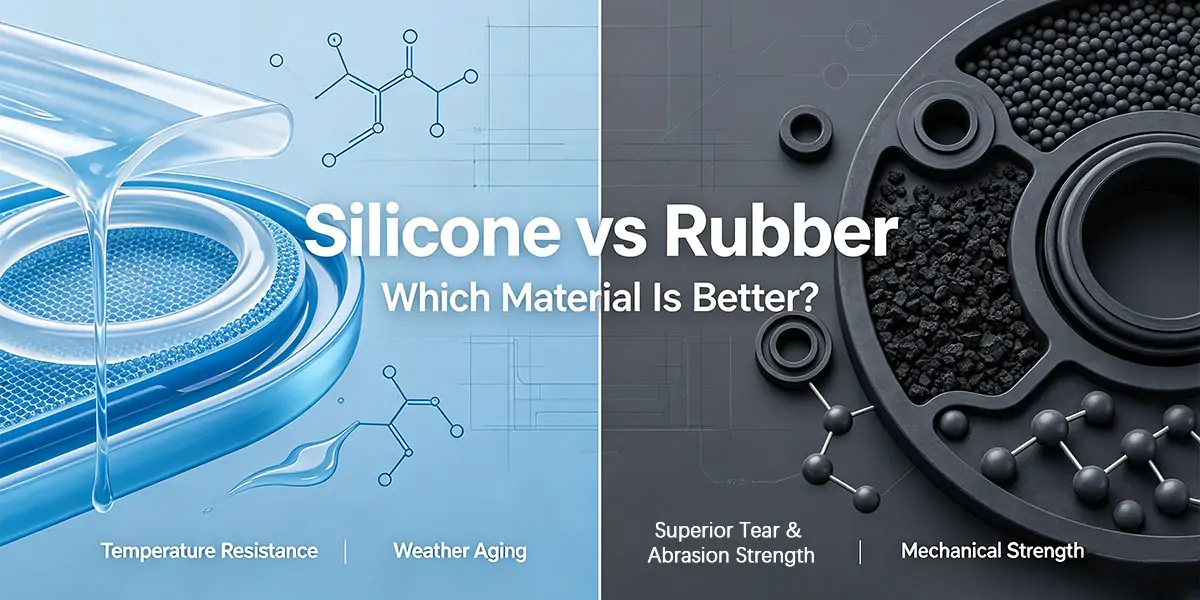
Side-by-Side: Silicone vs Traditional Rubber
| Property | Silicone (VMQ) | Traditional Rubber (EPDM / NBR / FKM) |
|---|---|---|
| Continuous temperature range | –60°C to +200°C (some grades to +230°C) | EPDM: –50°C to +150°C; NBR: –40°C to +120°C; FKM: –20°C to +200°C |
| Tear & abrasion strength | Low to moderate—the main weakness | Generally higher; NBR/FKM/HNBR are tougher |
| Oil & fuel resistance | Poor to moderate | NBR/HNBR/FKM: excellent |
| Weathering, ozone, UV | Excellent (does not crack) | EPDM: excellent; NBR/FKM: moderate |
| Electrical insulation | High dielectric strength | Varies by type |
| Food/medical grade | FDA / USP Class VI / ISO 10993 available | Limited grades available |
| Relative cost | 2–3× the price of organic rubber per kg | Lower upfront cost |
Silicone vs Rubber: The Different Applications
1. Medical and Food-Grade Applications
Silicone is the undisputed leader in applications requiring biocompatibility and regulatory compliance.
Silicone is considered a “sterile” or ultra-clean elastomer, ideal for sensitive applications like dairy tubing, food machinery seals, and medical devices. It is the default choice for FDA, USP Class VI, and ISO 10993 grades in tubing, seals, and gaskets. It is odorless, tasteless, and resistant to fungal growth. The production process for quality silicone does not require questionable stabilizing agents, unlike rubber.
Traditional rubber is used in medical gloves and some non-implantable devices where biocompatibility is less critical. Some NBR formulations are FDA-compliant for food handling, but silicone remains the preferred material for implants, catheters, and food-contact surfaces.
- Choose silicone when: FDA or ISO 10993 compliance is required, or when the product contacts food or the human body.
- Choose traditional rubber when: Biocompatibility is not a concern and mechanical strength is the priority.
2. Industrial Applications
Best Uses for Silicone
- Automotive: Gaskets, seals, hoses, and wiring harnesses that require resistance to engine heat and oil.
- Medical: Catheters, surgical instruments, and prosthetics due to its biocompatibility and sterilization resistance.
- Electronics: Insulators, keypads, and connectors that need protection from moisture and extreme temperatures.
- Aerospace: Seals, O-rings, and thermal insulation for aircraft engines and spacecraft components.
- Food & Beverage: Seals, gaskets, and baking molds that meet FDA food safety standards.
Best Uses for Rubber
- Tires & Transportation: Natural rubber is the primary material for vehicle tires due to its high elasticity and abrasion resistance.
- Industrial Belts & Hoses: Conveyor belts, hydraulic hoses, and power transmission belts that require high tensile strength.
- Seals & Gaskets: Low-pressure sealing applications where cost is a primary concern.
- Consumer Goods: Footwear, toys, and sporting goods that benefit from rubber’s flexibility and shock absorption.
When Should You Choose Silicone?
Pick custom silicone parts if your project matches any of these scenarios:
- Parts work under extreme high‑low temperature cycles
- Outdoor long‑term deployment with UV and ozone exposure
- Food‑contact kitchen gadgets, baby products, medical accessories needing safety certifications
- Electronic insulation components with wide temperature fluctuation
- Products requiring repeated high‑temperature sterilization
When Should You Stick with Conventional Rubber?
Choose organic rubber options in these cases:
- Cost‑sensitive large‑volume projects without extreme‑temperature requirements
- Heavy‑abrasion dynamic parts such as rollers, belts and heavy‑load seals
- Continuous exposure to petroleum‑based oils and fuels (select NBR rubber)
- General‑purpose indoor sealing where premium weather resistance is unnecessary
Decision Framework
Ask yourself these questions to determine the right material:
| Question | If YES → | If NO → |
|---|---|---|
| Will the part face extreme heat (>150°C) or extreme cold (<–40°C)? | Silicone | Consider rubber |
| Will the part contact food, beverages, or the human body? | Silicone | Consider rubber |
| Will the part be exposed to outdoor UV and ozone for years? | Silicone | Consider rubber |
| Will the part contact oils, fuels, or petroleum-based fluids? | NBR / FKM | Consider silicone |
| Will the part face repeated flexing, abrasion, or mechanical stress? | NBR / EPDM / FKM | Consider silicone |
| Is upfront cost the primary constraint? | Traditional rubber | Consider silicone |
Practical Tips for OEM & Wholesale Buyers
Before launching your custom molding project, answer these key questions:
- What is the continuous and peak working temperature of your finished product?
- Will the finished item contact food, skin or medical tissues? Which certification standards do you need?
- Does the product run outdoors under sun, rain and ozone?
- What mechanical stress, friction and chemical exposure will the custom component endure?
- What are your target hardness, color, surface texture and order volume?
Working with an experienced custom silicone manufacturer like Siliconexy helps you avoid material mis‑selection. Our engineering team reviews your drawing or sample, recommends proper silicone hardness and material grade, and supports ODM & OEM custom silicone manufacturing from prototype testing to mass shipment.
Why Choose Siliconexy for Custom Silicone Solutions?
At Siliconexy, we specialize in developing high-quality custom silicone products for global customers.
- Expertise: With 20+ years of experience in silicone manufacturing, we can help you select the right material for your project.
- Customization: We offer tailored silicone products with precise dimensions, colors, and properties to meet your unique requirements.
- Quality Assurance: All our products undergo rigorous testing to ensure they meet international standards like FDA, RoHS, and ISO.
- Global Delivery: We ship to over 50 countries, with reliable logistics and on-time delivery.
Ready to start your custom silicone project? Contact our team today to request a quote and discuss your material needs.
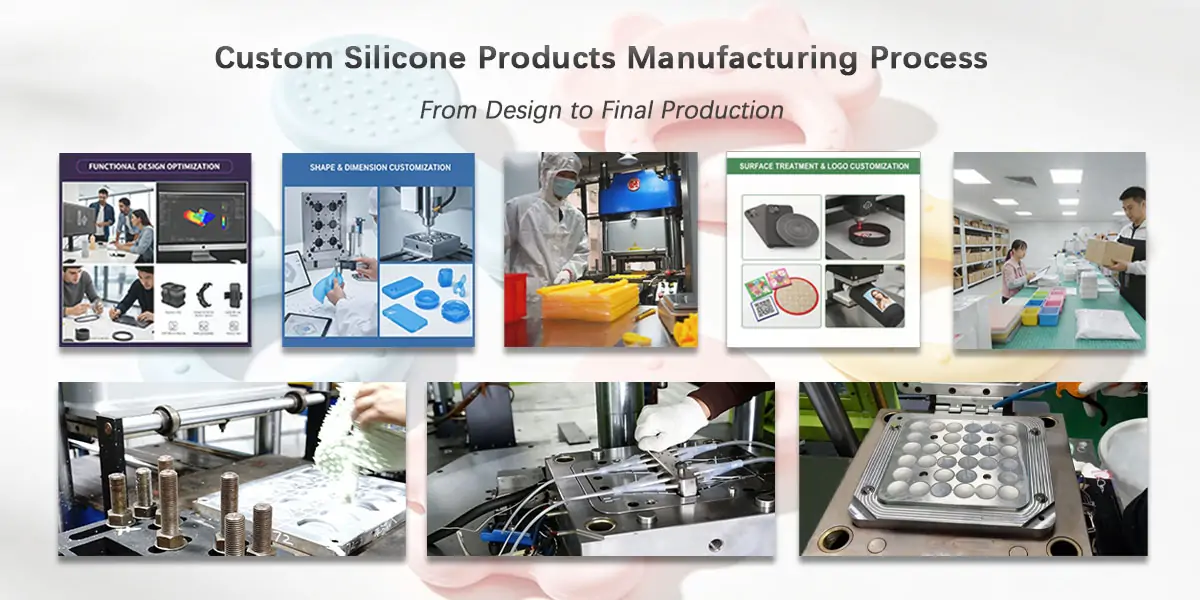
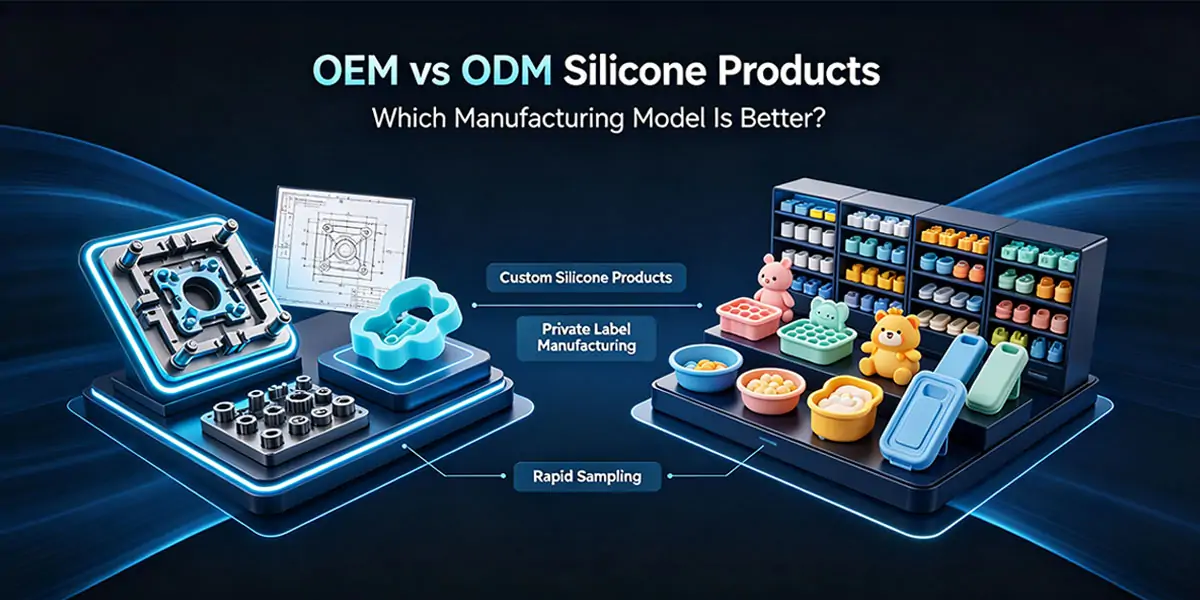
Our OEM and ODM silicone manufacturing services include:
- Product design support
- Silicone material selection
- Mold development
- Prototype production
- Mass manufacturing
- Quality inspection
- Customized packaging
Whether you need silicone kitchen products, electronic accessories, baby products, or industrial silicone components, Siliconexy provides complete manufacturing solutions. Contact Siliconexy today to discuss your silicone product project with an experienced custom silicone products manufacturer.
How to Select the Right Silicone Products Manufacturer?
Choosing the right manufacturing partner is as important as choosing the right material.
A reliable silicone products manufacturer should provide:
- Material Expertise. The manufacturer should understand different silicone grades and applications.
- Engineering Support. Professional engineers can help optimize product designs for manufacturing.
- Mold Development Capability. A complete silicone factory should provide mold design and production support.
- Quality Control System. Reliable manufacturers should inspect: Material quality, product dimensions, appearance and performance consistency.
Conclusion
Silicone vs rubber is not about which is “better”. It’s about which is right for your specific application.
Choose silicone when you need extreme temperature resistance, food or medical-grade compliance, long-term weathering durability, or electrical insulation. The higher upfront cost is often justified by longer service life and lower total cost of ownership.
Choose traditional rubber (NBR, EPDM, FKM, natural rubber) when your application demands superior tear and abrasion strength, oil and fuel resistance, or when cost sensitivity and moderate operating conditions prevail.
Understanding these differences is the first step towards achieving successful customized formed parts. These parts can operate reliably in their intended environment and continuously create value throughout their entire lifecycle.
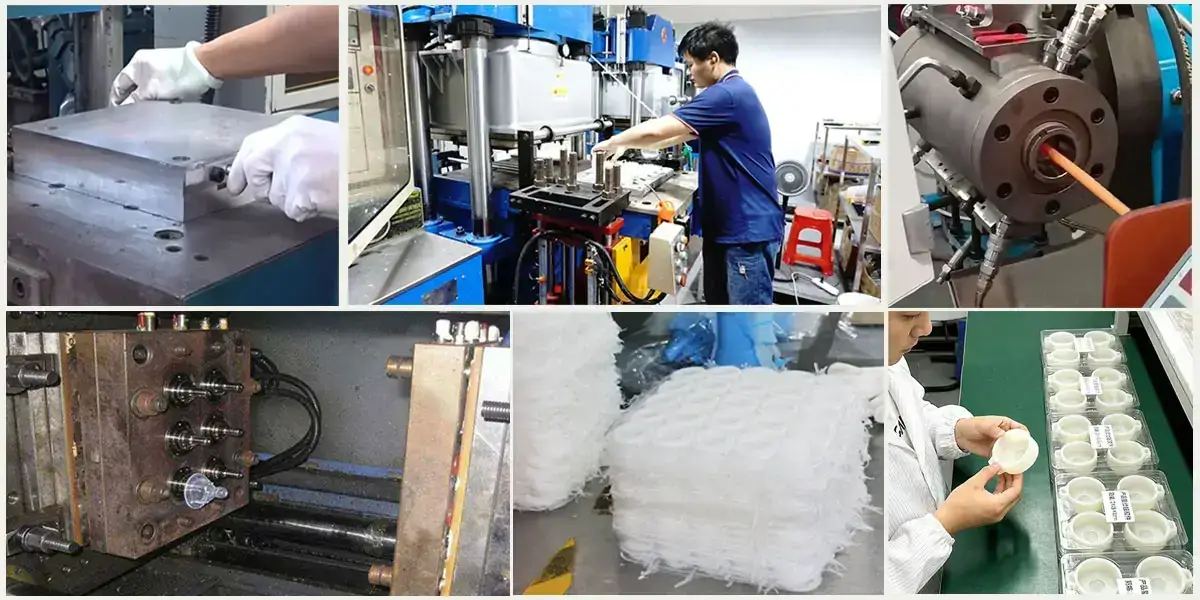
At Siliconexy, we specialize in custom silicone products manufacturing across all major processes, including injection molding, compression molding, transfer molding, and extrusion. Contact us to discuss your project requirements and let our engineering team help you select the optimal material for your application.