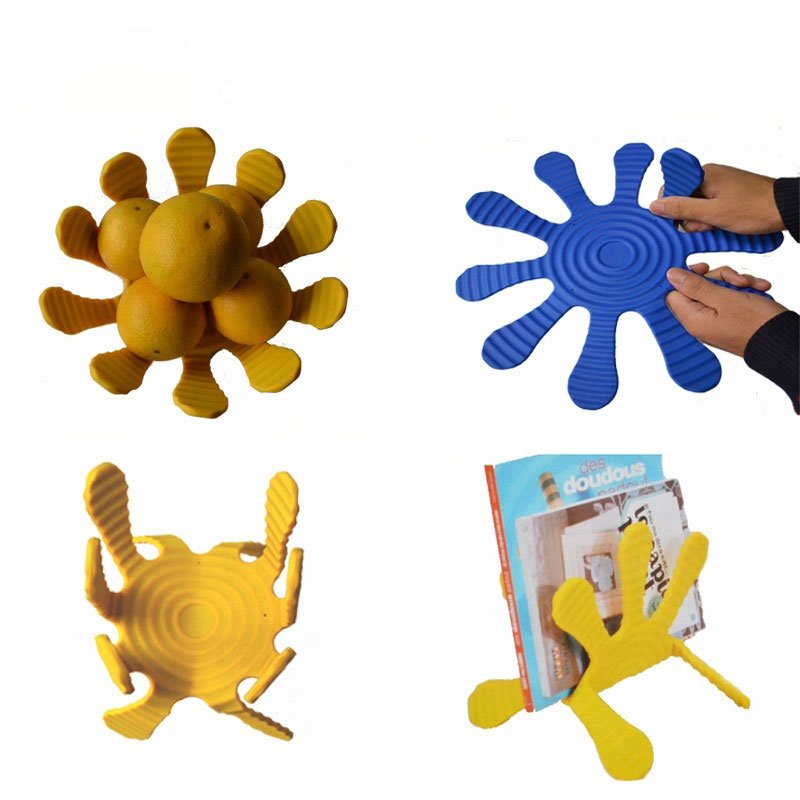
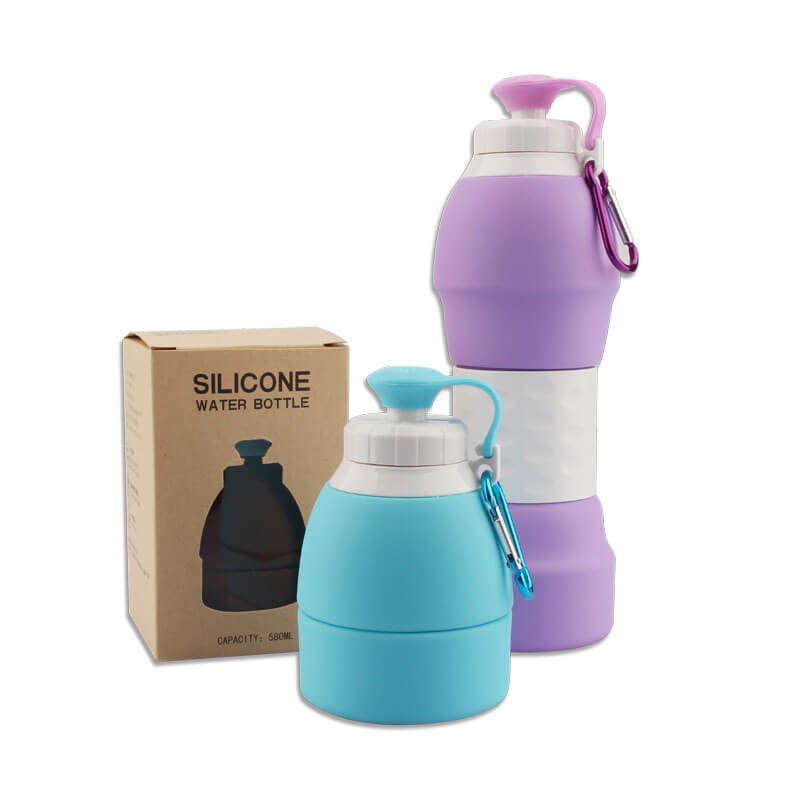
Custom silicone products have become a staple across consumer goods, medical devices, automotive parts, industrial sealing, and kitchenware industries, thanks to silicone’s unmatched flexibility, extreme temperature resistance, biocompatibility, and long-term durability. Choosing the right silicone material is one of the most consequential decisions in custom product development. The material you select directly affects everything from tactile feel and durability to regulatory compliance and per-unit cost.
However, many brand buyers, product designers, and procurement managers struggle with a core question: which silicone material grade suits custom molded silicone products best for specific application scenarios. Choosing the wrong silicone type will lead to poor product performance, shortened service life, and increased production costs.
For brands, wholesalers, and product developers working with a silicone products manufacturer, understanding the differences between Liquid Silicone Rubber (LSR), High-Consistency Rubber (HCR), Room-Temperature Vulcanizing (RTV) silicone, and specialty silicone materials can help reduce development risks and improve manufacturing efficiency.
In this guide, Siliconexy (Xinyin) explains how to choose the right silicone material for custom silicone products, from kitchenware and household products to industrial components and precision-molded parts.
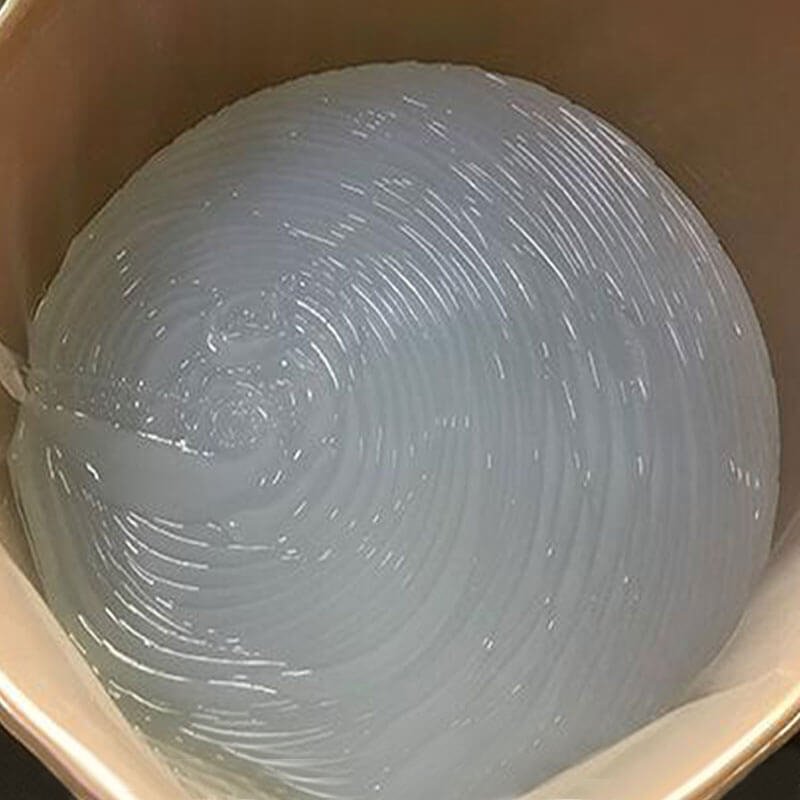
Understand the Main Types of Silicone Materials
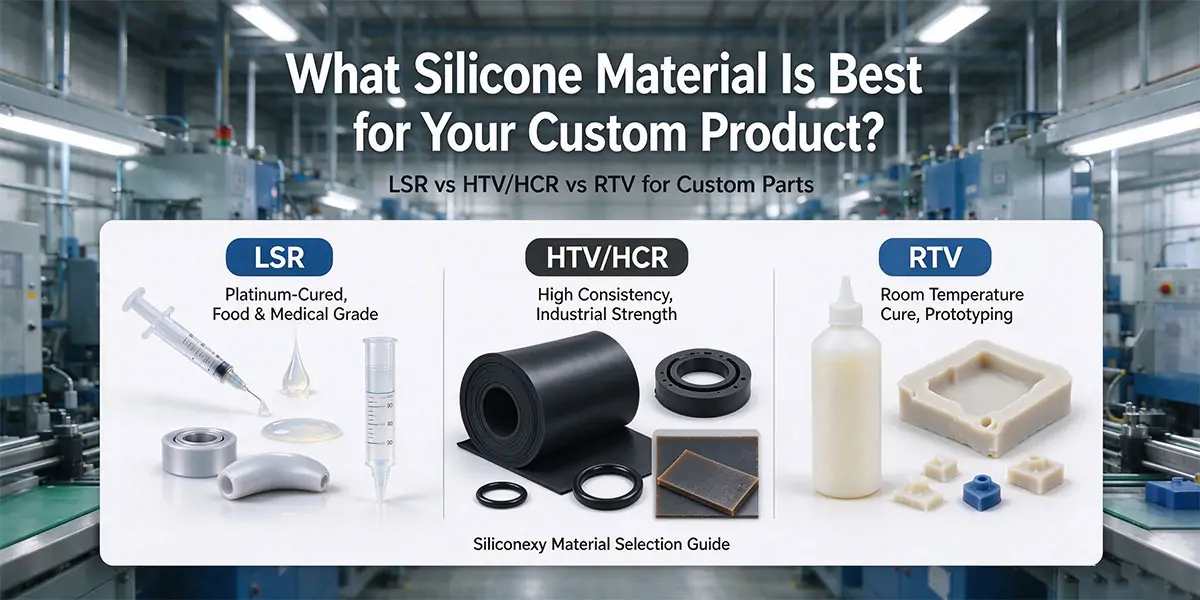
Silicone rubber is not a single material. It comes in three primary forms, each defined by its viscosity, curing mechanism, and manufacturing process. Their physical form, curing systems, and processing requirements determine which applications they are suitable for.
1. Liquid Silicone Rubber (LSR)
Liquid Silicone Rubber (LSR) is a two-component, low-viscosity silicone material typically cured through a platinum-catalyzed addition reaction. Featuring low viscosity, fast high-temperature curing, and zero harmful byproducts, LSR outperforms traditional solid silicone in precision molding, surface finish, and safety.
It is processed using specialized liquid silicone injection molding equipment. In its uncured state, it flows like a liquid and is injected into precision molds, making it ideal for complex geometries and high-volume automated production. LSR cures rapidly and offers exceptional optical transparency, tear resistance, and elongation.
Key characteristics:
- Excellent flowability for filling complex mold cavities
- Suitable for automated lsr injection molding
- Supports detailed geometries and precision components
- Available in different hardness grades and formulations
- Suitable for selected food-contact, medical, and consumer applications when the material meets the required standards
Common applications:
- Baby care components
- Silicone seals and gaskets
- Medical and healthcare components
- Electronic accessories
- Precision-molded consumer products
LSR is often a suitable option for products requiring complex geometries, repeatable production, or high-volume manufacturing. However, the material and injection tooling may involve higher initial investment.
2. High-Consistency Silicone Rubber (HCR/HTV)
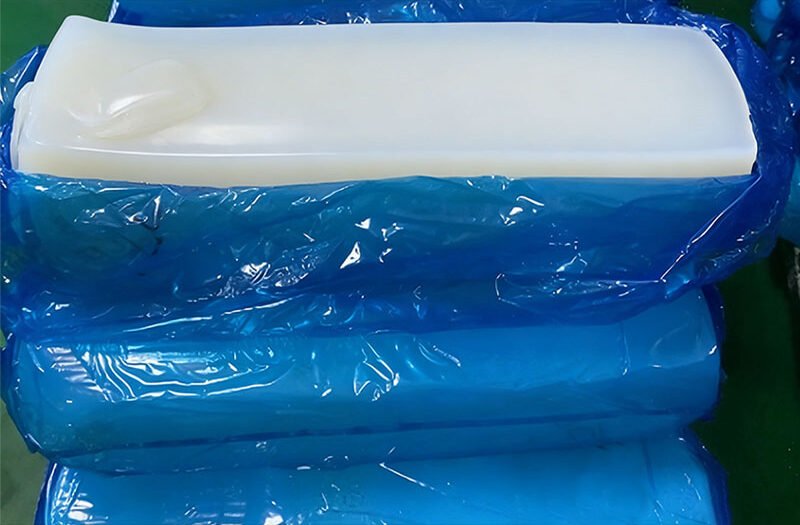
High-Consistency Rubber (HCR), also called High-Temperature Vulcanizing (HTV) silicone, is a solid, gum-like material processed through methods such as compression molding, transfer molding, and extrusion.
HCR is known for its excellent mechanical properties, including high tensile strength and compression set resistance, making it suitable for durable, long-lasting applications. It performs reliably across a wide temperature range, from extreme cold to high heat.
Key characteristics:
- Superior tensile strength and abrasion resistance, resistant to mechanical deformation
- Solid, high-viscosity material before curing
- Suitable for compression molding and extrusion
- Available in a wide range of hardness and mechanical property options
- Supports various product sizes and structures
- Can be formulated for specific requirements such as tear strength, flexibility, and heat resistance
- Cost-efficient for mass production, stable quality with low batch error
Common applications:
- Silicone kitchenware
- Silicone baking mats and molds
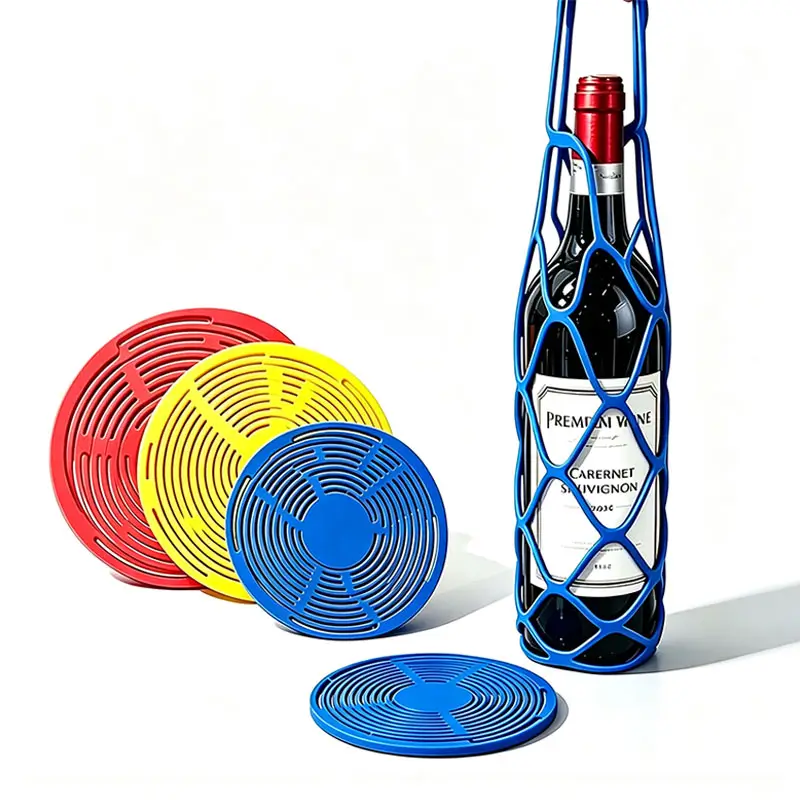
- Silicone placemats and silicone trivets
- Silicone tubing and profiles
- Industrial seals and gaskets
- Household silicone products
HCR is widely used in custom silicone products manufacturing, particularly for compression-molded products and extruded profiles. It can be a practical choice when product geometry, material requirements, tooling investment, and production volume align with these processes.
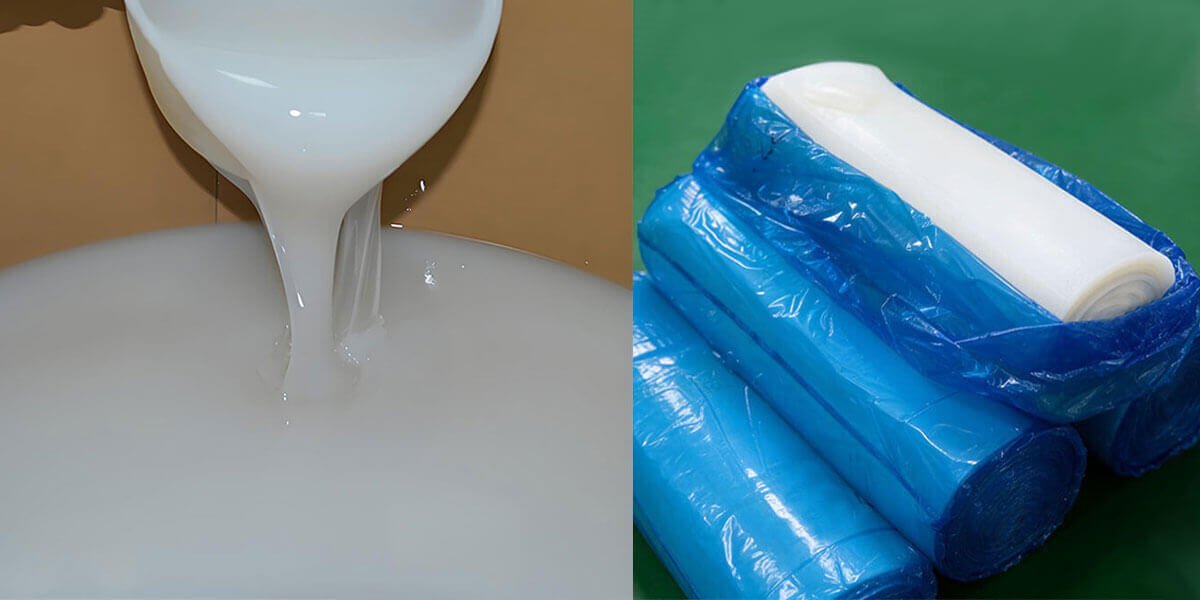
3. Room-Temperature Vulcanizing Silicone (RTV)
Room-Temperature Vulcanizing (RTV) silicone cures at or near room temperature. It is commonly used for sealing, bonding, coating, and mold-making. RTV is best suited for low-volume production or prototyping scenarios where tooling investment must remain minimal. Depending on its formulation, it may be supplied as a one-component or two-component system.
Key characteristics:
- Cures without conventional high-temperature molding
- Available in different viscosities and curing systems
- Useful for casting, sealing, bonding, and encapsulation
- Suitable for certain prototypes and specialized low-volume applications
Common applications:
- Silicone casting molds
- Electronic potting and encapsulation
- Sealants and adhesives
- Prototypes and model-making
- Certain custom casting applications
RTV silicone is not a direct replacement for production-grade LSR or HCR. It is mainly selected for applications where its curing method and processing convenience match the product requirements.
Specialty Silicone Materials
For specialized industrial and commercial custom demands, we provide customized modified silicone materials to meet extreme working conditions:
- Conductive silicone: For custom EMI shielding silicone parts and conductive keypads for electronic devices
- Silicone foam/sponge: For custom shockproof, heat-insulating, and noise-reducing silicone cushion parts
- Flame-retardant silicone: For custom fire-resistant silicone accessories for electrical and new energy equipment
Compare Silicone Materials for Custom Product Development
The following table provides a general comparison of common silicone material families.
| Material Type | Typical Processing | Main Advantages | Common Applications |
|---|---|---|---|
| LSR | Liquid injection molding | Flowability, automation, complex geometries | Precision components, baby products, selected medical parts |
| HCR / HTV | Compression, transfer molding, extrusion | Versatile processing, broad property options | Kitchenware, tubing, seals, household products |
| RTV | Casting, dispensing, bonding, sealing | Room-temperature curing, processing flexibility | Prototypes, molds, sealants, encapsulation |

How to Choose the Right Silicone Material for Your Silicone Product?
Selecting the right silicone material starts with the product’s functional requirements, not simply the material name.
Application and Working Environment
First, identify how and where the product will be used. A material that works well for a silicone baking mat may not be suitable for a precision sealing component.
Hardness and Flexibility
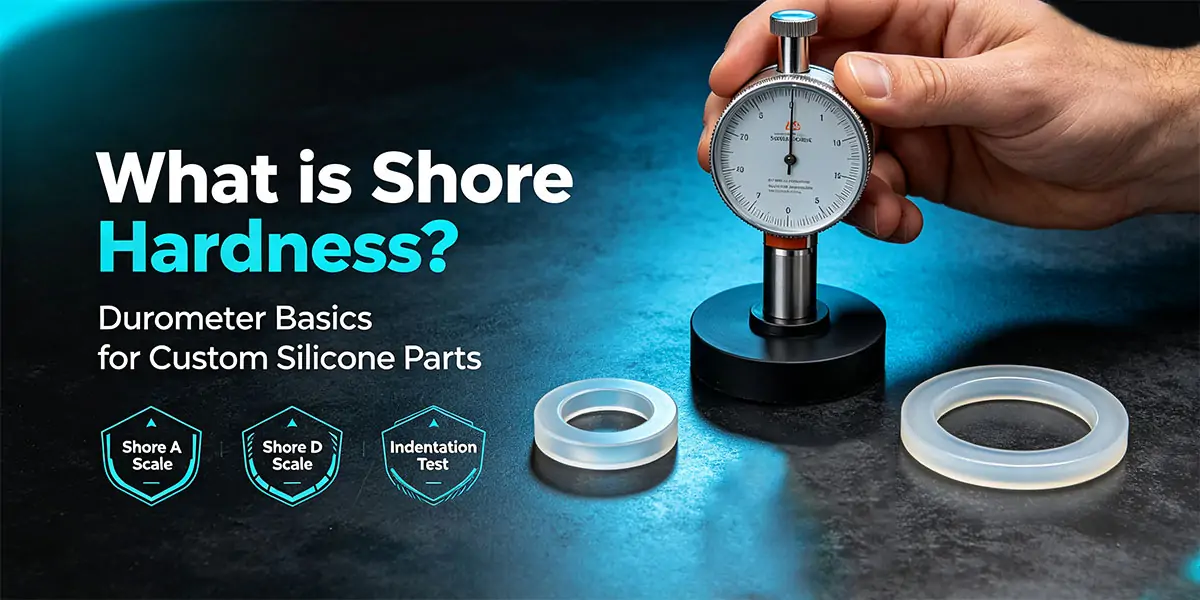
Silicone hardness is commonly measured using the Shore A scale for many elastomeric products. Hardness affects how a product feels, bends, compresses, and interacts with other components.
Consider these examples:
- Softer silicone may be suitable for flexible grips, soft-touch components, and certain cushioning applications.
- Medium-hardness silicone may work well for many kitchenware and household products.
- Firmer silicone may be appropriate for structural components or products requiring greater resistance to deformation.
Hardness alone does not determine product performance. Tear strength, tensile strength, elongation, compression set, and product geometry also influence the final result. When requesting a custom silicone product, provide a target hardness range and the relevant mechanical requirements rather than specifying hardness alone.
Temperature Resistance
Temperature requirements are particularly important for silicone kitchenware, automotive components, and industrial products. Different silicone formulations have different temperature-performance limits. Avoid assuming that all silicone products have the same heat resistance. For products such as silicone baking mats, trivets, or oven accessories, the finished product should be evaluated according to its actual material specification and intended use.
Chemical and Environmental Exposure
If your custom product will contact oils, fuels, cleaning agents, or other chemicals, material compatibility should be assessed early in development. Standard silicone rubber offers useful resistance to many environmental conditions, but it is not equally resistant to every chemical.
Fluorosilicone may be considered when exposure to specific fuels or oils is a key requirement. The final choice should be based on compatibility data for the actual chemical, temperature, and exposure duration.
Product Design and Manufacturing Process
Material selection and manufacturing process are closely connected. A product’s wall thickness, undercuts, dimensions, surface finish, and required tolerances can affect the recommended process and material.
For example:
- Compression molding: Commonly used with HCR for molded silicone kitchenware, household products, and silicone industrial components.
- LSR injection molding: Suitable for selected complex or precision components and production programs that benefit from automated processing.
- Extrusion molding: Used for silicone tubes, strips, profiles, and continuous cross-sectional shapes.
- Casting with RTV: Useful for certain prototypes, flexible molds, and low-volume casting applications.
The most suitable option is the one that balances performance, manufacturability, tooling requirements, and production economics.

Matching Material to Your Product
The right custom silicone material depends on where your product will live and how it will be used.
- Food-contact products: demand food-grade silicone that passes rigorous migration and sensory testing. For these applications, LSR is the preferred choice because it is inherently food-safe and consistently passes both FDA and LFGB standards. Such as silicone trivets, silicone baking mats, baby bottle nipples, silicone ice cube trays, etc.
- Products requiring high durability: benefit from HCR’s superior tensile strength and compression set performance. Its resistance to extreme temperatures makes it suitable for harsh environments. Such as industrial gaskets, automotive seals, heavy-duty cushioning.
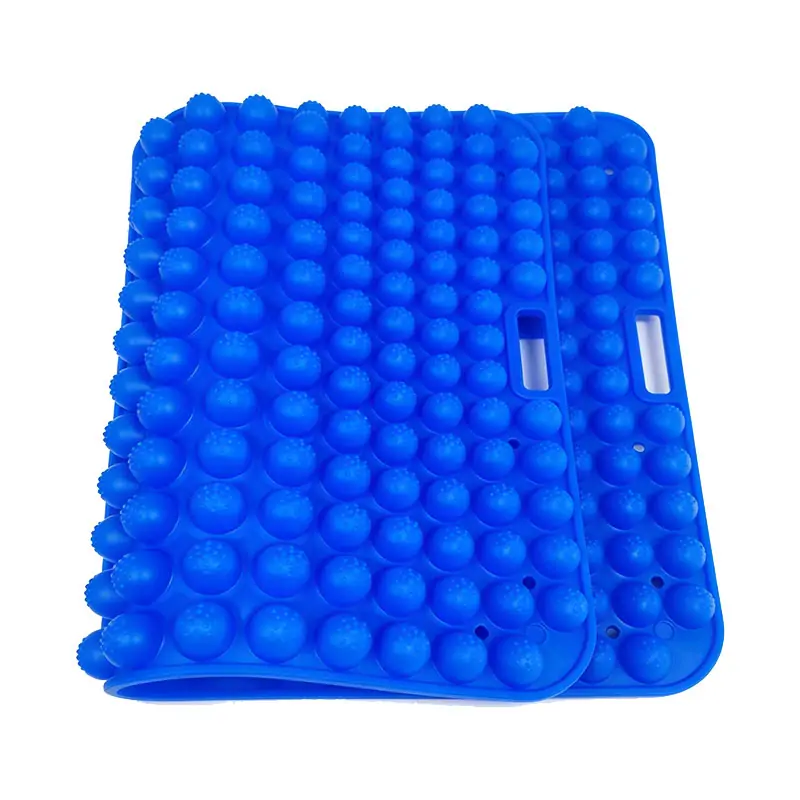
- Cushioning and comfort products: require softer durometers in the 20–40 Shore A range, where the material feels gel-like yet retains structural integrity. LSR excels here because its adjustable hardness allows us to fine-tune the tactile feel without compromising durability. Such as silicone seat cushions, insoles, grip pads.
- Prototyping and small-batch runs: RTV silicone is the most cost-effective path, as it eliminates the need for expensive steel tooling.
To simplify your decision-making, we summarize a practical selection standard based on years of custom silicone manufacturing experience:
- Hygiene & medical scenarios: Choose platinum-cured LSR for medical and food grade custom silicone products
- Industrial heavy-duty & bulk orders: Choose HTV/HCR for cost-effective and durable industrial custom parts
- Prototypes & small-batch DIY orders: Choose RTV silicone for flexible and fast customization
- Special functions (conductive/insulation/flame retardant): Choose modified specialty silicone materials
Certifications That Matter for Food-Contact Silicone
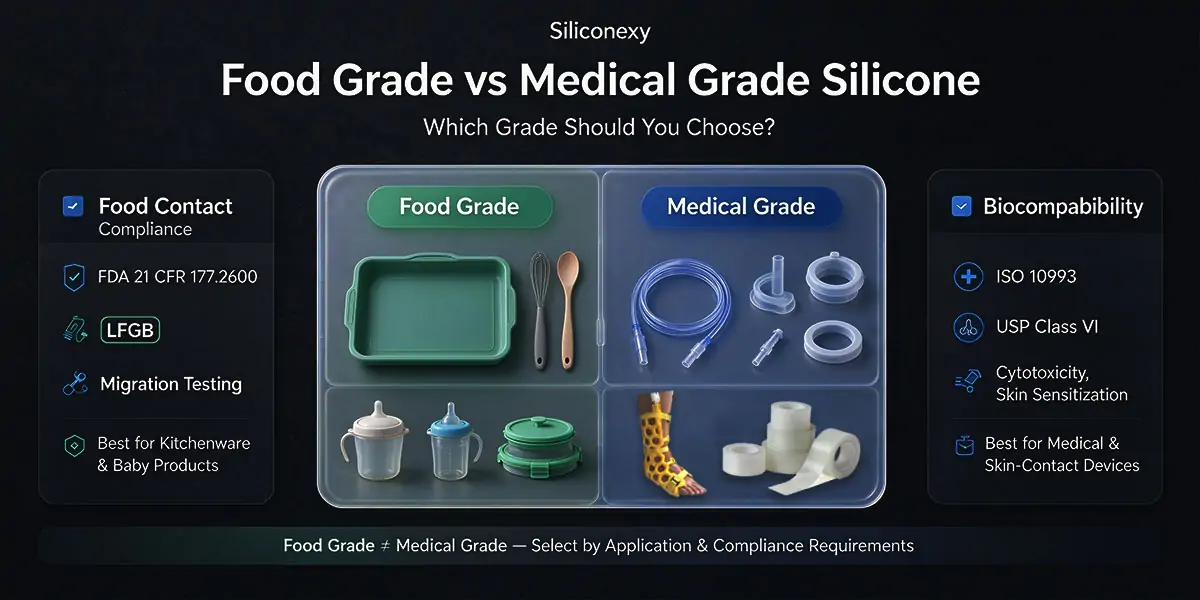
If your custom silicone product touches food, certifications are non-negotiable. The two most widely recognized standards are:
- FDA 21 CFR 177.2600: the U.S. standard for rubber articles intended for repeated use in contact with food. It primarily tests for water and n-hexane extractables.
- LFGB (German Food and Feed Code): the European standard, which is stricter than FDA. LFGB testing includes overall migration limits, volatile organic matter testing, heavy metal (lead and cadmium) content, and a sensory odor-and-taste test. LFGB-certified silicone is generally regarded as the safest grade for food contact.
Consider Production Volume and Total Manufacturing Cost
Material selection also affects tooling, production efficiency, and overall project costs. For custom silicone products, buyers should consider more than the price per kilogram of raw material.
Important cost factors include:
- Silicone material grade and formulation
- Mold design and tooling investment
- Manufacturing process
- Product dimensions and material consumption
- Cycle time and production efficiency
- Trimming, finishing, and post-curing requirements
- Quality inspection and compliance documentation
- Packaging and order quantity
For example, LSR injection molding can support automation and high-volume production, but it requires specialized equipment and process-specific tooling. HCR compression molding may offer a different balance of tooling cost, production flexibility, and part complexity.
There is no universally cheapest silicone material. The most cost-effective solution depends on the product design, performance requirements, order volume, and expected product lifecycle.
Conclusion:
There is no single best silicone material for every custom product. The best silicone material depends on your silicone product requirements.
LSR is often suitable for precision components and automated injection molding. HCR is widely used for compression-molded and extruded silicone products. RTV serves specialized casting, sealing, and bonding applications, while fluorosilicone can be considered for selected fuel- and oil-exposed environments.
The key is to match the material to the product’s application, performance requirements, manufacturing process, compliance needs, and production volume.
If you are developing a custom silicone product, Siliconexy (Xinyin) can help evaluate your specifications and discuss suitable OEM/ODM manufacturing options.
Contact Siliconexy to discuss your custom silicone product project and find a material solution that fits your requirements.