Silicone Orthopedic Cast vs. Traditional Plaster Cast: Posted by Siliconexy | Silicone OEM & ODM Manufacturer
Looking for an alternative approach to silicone orthopedic cast design? Discover how a hollow silicone lattice structure and a fill-and-cure concept may create new opportunities for custom orthopedic support products.
Fracture immobilization has long relied on plaster of Paris and fiberglass casting as the standard of care, but medical device brands, orthopedic product designers, and contract manufacturing partners are increasingly evaluating silicone-based platforms as a modern alternative.
For orthopedic manufacturers and sourcing teams, the choice between silicone-based casting systems and conventional plaster of Paris (POP) is no longer simply a materials decision. It is a product positioning decision.
The global orthopedic splints and casts market was valued at approximately US$2.4 billion in 2025 and is projected to reach US$3.4 billion by 2032, with the market shifting decisively from generic POP casts toward lightweight, breathable, and patient-conforming designs.
Why Explore New Orthopedic Cast Designs?
Fracture immobilization has long relied on plaster of Paris and fiberglass casting as the standard of care. But compared with conventional casting materials, a custom silicone orthopedic cast can offer distinct advantages in breathability, lightweight construction, skin contact comfort, and product customization.
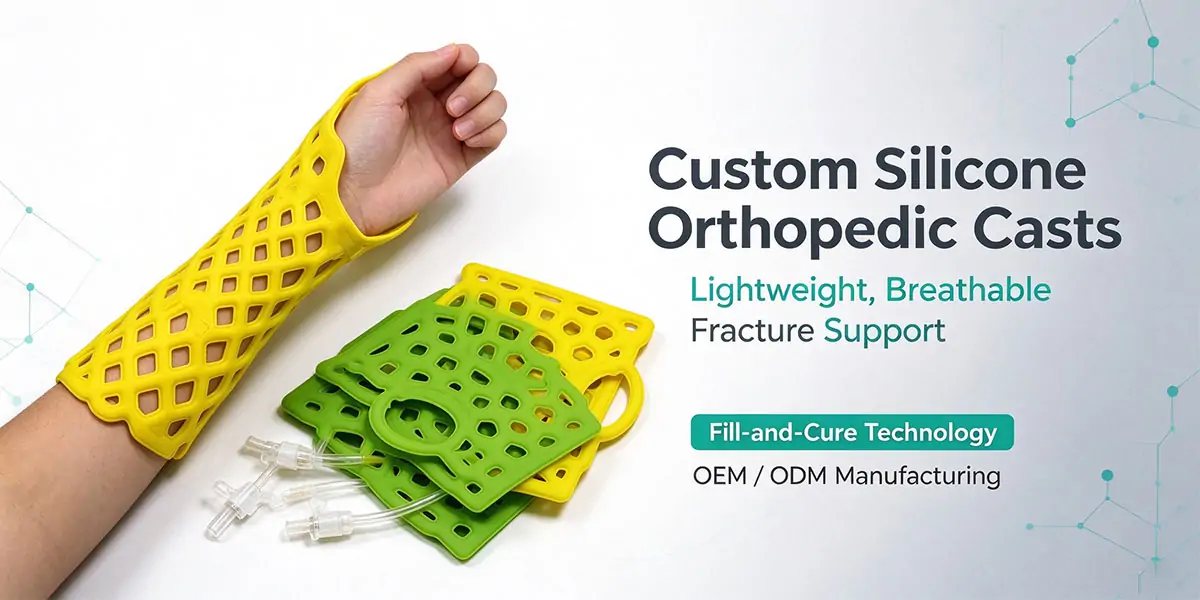
At Siliconexy, we develop custom silicone products for international B2B customers. Our customized silicone orthopedic cast concept combines a hollow silicone lattice shell with a compatible curing material designed to harden and form a more rigid structure.
This approach offers a different direction for orthopedic support product development. Its practical advantages must be established through engineering tests and appropriate product validation.
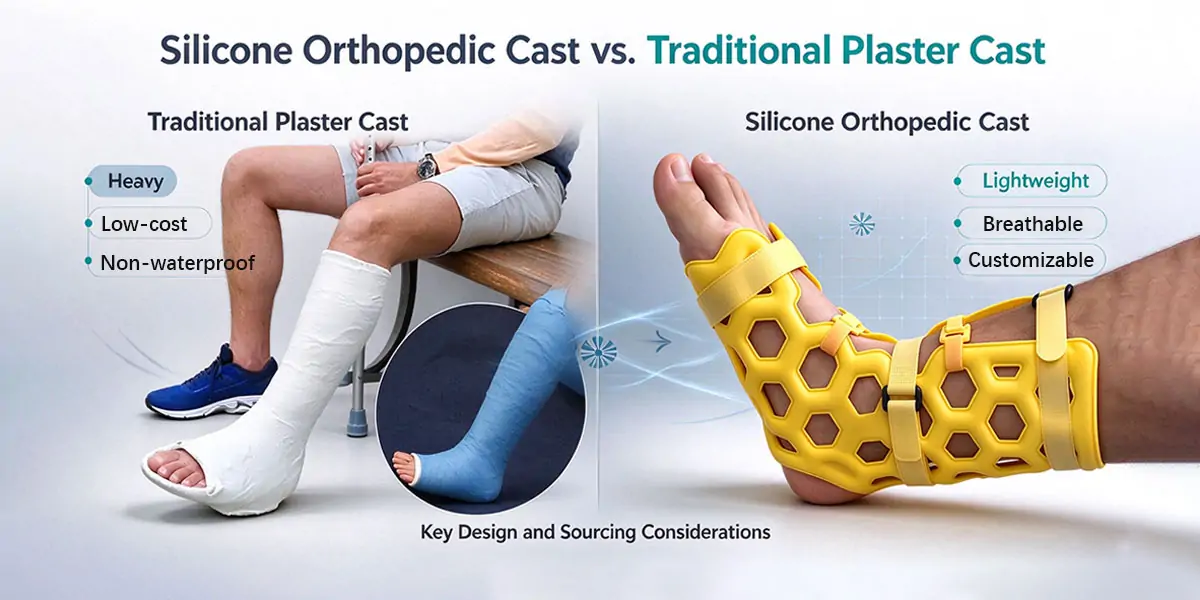
Silicone Orthopedic Cast vs. Traditional Plaster Cast
Although both concepts aim to provide structural support, their materials and construction methods are different.
| Comparison factor | Traditional plaster cast | Fill-and-cure silicone cast concept |
|---|---|---|
| Main structure | Plaster-based rigid casting material | Hollow silicone shell combined with a compatible curable filling material |
| Design approach | Commonly shaped around the affected body area during application | Developed through custom silicone molding and structural design |
| Ventilation | Depends on the cast design and application | Open lattice structure creates ventilation openings |
| Weight | Depends on the size and construction | Depends on the silicone shell, filling material, and final dimensions |
| Customization | Depends on the casting method and product format | Potential customization of geometry, dimensions, and lattice layout |
| Manufacturing considerations | Plaster formulation, application process, and setting behavior | Silicone molding, filling compatibility, curing behavior, and final mechanical performance |
Which option is better? There is no universal answer. The right choice depends on the intended application, required immobilization performance, user needs, manufacturing feasibility, and applicable medical device requirements.
For buyers researching a silicone orthopedic cast vs. traditional plaster cast, the most useful approach is to compare validated product specifications rather than relying on material descriptions alone.
1. Material and Structural Differences
Traditional Plaster Casts & Fiberglass Casts
Traditional plaster casts are low-cost, widely available, and familiar to clinicians, but they have well-documented limitations. Plaster casts are non-waterproof, brittle, and technically challenging to apply correctly; moisture trapped beneath a POP cast creates conditions for maceration and odor that no amount of padding fully resolves.
Plaster is heavy when wet, takes time to set, and creates a largely occlusive environment around the limb. Sweat, moisture, and heat can become trapped under the cast, increasing the risk of skin irritation, maceration, and discomfort during daily wear.
Although fiberglass-reinforced plaster is stronger, it generates the highest internal pressure of any plaster material, which directly causes pain in patients during the acute swelling phase. And fiberglass casts are lighter than plaster and offer higher structural rigidity, but they still enclose the limb in a relatively non-breathable shell, and their rigid pre-formed nature can limit anatomical customization.
Silicone Orthopedic Cast
Silicone rubber’s force-absorption properties and high flexibility make it more effective for short-term immobilization and for patients who need to remain mobile during recovery.
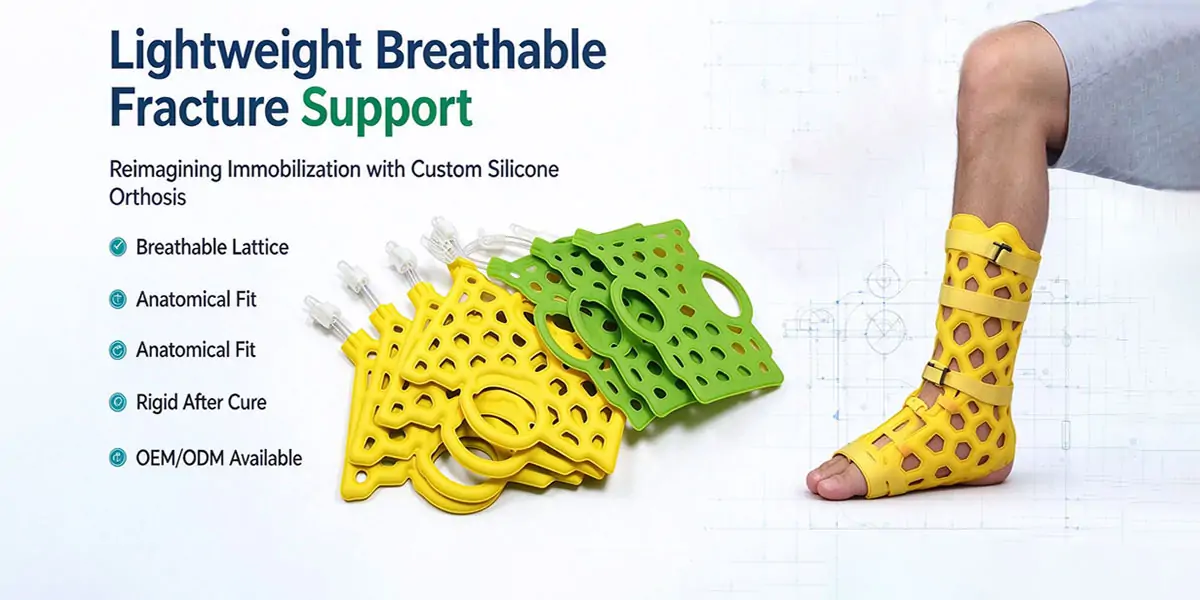
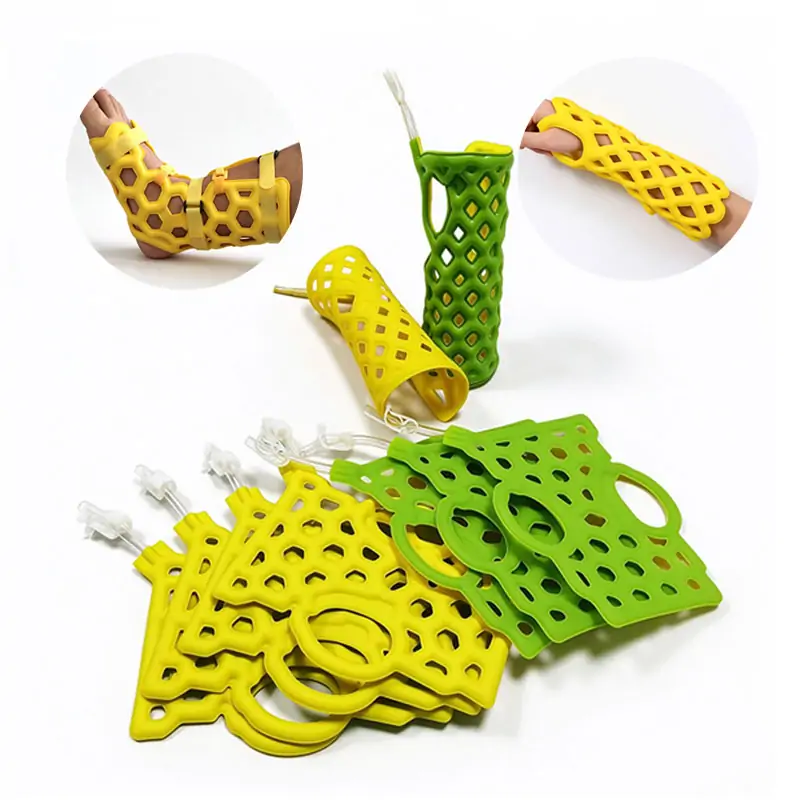
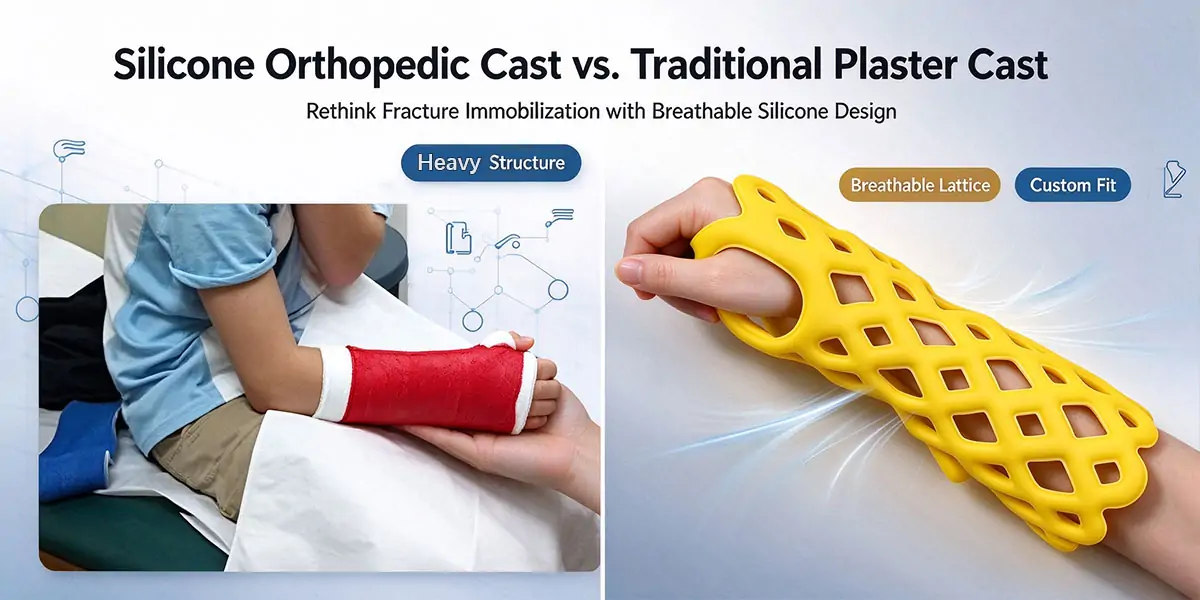
A silicone orthopedic cast takes a different approach. Instead of a fully rigid outer shell, it is typically built around a soft medical-grade silicone lattice or porous sleeve that conforms to the limb before being reinforced through a fill-and-cure mechanism.
The silicone layer remains in direct contact with the skin, while internal support structures provide dimensional stability after curing. This design enables lightweight breathable fracture support with larger ventilation openings, direct skin and wound visualization, and a more anatomically contoured fit than many standard pre-formed braces.
2. Weight and Daily Usability
Plaster casts are often bulky and heavy, especially when applied to the lower limb. Fiberglass is lighter, but the rigid shell can still create discomfort during movement, sleep, and hygiene.
A custom silicone fracture brace can reduce overall weight through a thin-wall, hollow-lattice construction. Because the silicone sleeve is soft before curing, it can be placed more comfortably around the limb, while the final cured assembly retains structural support. This combination makes silicone systems attractive for lightweight fracture support intended for longer wear time.
3. Stability and Immobilization
Plaster casts provide reliable immobilization when properly applied, but their final mechanical performance depends heavily on clinician technique, layer thickness, moisture control, and post-application drying time. Fiberglass casts offer high rigidity and are often used where strong structural support is required.
Silicone-based systems can deliver comparable immobilization for suitable indications through a hybrid mechanism: soft silicone sleeve positioning + curable fill material + post-cure structural rigidity.
The silicone lattice acts as a conformable interface, while the cured internal fill creates a stable support structure. This makes the platform particularly interesting for custom orthopedic cast alternatives and anatomically specific designs.
4. Breathability and Skin Protection
Breathability is one of the most frequently cited patient concerns with traditional casting. Plaster and fiberglass both create a barrier that reduces air circulation, and moisture retention can lead to itching, odor, skin irritation, and in some cases maceration.
A hollow-lattice silicone orthopedic cast is inherently more open. The porous structure allows air exchange, reduces heat and moisture buildup, and gives care teams better visibility into the skin and wound area. For this reason, silicone platforms are often explored for waterproof custom orthopedic cast concepts, pediatric orthopedic cast development, sports injury bracing, and post-operative monitoring applications.
5. Customization and Fit
Custom silicone casts are not an off-the-shelf product category. They are manufactured from patient-specific measurements. Silicone casting compounds such as medical-grade RTV silicones are biocompatible under ISO 10993 standards and can be formulated to cure at room temperature without generating the exothermic heat associated with plaster setting. For patients with atypical limb contours, post-surgical swelling, or scarred residual limbs, a precisely fitted silicone cast reduces pressure-point risk in ways a stock plaster roll cannot.
Sourcing and Manufacturing Considerations
Plaster remains the cost-effective baseline for full-body immobilization and high-volume, low-complexity applications, and it is unlikely to disappear from fracture care. But the casting segment’s growth trajectory is clearly moving toward materials that address what POP and fiberglass structurally cannot: breathability, skin health, and individualized fit.
Material selection and fill-system compatibility
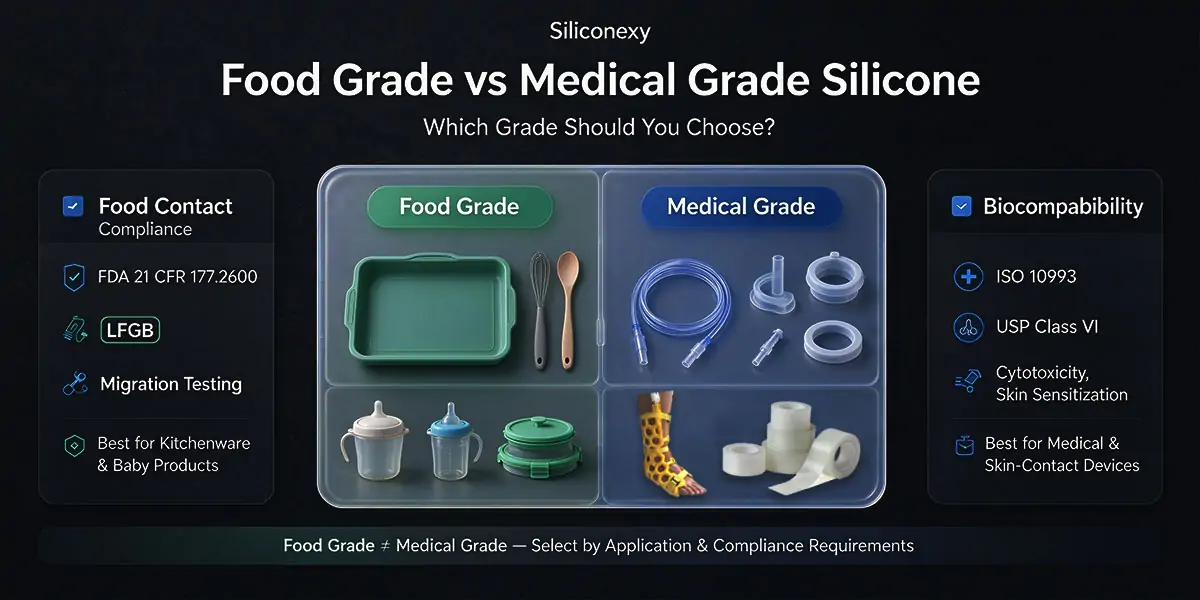
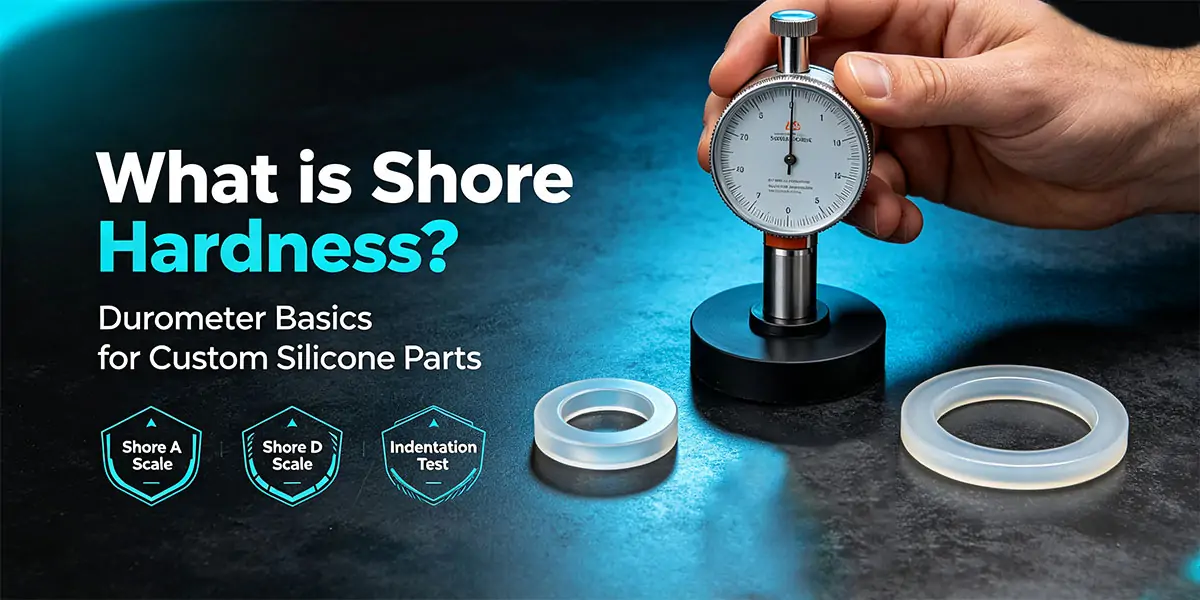
Plaster is a single-material system with a long clinical history. Silicone orthopedic casts are hybrid systems, so the choice of silicone grade and fill material is critical. The base silicone should be selected for biocompatibility, skin contact safety, tear resistance, appropriate Shore hardness, and surface finish. The fill material must be compatible with the silicone framework and meet project-specific requirements for setting time, mechanical strength, temperature profile, and regulatory compliance.
This multi-material capability is both a strength and a design consideration. Silicone platforms can be engineered to support different fill formulas rather than being locked into a single resin system, giving product developers greater flexibility. However, it also means that material qualification, compatibility testing, and process validation become more important during product development.
For companies evaluating OEM orthopedic immobilization support or moving from conventional casting to silicone-enabled products, the decision involves more than material substitution.
Design for anatomy and indication
Silicone orthopedic systems are highly configurable. Design teams can adjust lattice geometry, aperture size, wall thickness, filling port location, edge contours, reinforcement zones, and material hardness for specific anatomies. This is a significant advantage over standard plaster and generic pre-formed braces, but it also requires more upfront engineering to ensure the right balance between flexibility, conformability, and final rigidity.
Key design directions include:
- Upper extremity immobilization: wrist fracture brace, forearm immobilizer, elbow injury support, hand and finger fixation.
- Lower extremity immobilization: ankle fracture cast, foot orthotic support, lower-leg stabilization.
- Specialty applications: pediatric orthopedic supports, sports injury splints, post-operative bracing, and custom anatomical orthoses.
Manufacturing complexity and scalability
Plaster casting is clinician-dependent and requires little upfront tooling, but it is labor-intensive and difficult to standardize across high-volume product lines. Fiberglass casting is faster but still application-dependent.
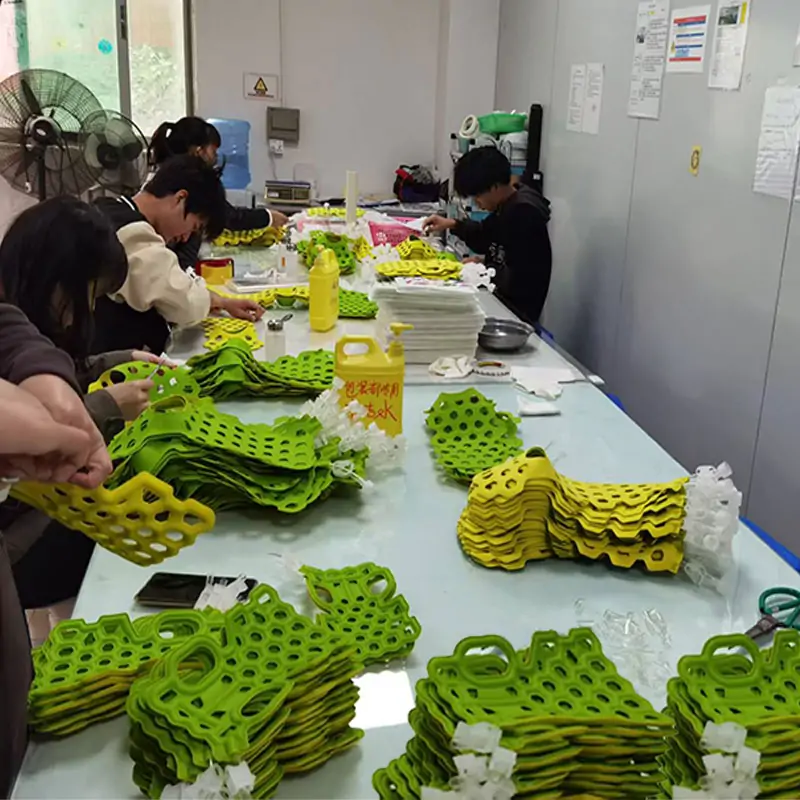
Silicone orthopedic casts are more suitable for industrialized manufacturing. They require silicone mold tooling, material selection, prototype sampling, structural validation, and controlled production processes. For medical device brands, this means a longer development lead time but greater consistency, repeatability, and customization capability.
When sourcing a custom medical silicone orthopedic cast manufacturer, brands should evaluate the supplier’s ability to support:
- Mold fabrication
- Silicone molding
- Material compatibility assessment
- Quality validation
- Scalable volume production
What Makes a Fill-and-Cure Silicone Orthopedic Cast Different?
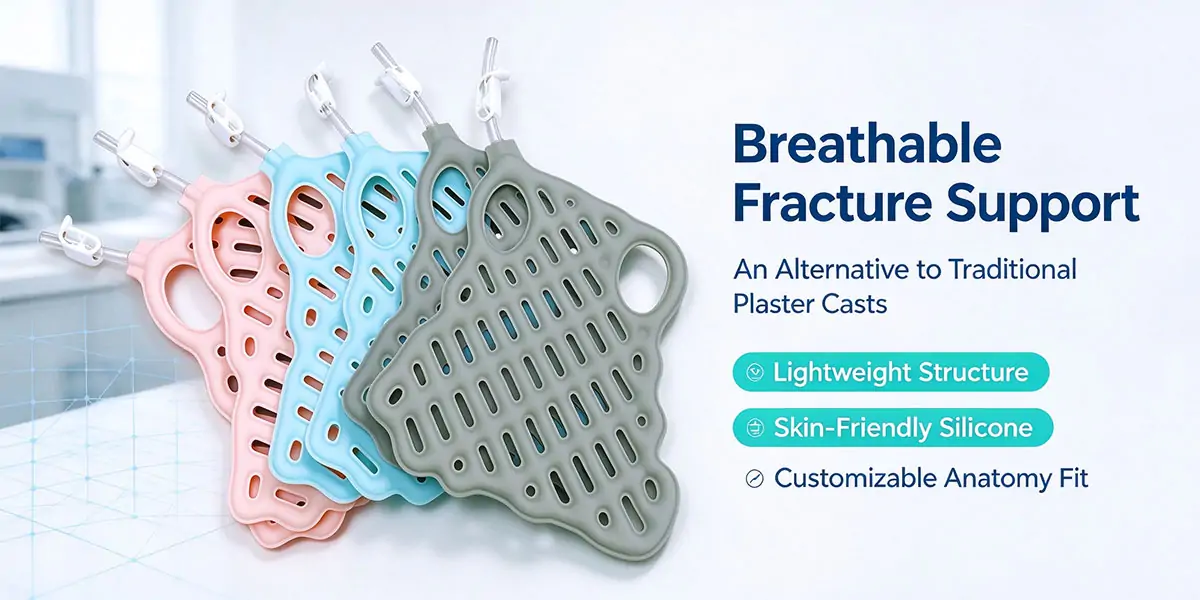
The key feature of Siliconexy’s product concept is its combination of a hollow silicone structure and a separate curing material.
1. Hollow lattice design
Instead of using a fully enclosed outer shell, the design incorporates a network of openings. This structure is intended to allow more airflow through the covered area than a continuous, closed surface.
The actual ventilation performance depends on the opening geometry, coverage area, fit, and other design factors. Testing is needed to determine how the finished product performs.
2. Flexible shell before curing
The silicone component is designed to provide the initial shape and structure before the filling material cures. Silicone molding also offers opportunities to develop customized shapes and complex geometries.
The required flexibility, wall thickness, and structural integrity must be specified for each project.
3. Rigidity after curing
A compatible filling material is introduced into the hollow structure and allowed to cure. The resulting assembly is intended to provide a more rigid form.
The filling material is not restricted to a single resin type. Different curing systems may be considered, subject to material compatibility, heat generation, curing conditions, and final performance requirements.
This is an important distinction for product developers: the performance of the finished orthopedic support depends on the complete silicone-and-filling system, not on the silicone shell alone.
Key Factors Buyers Should Evaluate
When sourcing a custom silicone orthopedic cast, buyers should assess several technical and commercial factors before moving toward mass production.
Weight and material efficiency
A hollow structure creates opportunities to manage material use and product geometry. However, the final product weight depends on its dimensions, silicone wall thickness, filling compound, and required rigidity.
Request actual prototype measurements before making weight comparisons with traditional plaster casts.
Ventilation and structural design
A lattice structure may provide more open area than a continuous shell, but the opening pattern must be balanced against structural requirements.
During product development, consider:
- Lattice opening size and distribution
- Shell wall thickness
- Fit and coverage area
- Structural strength after curing
- Edge finishing and fastening design
These parameters should be evaluated together rather than optimized individually.
Curing process and material compatibility
The curing system is one of the most important considerations for this product concept.
Before selecting a filling compound, evaluate curing time, heat generation, dimensional changes, residual substances, adhesion or retention within the shell, and the mechanical properties of the cured structure.
Not every resin or polymer system is automatically compatible with a silicone shell. Material selection should follow technical evaluation and testing.
Safety and intended use
A product designed for orthopedic immobilization requires a clear intended use and appropriate safety evaluation.
Depending on the final design and target market, relevant considerations may include biocompatibility, skin-contact duration, mechanical performance, application and removal procedures, and regulatory documentation.
The U.S. Food and Drug Administration (FDA) explains that biocompatibility assessment considers the finished medical device, including its materials, manufacturing processes, and relevant interactions between components. See the FDA’s Basics of Biocompatibility.
Medical-grade silicone alone does not establish the safety or clinical suitability of the complete assembled product.
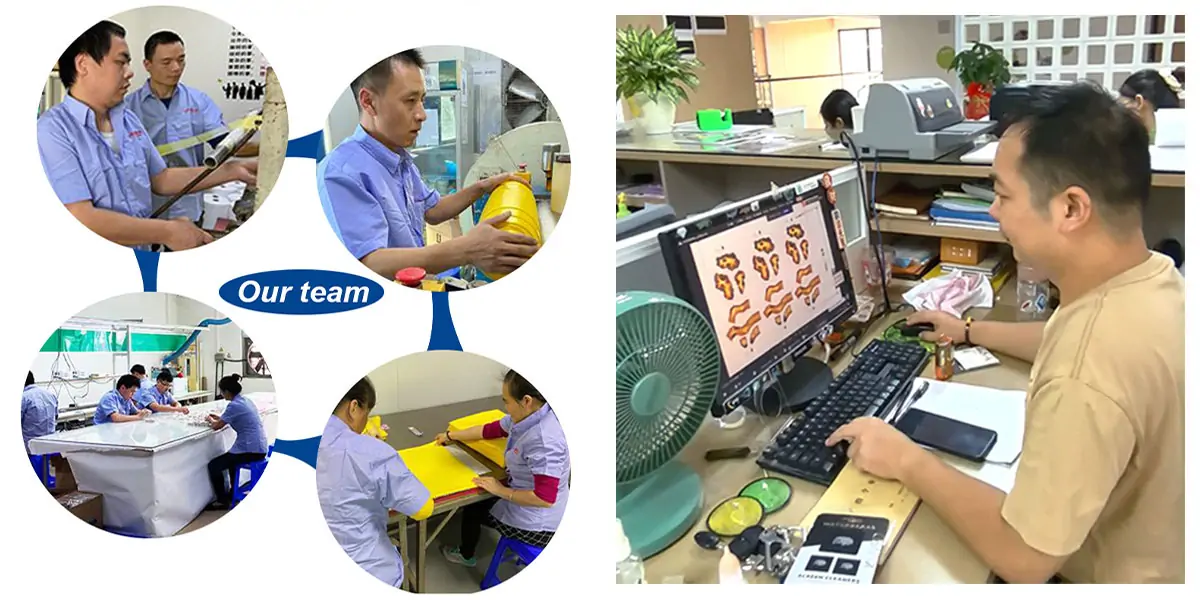
Custom OEM/ODM Manufacturing for Orthopedic Support Products
For medical product brands, importers, distributors, and product development companies, a new orthopedic support concept may require a manufacturing partner capable of supporting both design development and production planning.
Siliconexy (Xinyin) provides custom silicone manufacturing and OEM/ODM services. Depending on the project requirements and technical feasibility, a development program may include the following stages.
- Step 1: Design review. Share your drawings, CAD files, reference samples, dimensions, and intended product requirements for an initial feasibility review.
- Step 2: Structural and material evaluation. Review the proposed silicone shell, lattice geometry, wall thickness, filling system, and manufacturing considerations.
- Step 3: Prototype and mold development. Develop prototypes and molds based on the agreed specifications. Samples should be evaluated against defined acceptance criteria before production approval.
- Step 4: Performance verification. Assess relevant mechanical, dimensional, curing, and safety requirements. Testing must be appropriate for the product’s intended use.
- Step 5: Production planning and quality control. Once the design and validation requirements are established, manufacturing specifications and quality inspection criteria can be defined for production.
Learn more about Siliconexy’s OEM/ODM silicone product customization services.
Why Siliconexy for Silicone Orthopedic Cast Development?
Siliconexy specializes in medical-grade silicone products OEM and ODM manufacturing, supporting customers from product concept and engineering evaluation through prototyping and mass production. For brands developing silicone orthopedic brace for fracture immobilization, custom orthopedic cast alternatives, or OEM orthopedic immobilization support, the company’s fill-and-cure hollow-lattice platform offers a flexible engineering foundation.
Key differentiators include:
- medical-grade silicone material customization
- soft pre-cure fitting and rigid post-cure support
- breathable hollow-lattice structures
- lightweight thin-wall construction
- anatomically customizable shape and lattice configuration
- multi-material fill-system compatibility
- prototype-to-volume manufacturing support
If you are evaluating silicone orthopedic cast development for your next product program, you can share target anatomy, performance requirements, design expectations, volume goals, and certification needs for technical review.
Start Your Custom Orthopedic Support Project
Choosing between a traditional plaster cast and a new silicone-based design requires careful consideration of the intended application, product specifications, safety, and validated performance.
For businesses exploring custom silicone orthopedic casts, the fill-and-cure concept offers a different structural approach that can be evaluated through product development and testing.
If you are a medical product brand, importer, distributor, or product developer, contact Siliconexy to discuss your drawings, design requirements, and OEM/ODM manufacturing needs.
Start a Conversation with Siliconexy (Xinyin)
Share your product concept to discuss design feasibility, customization options, and the next steps for development.