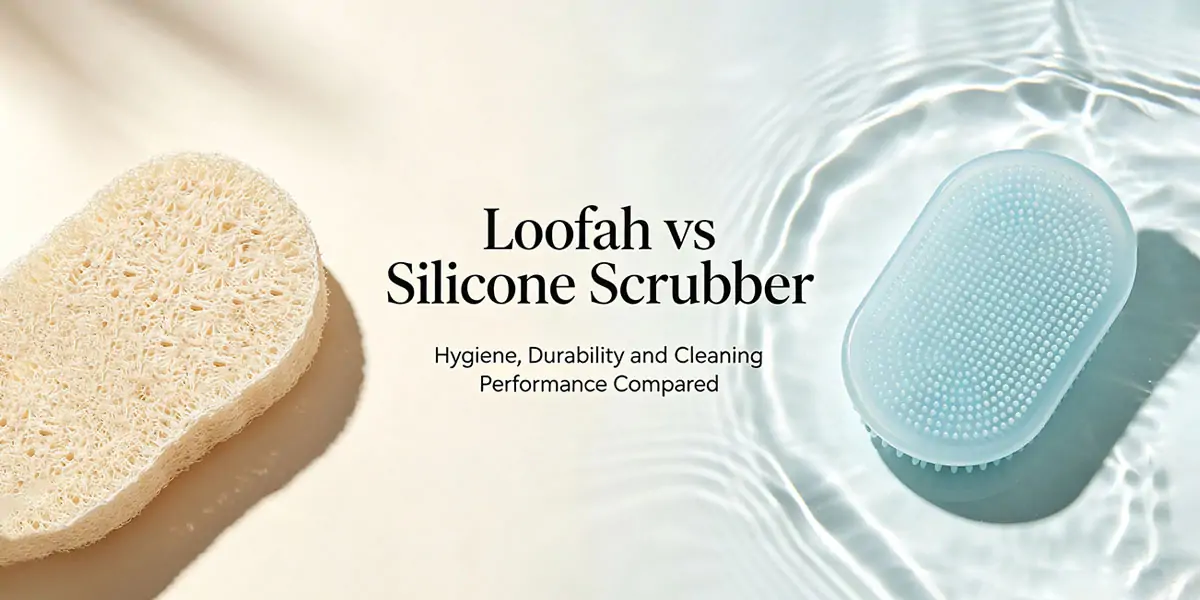
Silicone Scrubber vs Loofah: Which One Is Right for Your Shower Routine?
When it comes to shower accessories, few debates are as common as silicone scrubber vs loofah. Both promise cleaner, smoother skin, but they couldn’t be more different in how they deliver.
The natural loofah has been a bathroom staple for generations. But in recent years, silicone body scrubbers have emerged as a modern alternative, promising better hygiene, longer life, and gentler exfoliation. So Silicone Scrubber vs loofah: which one is better for body care? Which one should you choose?
The answer depends on what you value most: hygiene and durability, or lather and that traditional scrubbing feel. Let’s break down the differences.
What Is a Silicone Scrubber?
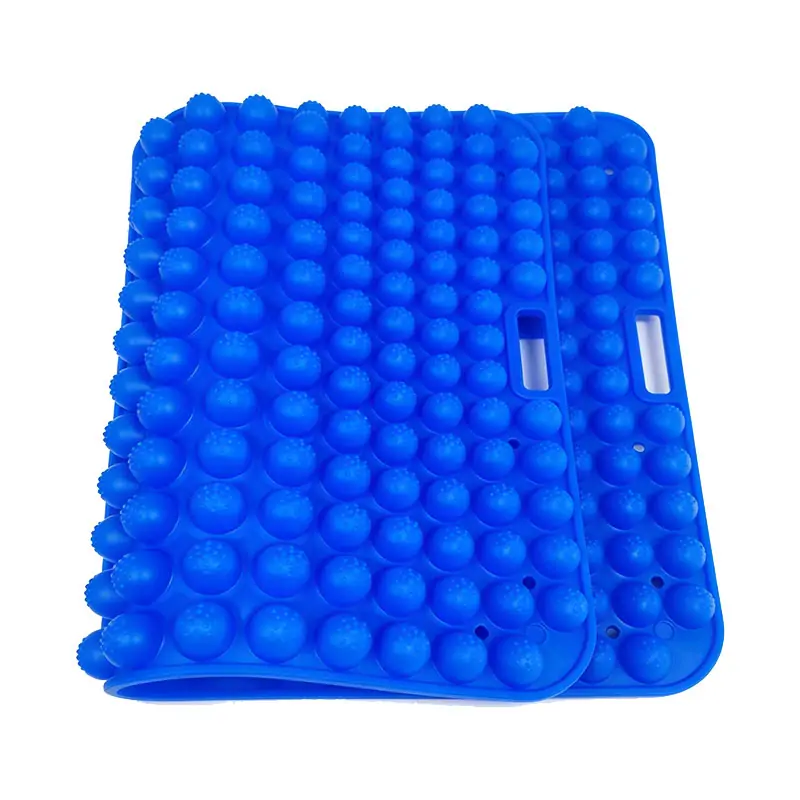
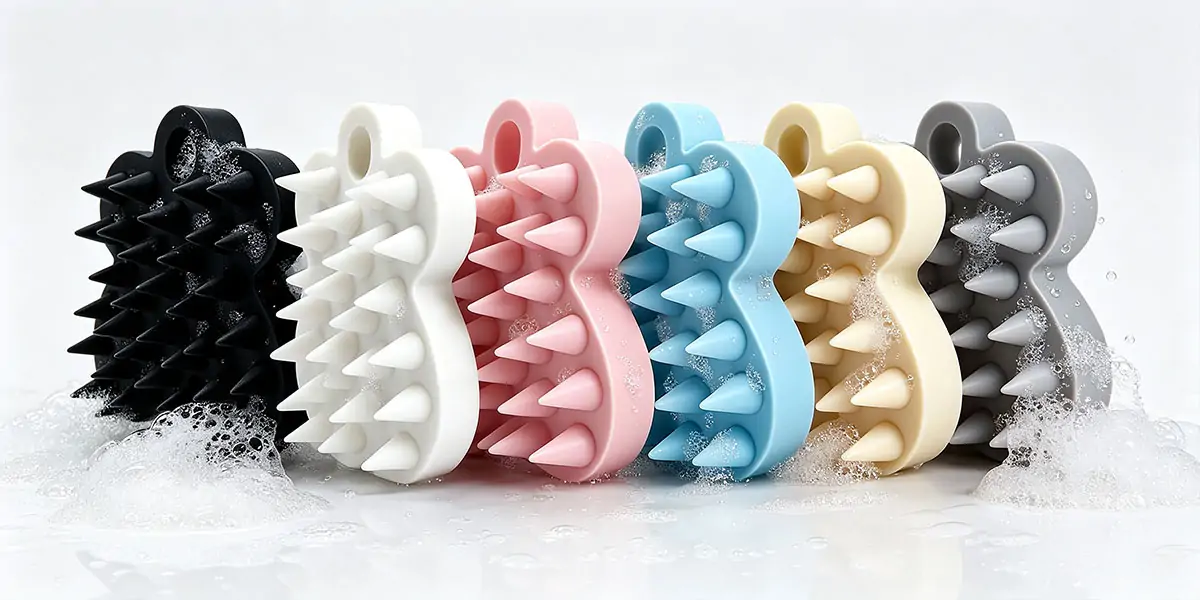
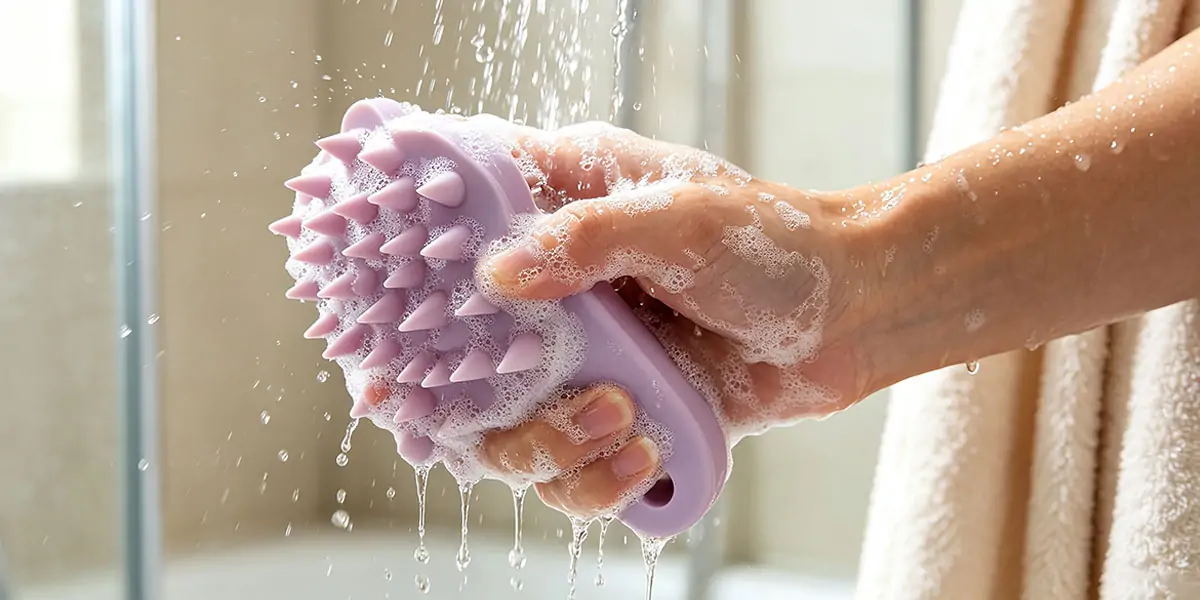
A silicone scrubber is a reusable, flexible, multi-functional personal care tool made of food-grade or medical-grade silicone, typically featuring soft, flexible bristles, raised or textured surfaces.
Unlike seaweed brushes, silicone scrubbers are non-porous and therefore do not absorb moisture, soap, or bacteria. They can be used for body exfoliation and kitchen cleaning.
Silicone scrubbers are often marketed as a more hygienic alternative to seaweed brushes, offering a longer lifespan, faster drying, and easier cleaning. They virtually solve many of the hygiene and durability issues associated with natural fiber cleaning tools.
Many products are BPA-free and dishwasher safe, and some also contain antibacterial silver or zinc ions for added protection.
Key Advantages of Silicone Scrubbers:
- Mold and bacteria resistant: Silicone is a non-porous material that does not absorb water, dirt, or residues. Water and soap foam slide off the surface quickly, leaving no damp environment for bacterial growth.
- Durable & Eco-friendly: Silicone is a tough, long-lasting material that can withstand regular use and repeated washing. Unlike loofahs, which can break down or become frayed over time, silicone scrubbers can last for months or even years with proper care. One reusable silicone scrubber replaces dozens of disposable natural loofahs, reducing daily waste and long-term household consumption costs.
- High-temperature sterilizable: Premium silicone scrubbers feature a temperature resistance range of -40°C to 230°C, supporting high-temperature boiling, dishwasher cleaning, and steam sterilization for thorough deep disinfection.
- Gentle on Skin: The soft, flexible bristles of a silicone scrubber are gentle enough for all skin types, including sensitive skin. They won’t scratch or irritate the skin, making them a great choice for people who want to exfoliate without causing damage.
- Easy to Clean: Silicone scrubbers are easy to clean and maintain. Simply rinse them with water and soap after each use, and hang them up to dry. They can also be placed in the dishwasher for a deeper clean.
Minor Disadvantages of Silicone Scrubbers:
- Slightly higher one-time purchase cost than cheap natural loofahs.
- Produces less natural foam than loofahs when using low-concentration mild cleansers.
Multi-scenario application:
It works perfectly for shower body exfoliation, facial cleansing, dish scrubbing, fruit and vegetable cleaning, meeting diverse household cleaning needs.
It is designed to be used with: Body wash, shower gel, soap, cleansing products.
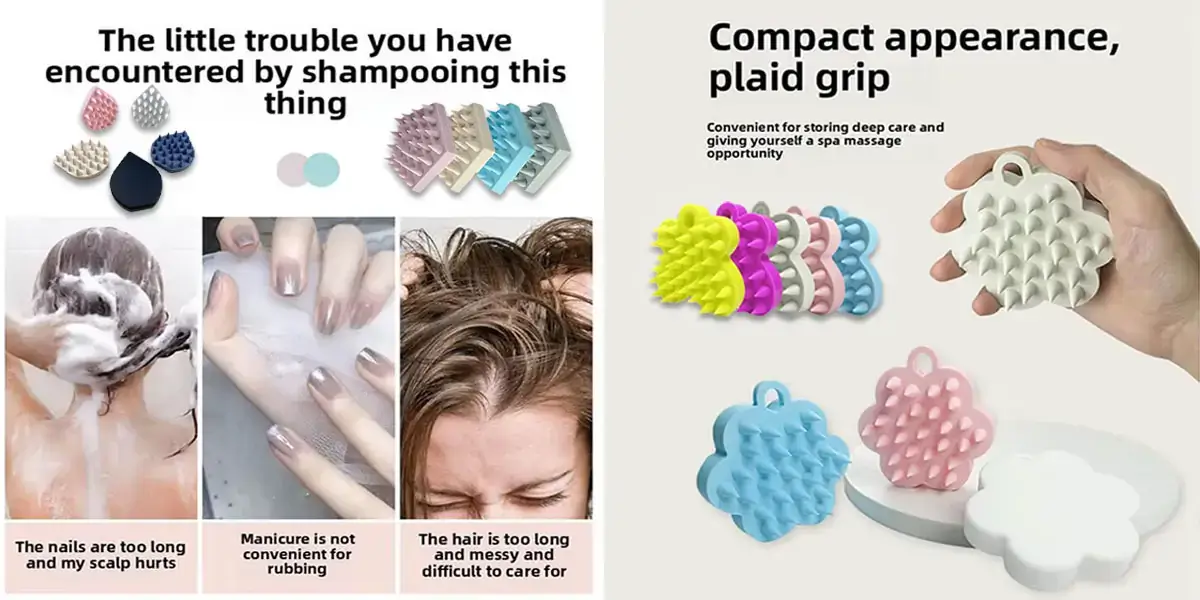
Silicone body scrubbers can be designed in different shapes, sizes, textures, and colors, making them suitable for both consumer products and private-label personal care brands. For manufacturers, this flexibility also makes custom silicone scrubbers a potential OEM product category.
What Is a Loofah?
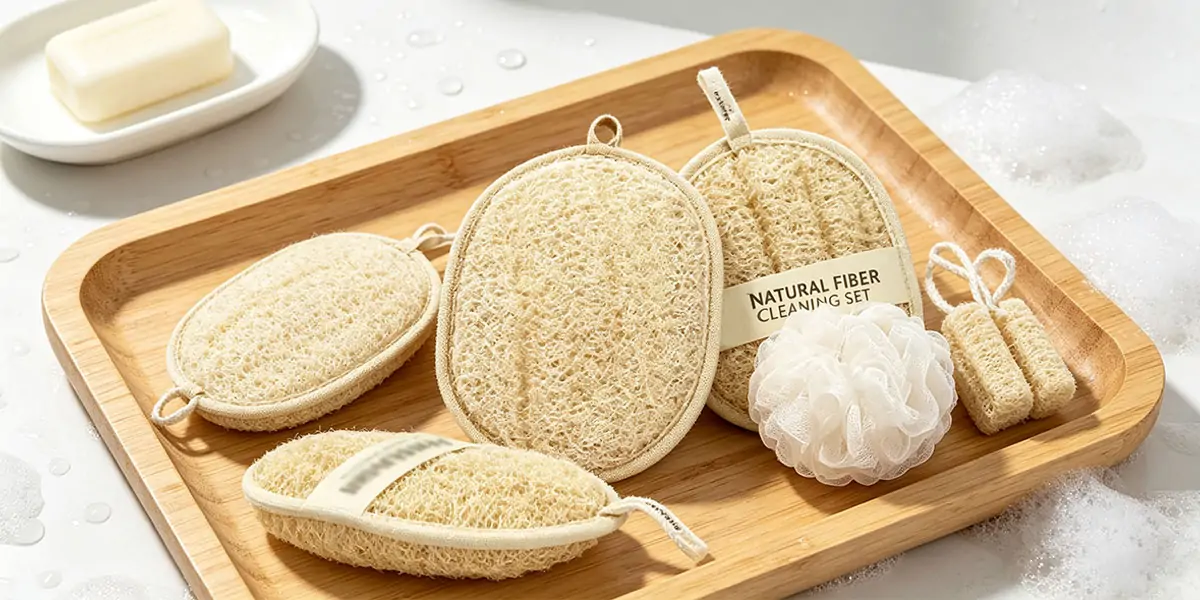
A traditional loofah (also spelled luffa) is a natural product made from the dried fibrous interior of a gourd from the cucumber family. As a 100% natural biodegradable product, it is popular among users who prioritize zero-plastic daily supplies and mild skin exfoliation.
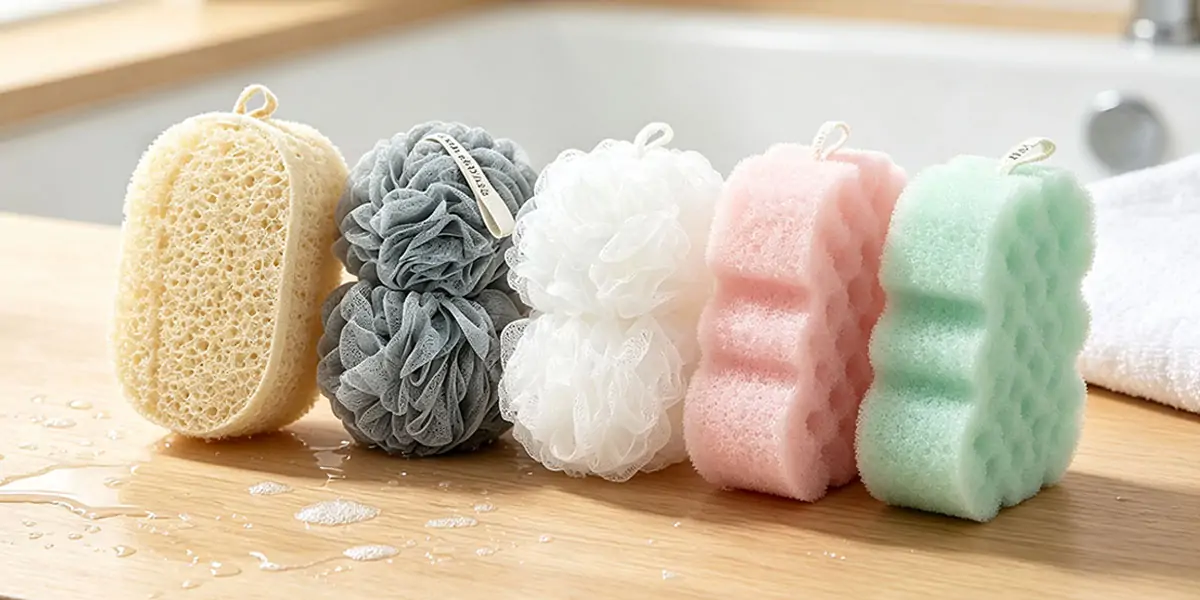
However, most of the “loofah sponges” sold in stores today are actually synthetic mesh puffs, made of brightly colored nylon or polyester mesh. Both types work similarly: they create rich lather and provide physical exfoliation by rubbing against the skin.
Key Advantages of Natural Loofahs:
- Natural exfoliation: The porous fibrous structure delivers gentle physical exfoliation, effectively removing dead skin cells without harsh friction, ideal for sensitive skin daily shower care.
- Natural and Eco-Friendly: Loofahs are made from a renewable plant source, which makes them a more eco-friendly option than silicone scrubbers. They are also biodegradable, so they won’t contribute to plastic waste.
- Soft texture: Soaks quickly in warm water to become fluffy and soft, creating rich lather with body wash or soap easily.
- Affordable: Loofahs are relatively inexpensive compared to silicone scrubbers. They can be found at most drugstores and supermarkets for just a few dollars each.
Critical Disadvantages of Natural Loofahs:
- Poor hygiene performance: Both natural and synthetic loofahs share a significant downside: they trap moisture, dead skin cells, and bacteria. Their porous structure can create many small spaces where moisture, skin cells, and other materials can remain after use.
- Short service lifespan: Daily damp use causes loofahs to degrade, fray, and rot rapidly. The average replacement cycle of a natural loofah is only 3–4 weeks for daily household use.
- Hard to fully clean: Residual grime and bacteria cannot be completely removed via simple rinsing or soaking, leading to persistent sour odors after short-term use.
Cleveland Clinic notes that loofahs can harbor microorganisms when they remain wet and recommends rinsing them thoroughly, allowing them to dry, cleaning them regularly, and replacing them periodically. Proper cleaning and drying are important for maintaining hygiene.
Versatile:
Loofahs can be used for a variety of purposes, including exfoliating the skin, washing the body, and even cleaning dishes or countertops.
Silicone Scrubber vs Loofah: A Side-by-Side Comparison
Now that we’ve looked at the key benefits of each bath tool, let’s compare them side by side to help you decide which one is right for you.
Quick Comparison Table
The most important difference for brands is product customization. A silicone body scrubber can be developed around a specific brand identity, target user, grip design, texture, color system, and packaging concept.
|
Factor |
Silicone Scrubber |
Loofah (Natural or Mesh) |
| Material | Silicone | Natural fiber or synthetic material |
| Surface | Flexible nubs or bristles | Porous / fibrous texture |
| Hygiene | Excellent, non-porous, dries fast, resists bacteria | Poor, traps bacteria, mold, and dead skin cells |
| Water retention | Generally easier to rinse and dry | Can retain moisture within its structure |
| Lather | Moderate to good | Excellent, creates rich foam |
| Exfoliation | Gentle, suitable for sensitive skin | Stronger, can be harsh on sensitive skin |
| Cleaning | Easy to rinse after use | Requires regular cleaning and thorough drying |
| Durability | Can be designed for repeated use | Requires periodic replacement |
| Eco-Friendliness | Reusable, reduces waste | Natural ones are biodegradable; synthetic ones are not |
| Cost | Higher upfront, lower long-term | Lower upfront, higher long-term |
| Customization | High | More limited |
| Branding | Colors, shapes, textures and logos can be customized | More limited design options |
| OEM Manufacturing | Highly suitable | Depends on product structure |
1. Hygiene and Cleaning
This is where silicone scrubbers shine, and loofahs fall short. If hygiene is your top priority, silicone is the clear winner.
- Silicone Scrubber: Non-porous material prevents bacteria growth, more hygienic for sensitive skin.
- Loofah: Porous texture absorbs water and harbors bacteria, requires regular replacement.
For Silicone Scrubbers:
Silicone scrubbers have a different surface structure and are generally easier to rinse clean. However, it is important not to confuse easy cleaning with inherent antimicrobial performance. A standard silicone scrubber should not automatically be marketed as “antibacterial” or “antimicrobial” unless the specific material and finished product have appropriate supporting test data.
For personal care brands, this distinction is important when developing product claims.
For Loofahs:
Loofahs are notorious bacteria traps. A Stanford infectious disease physician describes loofahs and sponges as “literally bacteria traps” that harbor staph, strep, E. coli, and other organisms. The mesh structure traps dead skin cells, body oils, and soap residue deep inside its folds. When left damp in a warm shower environment, this creates the “perfect breeding ground for germs”.
According to Cleveland Clinic, moisture and trapped skin cells can create conditions where microorganisms may persist, especially when a loofah does not dry completely between uses.
Silicone scrubbers, by contrast, are made of non-porous material. Bacteria don’t have the chance to adhere to the smooth, water-repelling surface and colonize. A silicone body scrubber dries much faster than a loofah because water simply slides off rather than soaking in.
As one reviewer put it: “Unlike loofahs, this scrubber is hygienic and easy to clean—no mildew smell or bacteria buildup over time”.
Even dermatologists are taking note. Dr. Sasha Haddad, a US-based family physician, has publicly warned against using loofahs, recommending silicone scrubbers or washcloths instead. Dr. Nabil Jetha notes that “a lot of professionals now prefer gentle silicone scrubbers or clean, soft washcloths because they’re easier to keep hygienic and less aggressive on the skin”.
2. Exfoliation and Skin Feel
Choose a loofah for stronger exfoliation; choose silicone for gentle, sensitive-skin-friendly cleansing.
- Silicone Scrubber: Gentle bristles suitable for all skin types, won’t scratch or irritate.
- Loofah: Rough texture provides deep exfoliation, may be too harsh for sensitive skin.
Loofahs provide more aggressive exfoliation due to their textured, slightly rough surface. This can be effective for removing dead skin cells and improving circulation, but it can also be too harsh for sensitive skin.
Silicone scrubbers offer gentle exfoliation that’s safe for all skin types, including sensitive skin. The soft silicone bristles remove dead skin cells without being too harsh. However, some users find the bristles “so soft that it doesn’t feel like I’m really exfoliating or scrubbing anything”.
However, stronger scrubbing is not necessarily better. The American Academy of Dermatology recommends gentle exfoliation and notes that mechanical exfoliation can be irritating for some people, particularly those with dry, sensitive, or acne-prone skin.
The AAD also advises people with back acne to avoid harsh scrubbing and notes that loofahs, back brushes, and similar tools can aggravate irritation.
3. Durability and Reusability
Silicone scrubbers last significantly longer, often 10 to 12 times longer than a disposable loofah.
- Silicone Scrubber: Long-lasting, can withstand months/years of use with proper care.
- Loofah: Breaks down over time, needs replacement every 2-4 weeks.
Synthetic mesh loofahs lose their shape quickly, with some users reporting they “lost its shape after using it twice”.
Cleveland Clinic recommends replacing natural loofahs every three to four weeks and plastic loofahs approximately every two months, while also emphasizing regular cleaning and drying.
Silicone scrubbers, on the other hand, are built to last. One reviewer noted: “After a full year of regular use, it hasn’t worn down, warped, or collected any mildew”. Another commented: “I can see this lasting for a year, whereas I’d go through ten loofahs in that same time”.
The exact service life of a silicone product, however, depends on its material formulation, design, usage conditions, and care instructions. It should not be promoted with an unsupported universal lifespan.
4. Lather and Foam
If you love a rich, foamy lather, loofahs have the edge. Loofahs create rich foam with very little shower gel. A small squeeze can produce enough lather for a full-body scrub. This explains their long-standing popularity.
Silicone scrubbers, however, don’t foam up as much. Some users find they need to use more body wash to achieve the same lather.
Some silicone scrubber users report the opposite that silicone requires less body wash than a natural loofah sponge. Results may vary depending on the specific product and body wash formula.
5. Product Design and Customization
This is where silicone has a significant advantage for OEM product development.
A silicone scrubber can be customized in many ways, including:
- Shape. Manufacturers can develop: Round scrubbers, oval scrubbers, ergonomic handles, palm-sized designs, hanging designs, and dual-sided scrubbers.
- Texture. Different textures can be incorporated into the same product. For example: Soft cleansing surface + massage texture
- Color. Brands can select custom colors to match their existing product line or packaging.
- Branding. Depending on the product design, manufacturers can incorporate: Embossed logos, debossed logos, molded branding and custom surface patterns.
This makes custom silicone body scrubbers suitable for private-label and OEM personal care brands.
6. Silicone Scrubber vs Loofah for Private Label Brands
For new brands launching entirely new shower or body care products, the key choice lies not only in the material but also in product differentiation.
Standard coconut palm brushes are relatively easy for competitors to imitate, while customized silicone brushes can be developed to meet the brand’s unique needs, offering more possibilities for creating iconic products.
Therefore, for companies seeking OEM silicone personal care products, silicone offers greater design flexibility.
7. Environmental Impact
Natural loofahs win on biodegradability; silicone wins on waste reduction through longevity.
- Silicone Scrubber: Made from plastic, not biodegradable, contributes to waste.
- Loofah: Natural plant-based material, biodegradable, eco-friendly choice.
Natural loofahs are biodegradable and plastic-free. When disposed of, they break down naturally. However, they need frequent replacement, which means more waste over time.
Silicone scrubbers are reusable and long-lasting. One scrubber can replace dozens of disposable loofahs, significantly reducing waste. Many silicone scrubbers are also made from food-grade, BPA-free materials and are recyclable. However, silicone itself is a synthetic material and not biodegradable.
8. Cost
Silicone scrubbers offer better long-term value.
- Silicone Scrubber: Higher upfront cost, but cost-effective in the long run.
- Loofah: Low initial cost, but frequent replacements add up over time.
9. Which Is Easier to Maintain?
For everyday product use, maintenance is another important consideration.
Loofah Users should:
- Rinse thoroughly after use.
- Remove excess water.
- Allow it to dry completely.
- Clean it regularly.
- Replace it periodically.
Silicone Scrubber:
- A silicone scrubber can generally be rinsed after use and allowed to dry.
- Its less porous surface structure can make routine cleaning more straightforward than a traditional fibrous loofah.
Again, this should be described as a maintenance advantage, not as proof that every silicone scrubber is antimicrobial.
Silicone Scrubber vs Loofah: Which Should Brands Choose?
For consumers, either option may work depending on personal preference and skin needs. For product developers, however, the decision is different.
Choose a silicone body scrubber if:
- Hygiene is your top concern
- You have sensitive or acne-prone skin
- You want a durable tool that lasts for months or years
- You prefer gentle exfoliation
- You’re tired of replacing loofahs every few weeks
- You want an easy-to-clean, quick-drying shower tool
You pursue pure natural plant-based products, have low-frequency use needs, or prefer ultra-soft fluffy exfoliation for occasional skincare use. It is suitable for retail sales targeting eco-sensitive casual users.
Choose a loofah if:
- You love a rich, foamy lather
- You prefer stronger, more aggressive exfoliation
- You want a biodegradable, plastic-free option
- You don’t mind replacing it frequently
- You prefer the traditional shower experience
You need long-lasting hygienic shower and kitchen cleaning tools, have high requirements for household sanitation, or want cost-effective reusable supplies.
For wholesale distributors, custom silicone scrubbers are more competitive in the home goods market due to their durable, easy-maintenance, and multi-functional advantages, supporting OEM/ODM personalized logo and shape customization .
How to Develop a Custom Silicone Scrubber?
For an OEM project, the development process can include:
- Product Concept. Define the target customer, product function, size, texture, and appearance.
- Product Design. Develop the 2D/3D design and optimize the structure for silicone manufacturing.
- Prototype Development. Create prototypes to evaluate: Shape, flexibility, texture, grip, user experience.
- Mold Development. Create production tooling based on the approved product design.
- Silicone Molding. Manufacture the product using the appropriate silicone molding process.
- Trimming & Finishing. Remove excess silicone and refine product edges and surfaces.
- Quality Inspection. Check product appearance, dimensions, texture, and other agreed specifications.
- Packaging. Prepare the finished silicone scrubbers for retail or distribution.
This complete process allows a custom silicone products manufacturer to support brands from initial concept to finished products.
Why Choose Siliconexy for Custom Silicone Scrubbers?
Siliconexy provides OEM and ODM manufacturing solutions for businesses developing custom silicone products. For a custom silicone body scrubber, our manufacturing support can cover:
- Product design support
- Silicone material selection
- Custom colors
- Texture development
- Mold development
- Prototype production
- Mass production
- Trimming and finishing
- Quality inspection
- Customized packaging
This makes silicone suitable not only for body scrubbers, but also for a wider range of custom silicone personal care products.
The Bottom Line
So, silicone scrubber vs loofah: which is better? There is no single answer for every user. The silicone scrubber vs loofah debate ultimately comes down to personal preference.
Both silicone scrubbers and loofahs have their own unique benefits and drawbacks. Whether you choose a silicone scrubber or a loofah, it’s important to use it properly and keep it clean to ensure optimal hygiene and performance.
If you’re still unsure which one is right for you, consider trying both and see which one you prefer. You may find that you like using a silicone scrubber for daily cleansing and a loofah for weekly exfoliation.
Whichever bath tool you choose, remember to take care of your skin and enjoy the benefits of a refreshing, invigorating bath or shower!
If you’re ready to make the switch, look for a food-grade silicone body scrubber with soft, flexible bristles that suit your skin type. This will benefit both one’s bathing habits and skin health.
At Siliconexy, we specialize in custom silicone manufacturing for a wide range of applications—from medical devices and kitchenware to personal care products.
For brands, the biggest advantage of silicone may be its design flexibility. A professional custom silicone products manufacturer can help transform a basic body scrubber concept into a differentiated OEM product with custom textures, shapes, colors, branding, and packaging.
Looking to develop a custom silicone scrubber or personal-care product? Contact Siliconexy to discuss your OEM/ODM project.