Silicone mold making is one of the most versatile and reliable manufacturing techniques available today. When developing a custom silicone product, the mold is one of the most important parts of the manufacturing process. A well-designed mold helps determine the product’s dimensions, surface finish, consistency, production efficiency, and overall quality.
Many new buyers assume silicone mold fabrication is a simple casting job. In commercial manufacturing, reliable custom silicone molds for silicone toys, kitchenware, bath accessories and resin‑casting applications follow a strict multi‑stage workflow.
For global buyers developing custom silicone products, understanding the silicone mold making process can make communication with an OEM silicone products manufacturer much easier. Understanding this workflow helps brand buyers reduce tooling revision costs, shorten lead‑times and avoid common mass‑production defects.
This guide walks you through the entire silicone mold making process, covering everything from design considerations to production-ready techniques.
Whether you’re producing custom parts for medical devices, creating prototypes for automotive components, or crafting jewelry and resin art at home, silicone molds offer exceptional detail reproduction, durability, and ease of use.
At Siliconexy, we specialize in providing high-quality silicone mold making materials and expertise for professionals and hobbyists alike. In this guide, we’ll walk you through the complete silicone mold making process, from initial design to final production.
What Is Silicone Mold Making?
Silicone mold making is the process of designing and manufacturing tooling that forms uncured silicone rubber into a specified product shape during molding.
For custom silicone products, the mold contains the cavity and structural features needed to create the required geometry. During production, silicone material is placed or injected into the mold and cured under controlled conditions.
The exact tooling structure depends on the product design and manufacturing method. Silicone compression molding, for example, commonly uses a mold with cavities, alignment components, and areas designed to manage excess material or flash.
A professional custom silicone products factory should therefore evaluate the product design before starting mold manufacturing.
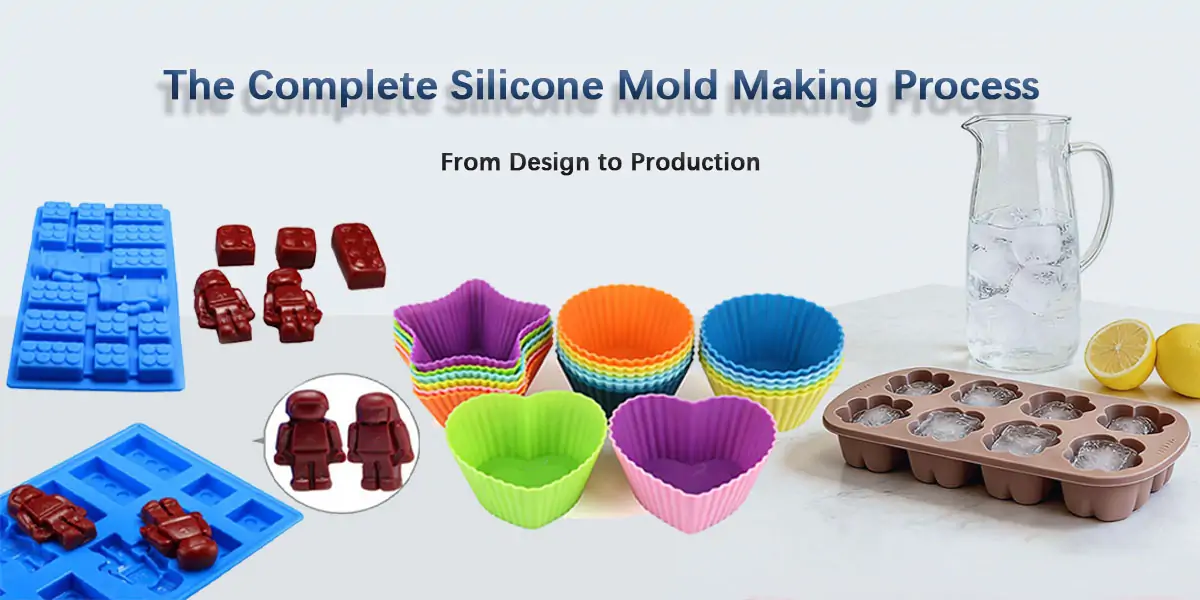
Custom Silicone Mold Making Process: From Design to Production
The silicone mold making process begins with understanding the product.
Step 1: Project Requirement Confirmation & DFM Design Review
Every robust silicone mold project starts before any steel gets machined. Before designing the tooling, an OEM manufacturer normally needs information such as:
- 2D technical drawings and 3D CAD files
- Product dimensions
- Material requirements
- Silicone hardness
- Surface finish and color requirements
- Logo or texture requirements
- Functional requirements
- Expected production volume
A physical sample or reference product can also be useful when developing a custom silicone product. At this stage, the engineering team evaluates whether the design is suitable for silicone molding.
This is often referred to as Design for Manufacturing (DFM). The goal is to identify potential manufacturing issues before the mold is produced.
As a custom silicone mold manufacturer, Siliconexy (Xinyin) first collects your inputs: 3D CAD files (STEP, STL, IGES), physical samples, sketches, target application, expected production volume, hardness requirement and compliance standards such as FDA or LFGB for food‑contact goods.
Our engineers complete a DFM (Design for Manufacturability) review, the most critical step for custom silicone mold for OEM projects. We analyze draft angles, wall‑thickness uniformity, undercut features, parting‑line placement, cavity layout and venting positions. This digital‑stage check eliminates risks of hard‑to‑demold parts, tearing, trapped air and excessive flash after tooling completion. We deliver feedback for design optimization for your confirmation before moving forward.
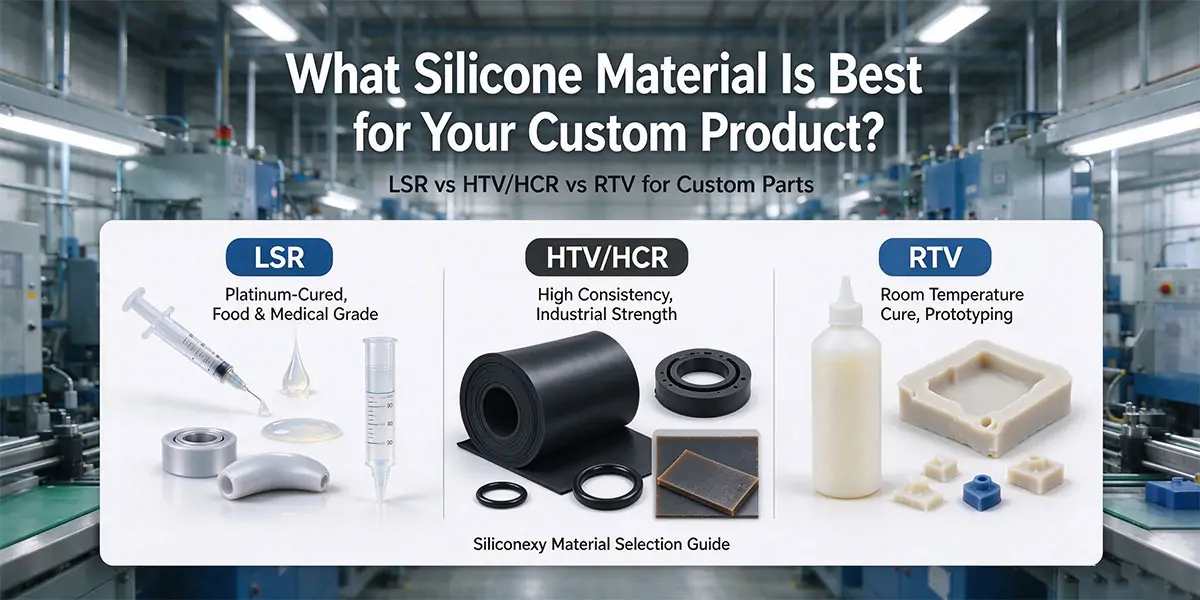
For Liquid Silicone Rubber (LSR) injection molding, key design considerations include:
- Parting line placement: determines how the mold opens and closes
- Gate location: ensures uniform material flow into the cavity
- Venting design: prevents air traps, bubbles, and short shots
- Shrinkage compensation: LSR typically shrinks 1–3%, and precise calculations are built into the mold dimensions
This stage typically takes 1–2 weeks and produces a detailed DFM report with actionable recommendations.
Step 2: Design and Master Model Preparation
Every great silicone mold starts with a great master model, the original object you want to replicate. Before you begin the silicone rubber mold process, the surface of the master must be carefully examined for imperfections. This is a critical step because the silicone rubber mold will reproduce every detail of the original surface, including any flaws.
Key considerations for master model design:
- Surface finish. To ensure a high-quality cast, consider using a smooth finish with fine-grit abrasive.
- Undercuts. One of the advantages of silicone molding is that it can forgive mistakes made when undercuts weren’t accounted for. Silicone’s flexibility allows for easy demolding even with complex geometries
- Mounting. The master must be elevated from the ground to allow the silicone to form a mold wall at least 1/2 inch thick on the bottom. If the wall is thinner, the mold may tear during de-molding
For industrial applications, the master model is often created using 3D printing, CNC machining, or traditional sculpting techniques. The rise of 3D printing auxiliary molds has opened new possibilities for rapid prototyping and custom mold making.
Step 3: Selecting Mold Materials
The mold material should be selected according to the product design, expected production volume, required surface finish, and manufacturing process. Common tooling materials include different grades of aluminum or steel.
The choice can influence:
- Mold durability
- Machining requirements
- Surface finish
- Production efficiency
- Tooling cost
- Maintenance requirements
For a long-term silicone OEM manufacturing project, mold selection should be based on the entire production plan rather than only the initial tooling price.
Step 4: Precision CNC Machining and Mold Manufacturing
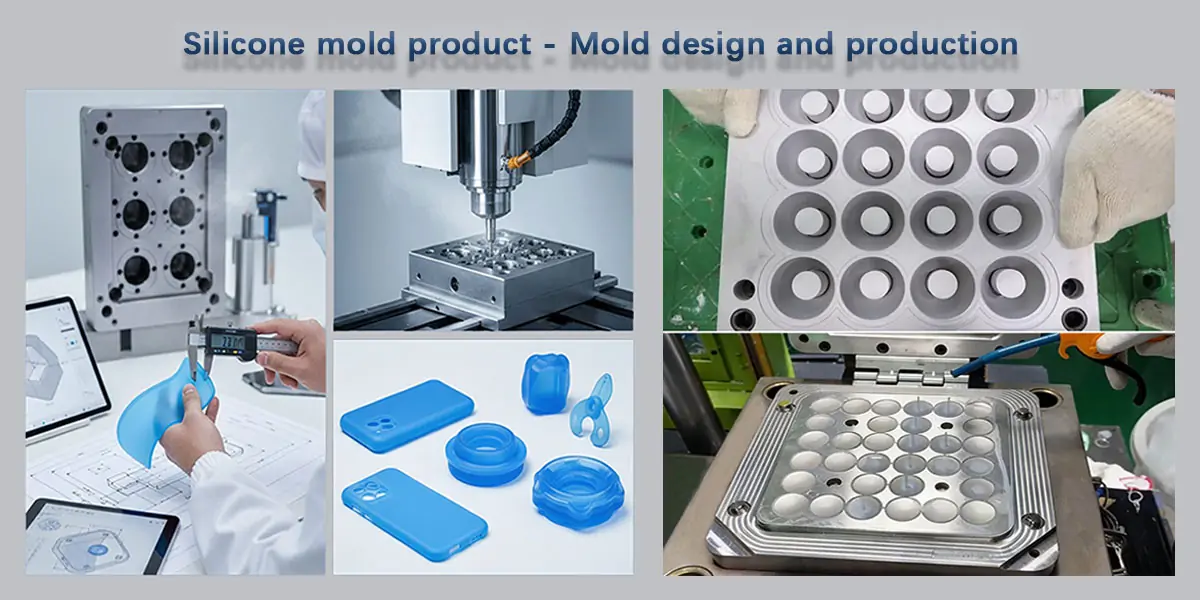
This step turns digital mold drawings into physical metal mold blocks. For machined silicone molds, CNC machining is commonly used to create the mold cavities and other precision features. A typical mold-making workflow can include material preparation, CNC machining, finishing, and additional treatment of the tool where required.
We use high‑precision CNC milling; for ultra‑fine textures, sharp corners and complex micro‑details, we apply EDM electrical discharge machining where CNC cannot reach.
The machining accuracy directly affects the final silicone product. For this reason, precision machining is particularly important when the finished product has tight dimensional requirements or complex geometry.
Mold Surface Finishing
After machining, the mold surface may require additional finishing. The required surface depends on the product design. For example, a product may require:
- Smooth surfaces
- Matte textures
- Polished surfaces
- Molded patterns
- Textured areas
- Logo details
Toolmakers perform manual fitting, component alignment and cavity polishing. Surface polishing directly defines the final visual quality of your silicone products. Poor polishing will transfer scratches and blemishes onto every molded piece. We carefully match polish grades to your product requirements, whether you need glossy baby‑product surfaces or textured finish for fidget toys and bath accessories.
Because the silicone product reproduces the surface of the mold cavity, mold finishing can have a direct influence on the appearance of the finished product. This is particularly important for consumer products where surface texture and appearance are part of the product design.
Mold Steel Selection & CNC Machining
The choice of mold steel directly impacts tool life, surface finish, and dimensional accuracy. At Siliconexy, we select materials based on your application:
- S136H stainless steel: ideal for medical-grade, food-grade, and optical-clear silicone parts; maintains hardness above 48 HRC even after 100,000+ cycles
- P20 tool steel: cost-effective for general industrial silicone components with moderate precision requirements
- The steel block then undergoes precision CNC machining, EDM (Electrical Discharge Machining) for complex cavities, and mirror polishing to achieve surface roughness below Ra 0.4μm, which critical for clean demolding and defect-free silicone parts.
Step 5: Mold Assembly & Pre‑Trial Preparation
and vent inserts are assembled and fine‑tuned. Our team checks parting‑surface matching, closure clearance and ejection function. Improper assembly causes flashing, misaligned cavities and inconsistent product dimensions during molding runs.
Before the first trial shot, we clean all cavity surfaces to remove machining oil and debris, preventing contamination marks on finished silicone goods.
The manufacturer checks whether:
- Mold components align correctly
- Cavities match the approved design
- Inserts fit correctly
- Moving components operate as intended
- Parting surfaces are properly matched
- Critical dimensions are within specification
The mold should be inspected before it enters production. For complex custom silicone molding projects, this stage helps identify tooling problems before material is used for large-scale production.
Step 6: Mold Trial Sampling (T1 / T2 Testing)
The assembled mold is mounted onto compression or LSR molding presses for trial production. This phase validates the real‑world performance of your custom‑made silicone mold. Our QC team inspects trial samples against your technical specifications: dimensional tolerance, surface quality, flash level, demolding performance, hardness and detail reproduction of logos or textures.
Our process follows a structured T0-to-Tf protocol:
- T0 Trial: verifies basic mold function: demolding, surface quality, and key dimensions
- T1 Trial: addresses T0 findings, refines dimensions and process parameters
- T2 / Pilot Run: validates production stability with a small batch (typically 200–2,000 units depending on part size)
Each trial generates a full inspection report covering dimensional accuracy (verified with CMM and optical comparators), visual quality, hardness testing, and process parameter logs. Most molds reach final approval within 2–3 trial rounds.
If defects occur such as incomplete filling, bubbles or hard‑release issues, our tooling team adjusts venting, polishing or cavity dimensions for T2 re‑sampling. We send physical samples or sample reports for your review and approval. Only after customer sample sign‑off, the mold is classified as production‑ready.
Step 7: Selecting the Silicone Molding Process
The mold itself is only one part of the production system. The manufacturing process must also match the product.
Common silicone molding processes include:
- Silicone Compression Molding: Compression molding uses a measured amount of solid silicone, which is placed into a heated mold and cured under pressure. It can be suitable for many solid silicone products and different product sizes.
- LSR Injection Molding: Liquid Silicone Rubber (LSR) injection molding uses two-part liquid silicone that is metered, mixed, and injected into a closed heated mold. It can be advantageous for high-precision and highly automated production of suitable silicone components.
- Transfer Molding: Transfer molding uses pressure to transfer silicone material into the mold cavities and can provide an alternative tooling and production solution for certain product structures.
The best molding process depends on factors such as:
- Product geometry
- Silicone material
- Required precision
- Production quantity
- Cycle requirements
- Tooling structure
Therefore, buyers should not select a mold independently from the intended manufacturing process.
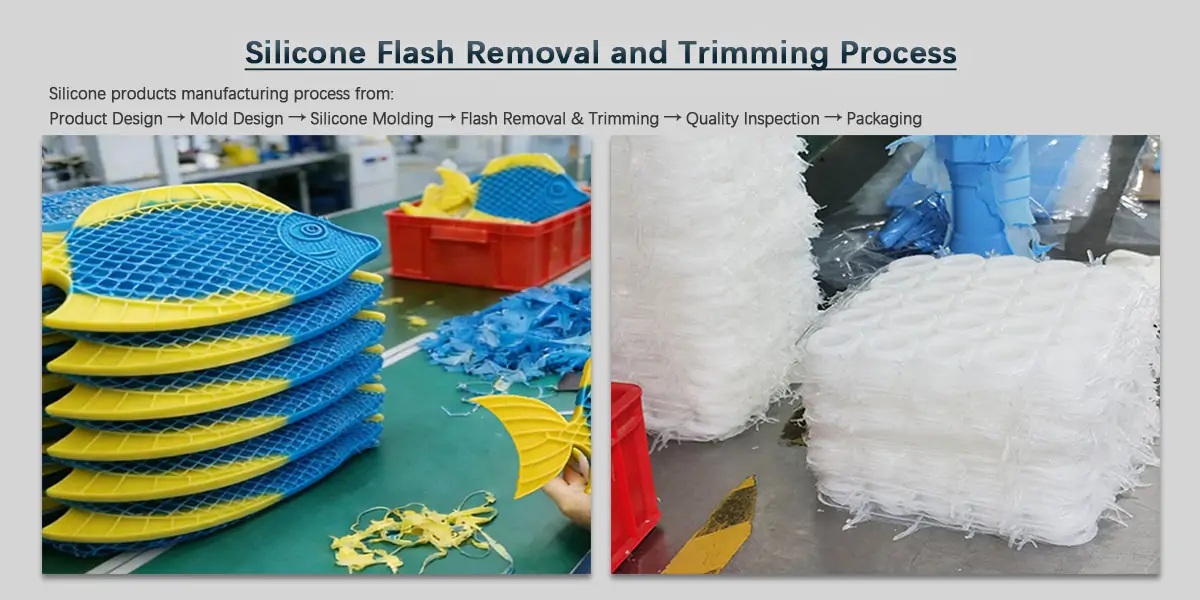
Step 8: Mass Production & Quality Control
After the mold and sample have been approved, the tooling can enter regular production. We perform routine cleaning to remove residual silicone build‑up, extending mold service life and keeping product consistency across thousands of production cycles.
During mass production, the manufacturer needs to maintain consistent:
- Material specifications
- Mold conditions
- Processing parameters
- Product dimensions
- Color
- Surface finish
- Trimming and flash removal
For B2B buyers, consistency between the approved sample and mass-produced products is particularly important. A production-ready mold should therefore be used together with clearly defined product specifications and quality standards.
Our quality system includes:
- First Article Inspection (FAI) for every new production run
- In-Process Quality Control (IPQC) with inspections every 2 hours
- Final Quality Control (FQC) with 100% visual inspection and AQL sampling for critical dimensions
- SPC (Statistical Process Control) monitoring to track process capability
Step 9: Packaging and Shipment
After inspection, finished silicone products can be prepared for packaging. Depending on the project, packaging may include:
- Individual bags
- Custom boxes
- Retail packaging
- Product labels
- Instruction cards
- Inner cartons
- Master cartons
For OEM projects, packaging can also be customized according to the buyer’s branding requirements. The finished products can then be prepared for shipment according to the agreed delivery terms.
Silicone Mold Making Process at a Glance
The complete workflow can be summarized as:
- Product Concept & 2D / 3D Design Review
- DFM Analysis
- Mold Design
- Tool Material Selection
- CNC Machining
- Mold Assembly & Inspection
- Prototype Approval
- Mass Production
- Trimming & Flash Removal
- Quality Inspection
- Packaging & Delivery
This structured approach helps connect tooling development with the final manufacturing requirements.
What Makes a Good Silicone Mold?
A good silicone mold is not simply a mold that produces the correct shape. For commercial production, the tooling should also support:
- Consistent product dimensions
- Stable molding performance
- Efficient demolding
- Controlled flash
- Appropriate surface finish
- Repeatable production
- Practical maintenance
The mold should be designed around the complete production requirement rather than the appearance of a single prototype. This is particularly important for brands developing custom silicone products for mass production.
Silicone Mold Making for Different Products
The tooling approach can vary significantly depending on the product.
Silicone Kitchen Products
Examples include:
- Silicone baking cups
- Silicone ice cube trays
- Silicone kitchen tools
- Silicone food storage products
These products may require specific material and food-contact considerations depending on their intended use.
Silicone Baby Products
Baby products may require particular attention to:
- Material selection
- Product geometry
- Surface finish
- Dimensional consistency
- Applicable market requirements
- Silicone Electronic Accessories
Electronic accessories may require:
- Precise dimensions
- Tight fit
- Complex structures
- Specific hardness
- Consistent surface finish
- Industrial Silicone Components
Industrial applications may place greater emphasis on:
- Dimensional tolerances
- Sealing performance
- Temperature resistance
- Chemical resistance
- Long-term mechanical performance
The mold design should therefore always start with the actual application and performance requirements.
Key Considerations for Buyers Working with a Silicone Mold Supplier
- Submit standard‑format 3D files to reduce DFM review errors. Low‑quality drawings lead to expensive mold revisions.
- Clarify surface finish, tolerance and certification requirements at the DFM stage, not after sampling.
- Distinguish OEM exclusive mold and ODM shared‑base mold options to balance budget and exclusivity.
- Confirm mold life expectancy and post‑production maintenance terms before placing your tooling order.

Why Choose Siliconexy for Your Silicone Mold Project?
Siliconexy supports businesses developing custom silicone products from product concept through production.
Our manufacturing workflow can include:
Design Review → DFM → Mold Development → Prototype → Mass Production → Trimming → Quality Inspection → Packaging
This approach allows the tooling to be developed around the actual product requirements instead of treating mold making as an isolated service.
Siliconexy (Xinyin) can support custom silicone product projects across areas such as:
- Silicone kitchen products
- Silicone household products
- Silicone baby products
- Silicone pet products
- Silicone electronic accessories
- Silicone personal care products
- Industrial silicone components
If you already have a product drawing, 3D file, physical sample, or initial concept, the first step is to share the available information with the engineering team. The manufacturer can then evaluate the design, tooling requirements, material options, and appropriate molding process before production begins.
Ready to start your silicone mold project?
Whether you need a prototype mold for product validation or a high-cavitation production tool for mass manufacturing, Siliconexy is here to help. Contact our engineering team today for a free DFM review and quote.
Conclusion
The silicone mold making process is the foundation of consistent molded silicone production.
From the initial product design and DFM analysis to mold machining, trial molding, optimization, mass production, trimming, and quality inspection, each stage can influence the final product.
For global buyers, choosing an experienced custom silicone products manufacturer is therefore about more than finding a supplier that can make a mold.
If you are developing a new custom silicone product, sharing your drawings, samples, product requirements, and expected production volume with an OEM manufacturer early in the process can help engineers evaluate the project more accurately and develop tooling around your actual production needs.
If you are searching for a reliable China custom silicone mold products manufacturer for your next silicone toy, kitchen accessory or personal‑care product project, Siliconexy offers full‑cycle OEM & ODM service: from DFM review, mold tooling, sampling to mass‑volume production. Contact our engineering team to discuss your project today.