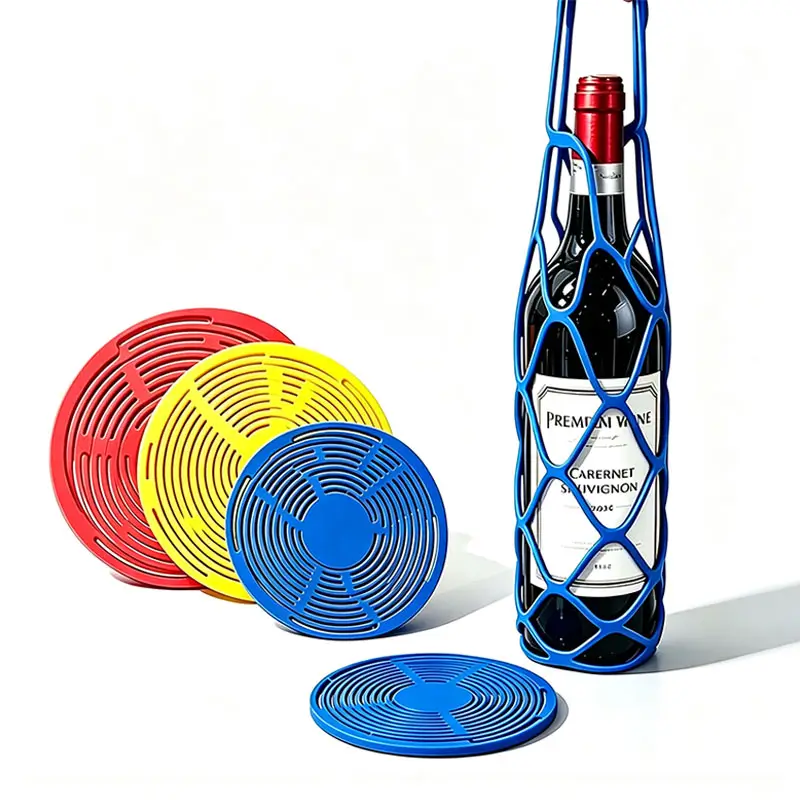
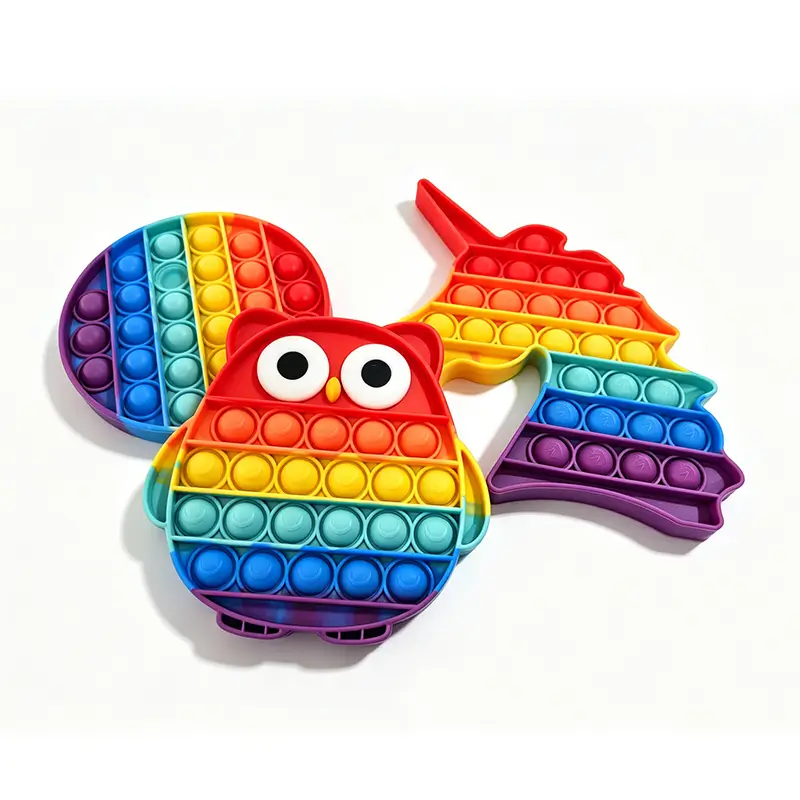
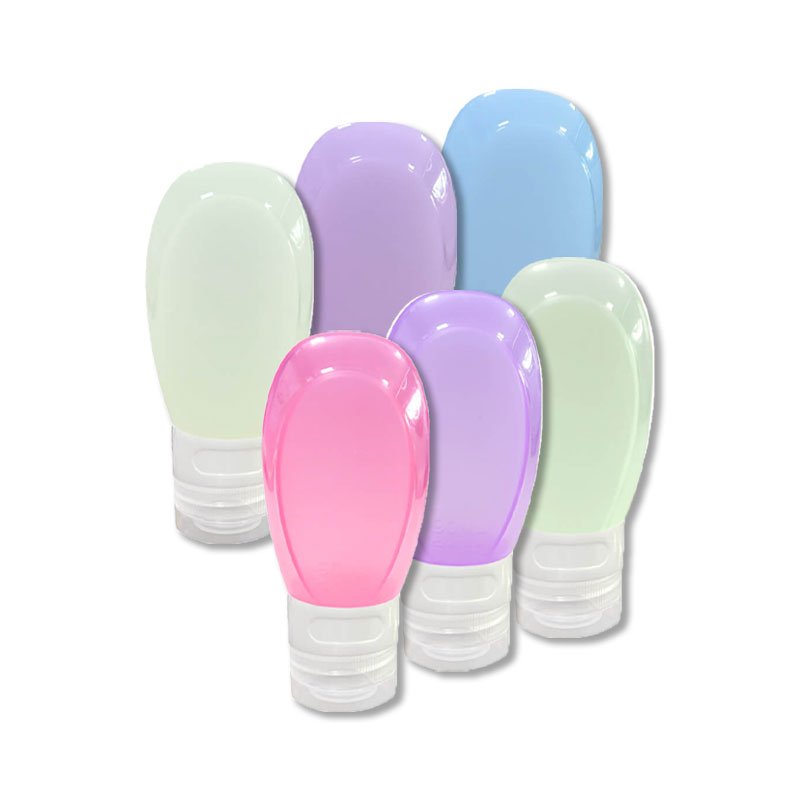
From baby products and kitchenware to automotive seals and medical devices, more global buyers are turning to custom silicone manufacturing to bring their product ideas to life.
However, sourcing custom silicone products from overseas isn’t as simple as just sending a photo and requesting a quote.
For global buyers, a successful project depends on several interconnected factors: product specifications, silicone material, tooling, silicone products manufacturing process, quality requirements, compliance, packaging, production capacity, and communication.
Whether you are developing custom silicone kitchen products, silicone household products, silicone baby products, silicone pet products, silicone electronic accessories, or industrial silicone components, having a clear manufacturing checklist can help reduce sourcing risks and make communication with your supplier more efficient.
At Siliconexy (Xinyin), we’ve compiled this comprehensive checklist based on years of hands-on experience serving global clients across North America, Europe, and Asia-Pacific markets. This guide provides a practical checklist for buyers working with a custom silicone products manufacturer or silicone OEM/ODM factory.
Why This Checklist Matters?
Whether you’re a brand owner, importer, or private-label seller, partnering with the right custom silicone products manufacturer requires more than comparing prices. The difference between a smooth production run and a costly headache often comes down to how thoroughly you prepare before mold development begins.
This checklist covers everything from RFQ preparation to quality control, helping you avoid common pitfalls and ensuring your custom silicone parts are manufactured to your exact requirements.
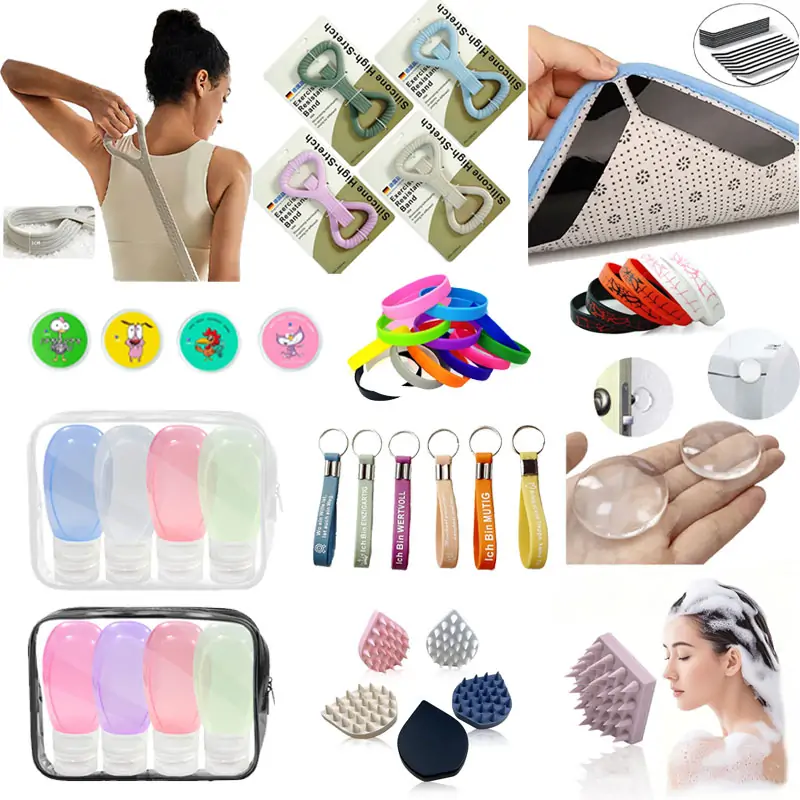
Custom Silicone Products Manufacturing Checklist:
Before reaching out to a custom silicone products manufacturer, finalize your product requirements. Vague specifications lead to inaccurate quotes, repeated sample revisions and misaligned expectations.
Industry data shows that approximately 60% of custom silicone products experience delays or failures due to unclear requirements or improper process selection at the outset.
Step 1: Prepare a Complete RFQ (Request for Quotation)
An incomplete RFQ is the reason for inaccurate quotes. Sending a single product photo and asking “Please quote this silicone product” rarely provides enough information for a manufacturer to give you an accurate estimate.
What to include in your RFQ?
Product Information:
- Product name and application
- Product dimensions
- Product weight
- 2D technical drawing
- 3D CAD file, if available
- Reference sample or photos
- Functional requirements
- Assembly requirements
- Surface finish
- Color requirements
- Logo or branding requirements
For custom projects, manufacturers may work from drawings, samples, photos or CAD files before reviewing tooling and production requirements. Siliconexy’s current manufacturing workflow follows this type of project evaluation before mold development.
Pro tip: The more details you provide upfront, the more accurately your silicone OEM manufacturer can evaluate tooling costs, molding processes, sampling timelines, and total project costs.
Your brief should include:
- Product name, application and intended use. Who will use it? Where? Will it contact food, skin, or water? This determines material grade and design priorities.
- Material specifications. Hardness (Shore A scale), temperature resistance range, tensile strength, and color (Pantone reference preferred).
- Regulatory requirements. Does your product need to meet FDA, LFGB, RoHS, REACH, CE, or ISO 10993 (biocompatibility) standards?
- Design files: Prepare STEP / STL 3D models and 2D drawings with clear dimensional tolerances; note undercuts, wall‑thickness transitions and draft angles for DFM review
- 2D/3D drawings or physical samples. STEP, STP, IGS, or IGES formats are preferred. If you don’t have a 3D drawing, a physical sample or detailed 2D drawing with critical dimensions and weight will work.
- Estimated order quantity. This affects mold cost, per-unit pricing, and lead time.
- Target market and compliance requirements. U.S., EU, or other regions determine which certifications you need.
- Packaging requirements. Retail-ready? Amazon-friendly? Eco-friendly?
Pro Tip: If you’re sourcing food-grade silicone products for the U.S. market, ensure your supplier can provide FDA test reports. For the EU market, LFGB compliance is mandatory for food-contact silicone items.
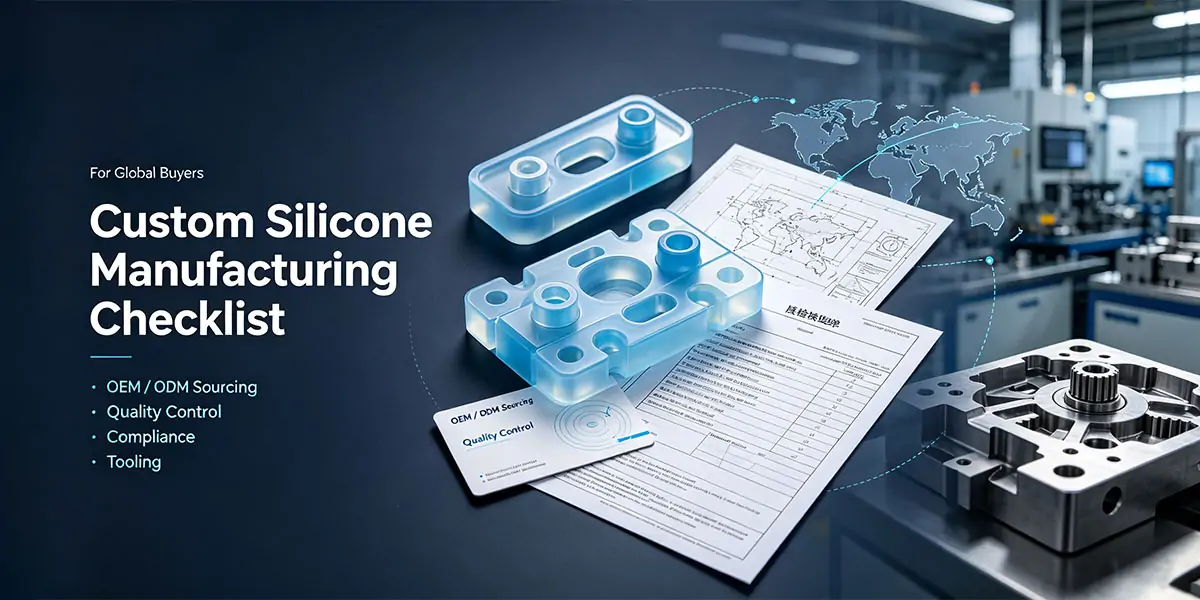
Step 2: Silicone Material Checklist
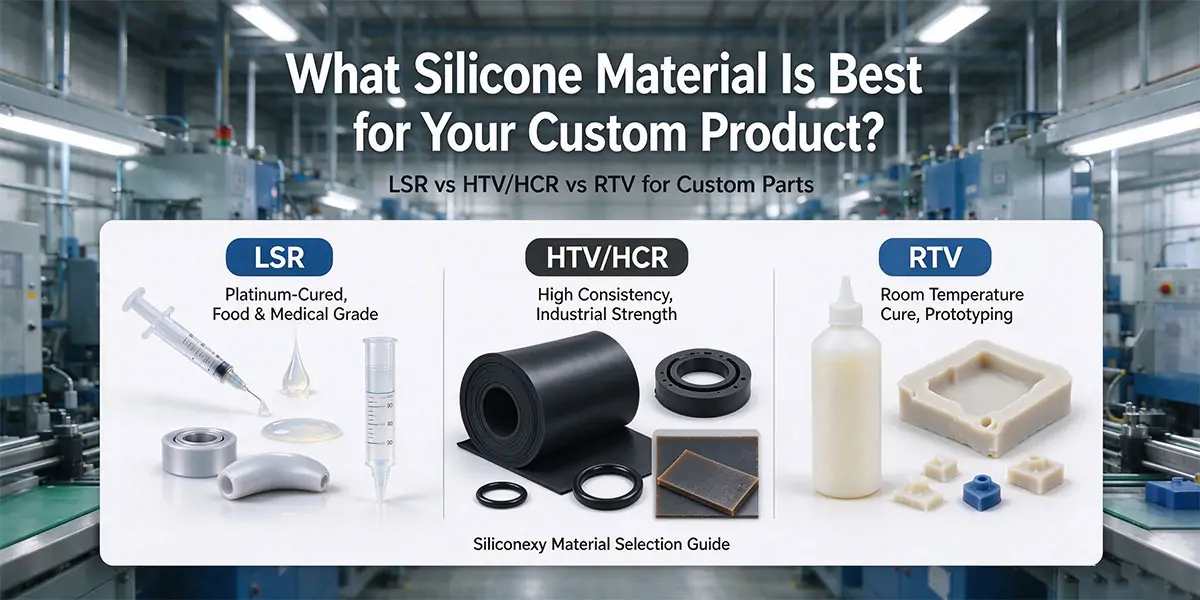
Not all silicone is created equal. Understanding the difference between material types is essential for custom silicone rubber products.
Liquid Silicone Rubber (LSR) vs. High Consistency Rubber (HCR):
- LSR (Liquid Silicone Rubber) : A two-component liquid system with low viscosity, ideal for liquid silicone injection molding. LSR offers excellent tensile properties, temperature resistance, and is commonly used for high-volume, precision parts like baby bottle nipples, medical devices, and automotive seals.
- HCR (High Consistency Rubber) : A putty-like solid silicone, typically processed via compression molding or transfer molding. HCR is often more cost-effective for lower-volume programs and simpler geometries.
Material Requirements:
- Silicone type
- Required hardness / Shore A
- Color
- Transparency requirements
- Temperature requirements
- Flexibility requirements
- Compression resistance
- Chemical resistance
- Surface requirements
- Applicable compliance requirements
For example, a silicone kitchen product may require food-contact considerations, while an industrial silicone component may prioritize temperature resistance, dimensional stability, or other performance characteristics.
Key material considerations:
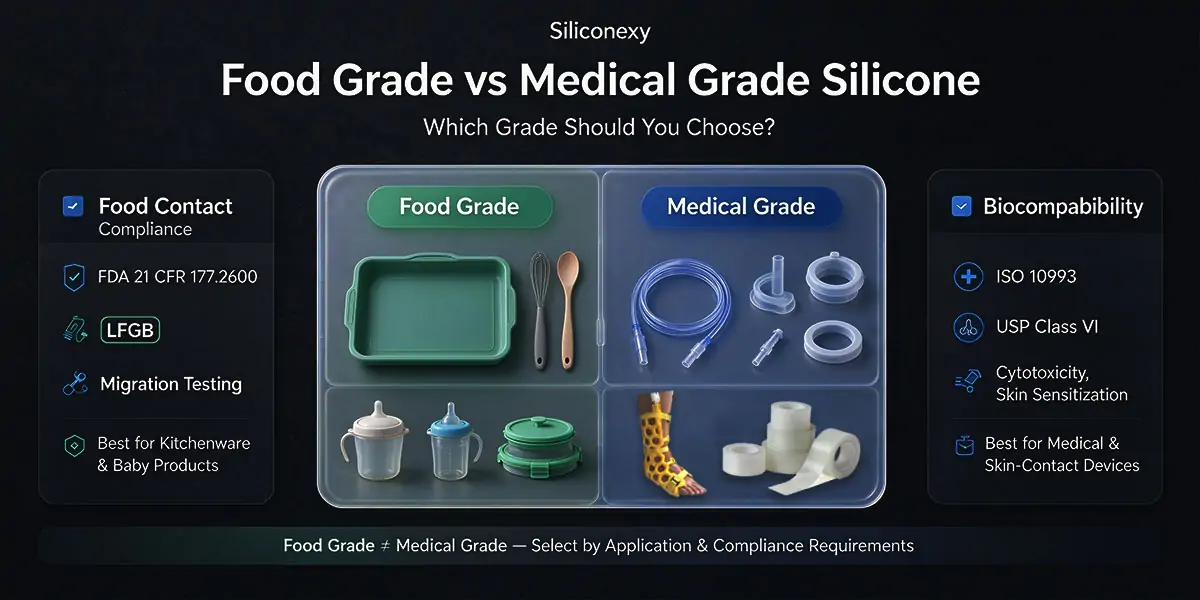
- Food-grade silicone. Must comply with FDA for U.S. markets or LFGB standards for the EU.
- Medical-grade silicone. May require ISO 10993 biocompatibility testing.
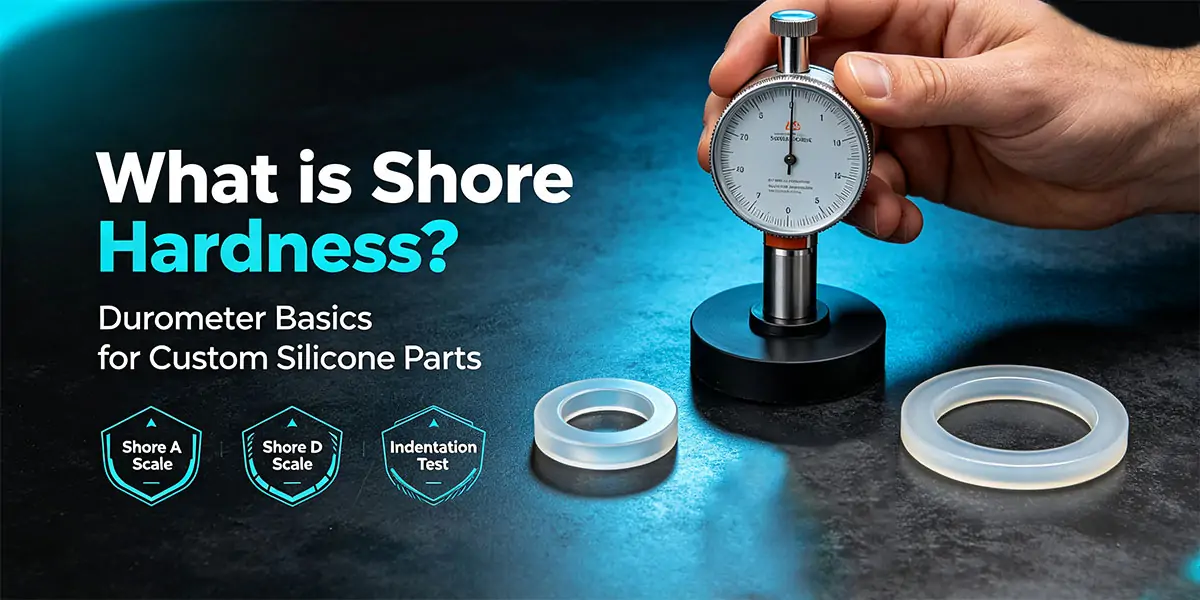
- Hardness range. Shore A 10 to 80, depending on your application.
- Temperature resistance. High-quality silicone compounds can withstand from approximately –60°C to +300°C.
Material risk ranks among the most expensive pitfalls for importers of custom molded silicone products. Certificates must correspond to your actual production batch, not generic old documents.
Ask for Certificate of Analysis (CoA) for the exact silicone raw material deployed for your order:
- Confirm lot‑traceability: Require raw‑material batch numbers linked to finished silicone goods for recall capability
- Food‑contact / skin‑contact goods: Demand batch‑specific FDA, LFGB migration test reports instead of general historical certification files
- Special chemical requirements: Confirm PFAS‑free declarations where required for EU and North American retail markets
- Verify post‑curing process: Confirm proper secondary oven post‑cure procedure to eliminate silicone odor and volatile residues for consumer‑facing silicone items
Step 3: Evaluate Your Manufacturer Thoroughly
Before committing to a custom silicone parts manufacturer, conduct a proper evaluation. Certificates alone don’t guarantee consistent quality.
Questions to Ask Your Supplier:
1. Are you a factory or a trading company?
Direct factories typically offer better pricing, faster communication, and tighter quality control. Ask for factory photos, production line videos, or arrange a virtual tour.
2. What certifications do you hold?
Key certifications to look for:
- ISO 9001: Quality management system
- FDA: Required for food-contact products in the U.S.
- LFGB: Required for food-contact products in the EU
- REACH / RoHS: Chemical safety compliance for Europe
Always request the actual certificate documents, not just logos on a website.
3. What is your minimum order quantity (MOQ)?
MOQ varies widely. Some factories require 1,000+ units per design; others can accommodate small batch orders of 500–1000 units for new product launches.
4. Can you handle custom mold development?
Please consult the company’s in-house mold design engineers regarding mold costs and lead times, as well as the key issue of mold ownership.
5. What is your standard lead time?
Typical timelines: sample production 7–15 business days; mass production 25–45 days after sample approval.
6. How do you handle quality control?
A reliable manufacturer should have QC checks at every stage: incoming material inspection, in-process quality checks, and final product inspection before shipment. Ask whether they allow third-party inspection (SGS, Bureau Veritas).
Step 4: Commercial & Logistics Checklist: Clarify All Hidden Costs Before PO Issuance
Many global buyers focus only on unit price and overlook tooling fees, sampling charges, packaging, inspection and delivery terms, which inflate total landed cost for custom silicone products orders.
- Full quotation breakdown: Separate one‑time mold cost, sample charges, per‑unit product price, custom private‑label packaging cost
- MOQ flexibility: Confirm minimum‑order quantity for trial runs and whether small‑batch custom silicone manufacturing is supported
- Lead‑time clarity: Document mold development cycle, sample turnaround, mass‑production lead‑time, buffer time for third‑party inspection
- Payment terms: Confirm deposit ratio, balance timing, avoid full prepayment before verifying pre‑production samples
- Incoterms: Clarify shipping terms, export documentation, and responsibility for customs‑required test report paperwork
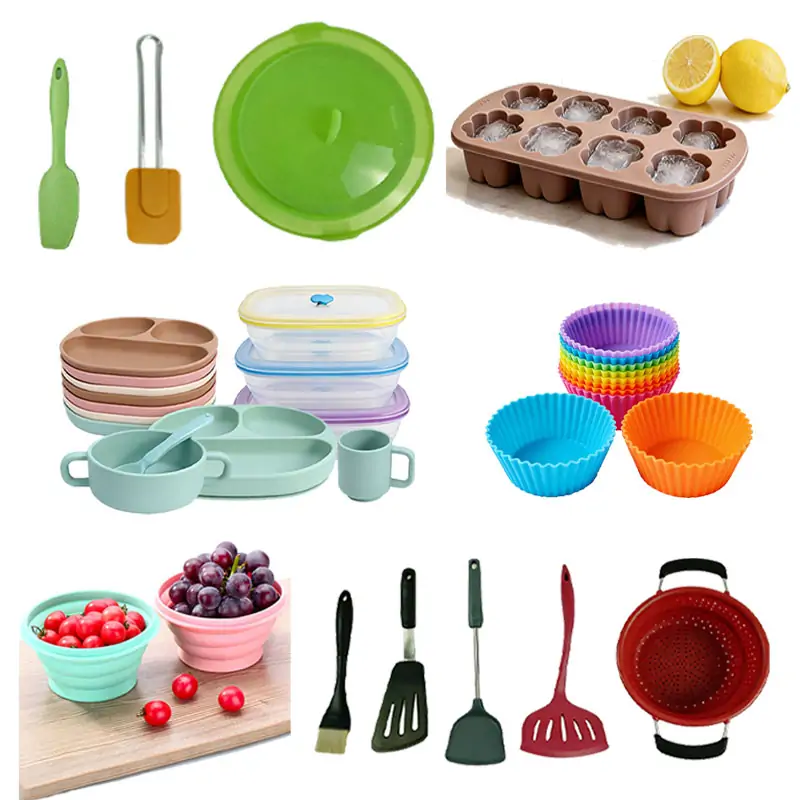
Step 5: Manufacturing & Tooling Checklist: Clarify Mold, Prototyping and Production Process
Tooling investment represents a major one‑time expense in custom silicone products manufacturing. Misunderstandings over mold ownership, revision charges and production methods create commercial conflicts later.
- Confirm mold production: Is tooling completed in‑house or outsourced? Clarify mold ownership terms after project payment
- DFM feedback: Does the silicone manufacturer provide formal Design‑for‑Manufacturability analysis before mold cutting to optimize wall thickness, demolding and minimize silicone flash?
- Prototype arrangement: Confirm sample lead‑time, sampling cost, and who bears modification costs if prototypes fail functional tests
- Molding technology match: Confirm compression molding, LSR injection molding or silicone extrusion aligns with your product precision and volume goals
- Batch‑consistency controls: Ask about first‑article inspection, in‑line QC, finished‑goods AQL inspection standards for mass silicone production
Step 6: Custom silicone mold development checklist
- Product use and target market: Confirmed upfront
- 2D and 3D drawings: Finalized and reviewed for manufacturability
- Material and hardness: Specified
- Wall thickness: Must be uniform enough for consistent curing and demolding
- Parting line: Determines where mold halves separate
- Surface finish: Texture, gloss, or matte requirements
- Logo and critical dimensions: Clearly defined
- Testing requirements: Functional, dimensional, or compliance testing
- Packaging method: Defined for mass production
- Mold ownership: Clarified in writing
- Sample approval process: Agreed upon
- Estimated production quantity: Finalized
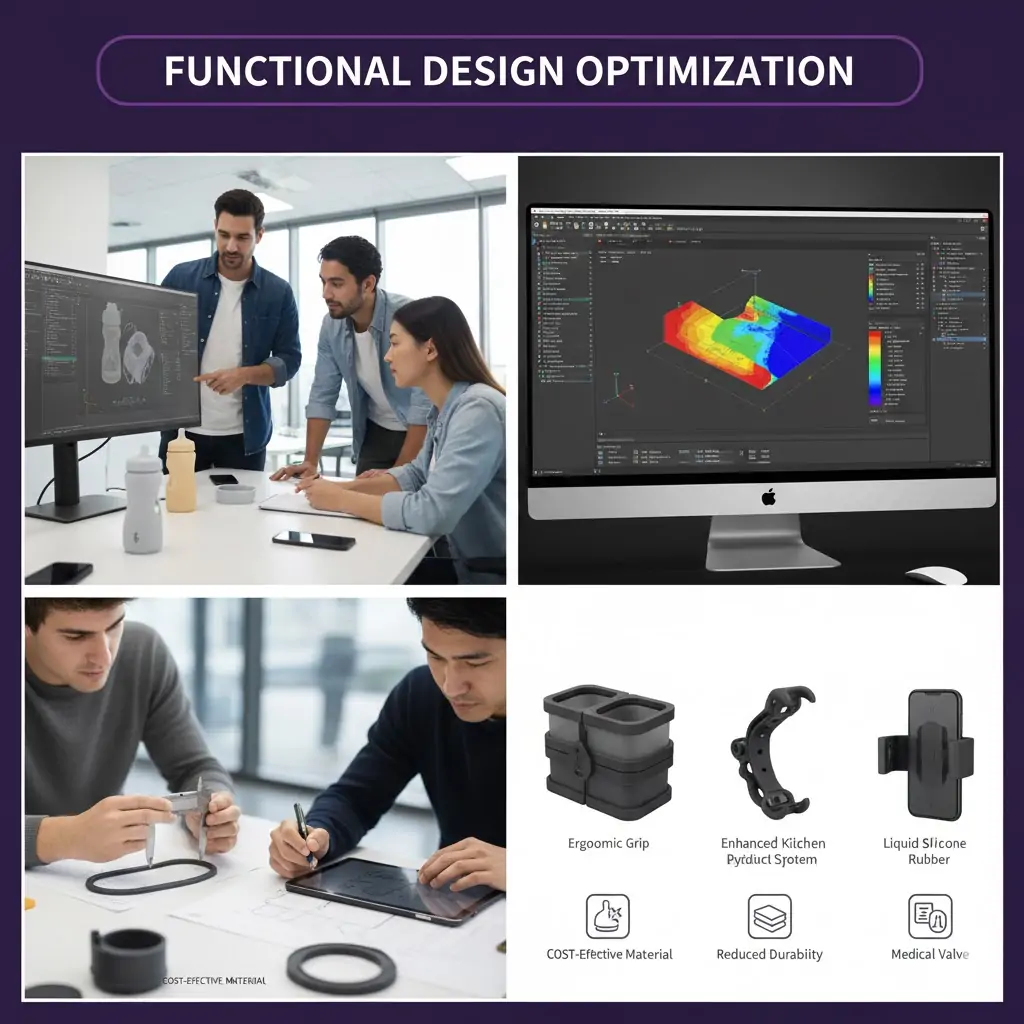
Why this matters: A visually attractive drawing isn’t automatically ready for manufacturing. The manufacturer should review whether the product can be molded, cured, demolded, inspected, and repeatedly produced without unstable dimensions, weak areas, excessive flash, or deformation.
Design for Manufacturing Checklist
Before tooling begins, both buyer and manufacturer need to align on critical details. This is where many projects encounter unexpected delays and costs.
DFM Checklist:
- Wall thickness reviewed
- Sharp corners evaluated
- Draft and demolding requirements reviewed
- Undercuts identified
- Parting lines considered
- Flash areas considered
- Tolerances defined
- Logo structure reviewed
- Surface texture reviewed
- Mold structure evaluated
Silicone shrinkage, product geometry, tooling structure, and molding method can all influence the final dimensions and appearance of a molded part.
For this reason, DFM should happen before mold manufacturing, rather than after production problems appear. Siliconexy’s published manufacturing process places design and DFM evaluation before tooling and sampling.
Mold & Tooling Checklist
Tooling is one of the most important investments in a custom silicone products manufacturing project.
Before approving a mold, confirm:
- Mold structure
- Number of cavities
- Mold material
- Expected tooling life
- Parting line location
- Gate / runner design where applicable
- Mold ownership
- Tool maintenance responsibility
- Tool modification costs
- Tool storage arrangements
Also ask the manufacturer to clarify what happens if the mold requires modification after sampling. This is particularly important for OEM silicone products, because tooling decisions can affect both initial investment and long-term production efficiency.
Step 7: Prototype & Sample Approval Checklist
Never rely only on drawings or digital renders when product performance and appearance matter. Before mass production, establish a clear sample approval process.
Sample Checklist
- Dimensions
- Weight
- Silicone hardness
- Color
- Surface finish
- Logo
- Function
- Assembly
- Packaging
- Sample approval record
The approved sample should become the reference for subsequent mass production.
This establishes a clear connection between the following stages and reduces the risk of misunderstandings between the buyer and the factory.
- Design → Prototype → Approval → Mass Production
Step 8: Quality Control Checklist
Quality control should not begin only after production is finished. A professional custom silicone products factory should have quality checkpoints throughout the manufacturing process.
QC Checklist:
- Incoming material inspection
- Material identification
- Color verification
- Hardness testing
- Dimensional inspection
- Appearance inspection
- Flash inspection
- Functional testing
- Packaging inspection
- Final random inspection
For food-contact products, quality and compliance requirements should also be linked to the intended market and use conditions. EU GMP rules, for example, require an effective quality assurance and quality control framework for applicable food-contact materials and articles.
Silicone Flash Removal & Trimming Checklist
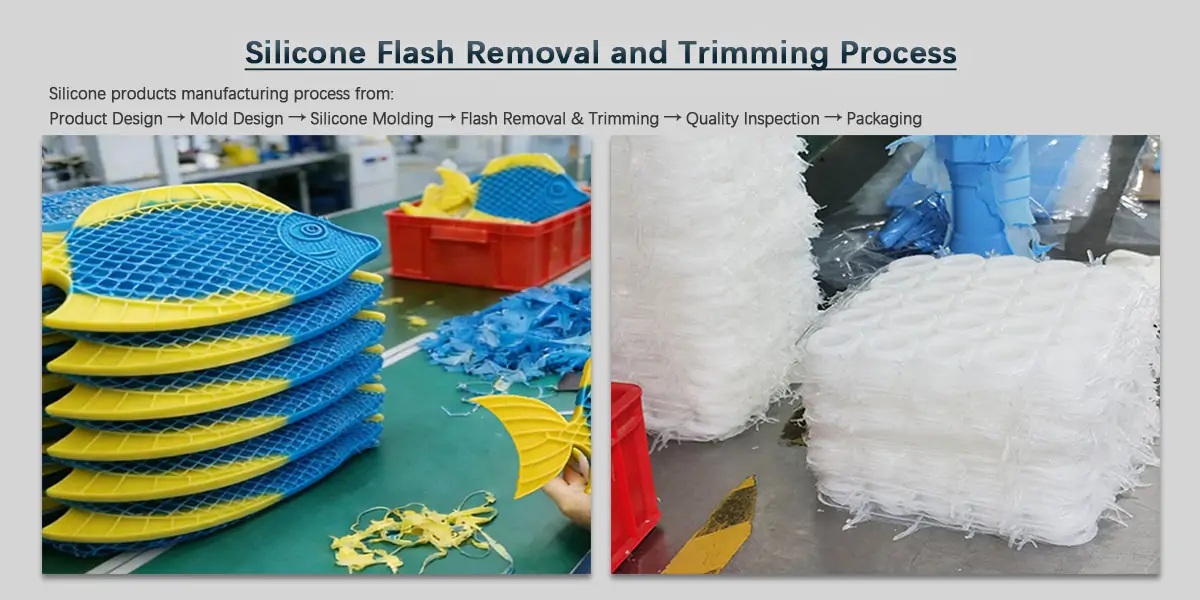
Flash is a common consideration in molded silicone products. After molding, excess silicone around parting lines or other areas may need to be removed.
- Flash level
- Edge quality
- Manual trimming requirements
- Automated trimming where applicable
- Surface damage after trimming
- Critical dimensions after finishing
For products with visible edges or tight dimensional requirements, trimming quality can have a direct impact on the final appearance and functionality. This is why trimming and finishing should be included in the manufacturing specification rather than treated as an afterthought.
Siliconexy’s documented manufacturing workflow includes finishing and quality inspection after molding and before final packaging.
Step 9: Pre‑Shipment Final Checklist Before Mass‑Production Shipment
Even after successful sampling, complete these steps before goods leave the silicone factory:
- Review pre‑production sample sign‑off against your technical specification document
- Request updated batch‑matched material test reports
- Arrange pre‑shipment inspection either in‑house or via independent third‑party inspector
- Confirm packaging compliance: retail‑ready private‑label packaging, moisture‑proof packing for silicone goods to avoid dust and deformation during sea freight
- Lock shipping schedule and document all agreed‑upon revisions in written purchase‑order attachments
Step 10: Packaging Checklist
Packaging should be discussed before mass production.
- Individual packaging
- Custom logo
- Product labels
- Instruction cards
- Retail box
- Inner carton
- Master carton
- Carton dimensions
- Carton quantity
- Shipping marks
- Barcode requirements
For retail products, packaging can also be part of the OEM development process. A manufacturer capable of handling custom silicone products with customized packaging can simplify coordination between production and final shipment.
Final Thought
A thorough custom silicone products manufacturing checklist does not eliminate sourcing risks entirely, yet it drastically lowers the chance of receiving defective, non‑compliant or delayed custom silicone OEM goods.
Successful long‑term partnerships with silicone manufacturers rely on clear written specifications, verified documentation, and transparent communication rather than chasing the lowest quoted unit price alone.
The most successful custom silicone products manufacturing projects aren’t built on the lowest quote, they’re built on clear communication, technical expertise, and mutual trust. A manufacturer that understands your product, your market, and your quality expectations will deliver consistent results, batch after batch.
Ready to start your custom silicone project?
At Siliconexy (Xinyin), we specialize in custom silicone products manufacturing for global buyers across baby, kitchen, pet, medical, and industrial sectors. From custom silicone mold development to OEM silicone production, we provide end-to-end solutions with ISO 9001, FDA, and LFGB compliance.
Contact our team today for a free consultation and accurate quote.
Why Choose Siliconexy?
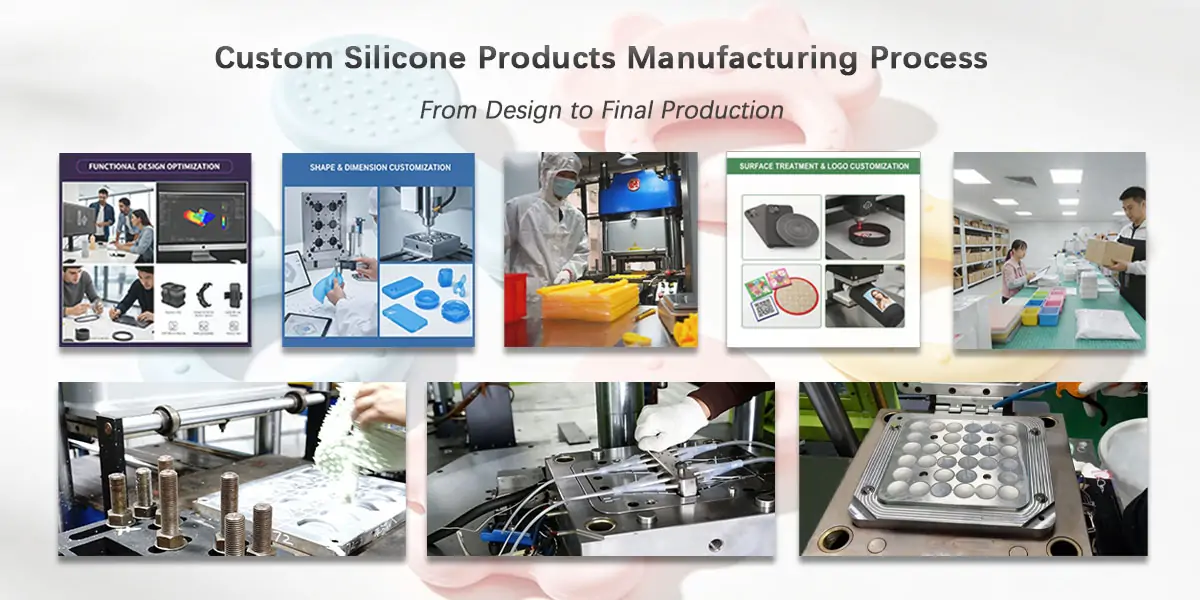
We combine full-chain manufacturing capabilities with a deep understanding of international compliance standards. From custom silicone prototyping to high-volume production, our integrated facility handles mold design, LSR injection molding, compression molding, surface finishing, and quality assurance.
We serve clients across medical, automotive, consumer electronics, and home goods sectors, with certifications including ISO 9001, FDA, LFGB, RoHS, REACH, and CE.