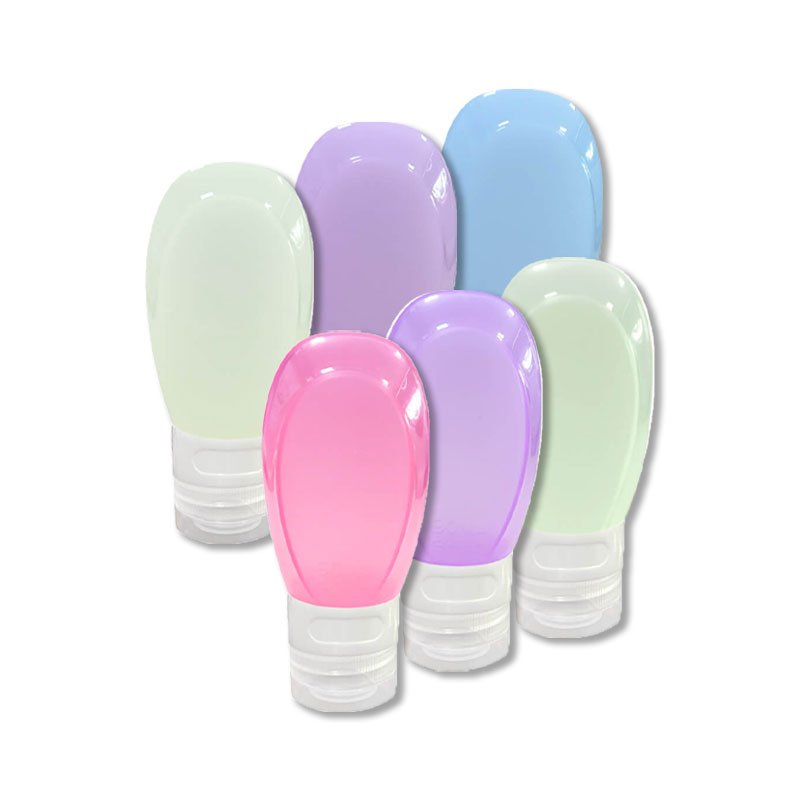
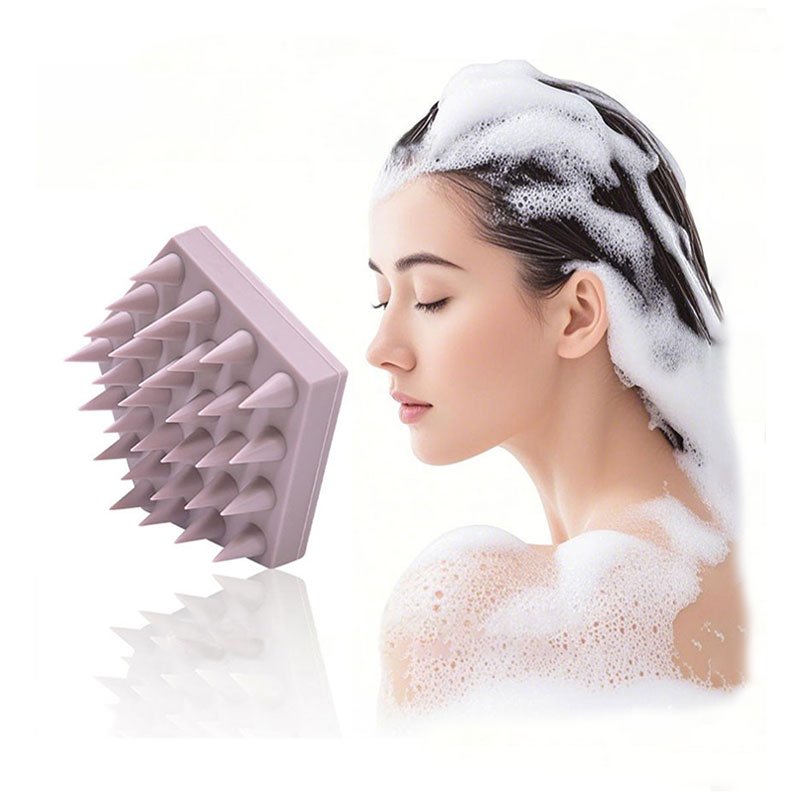
Silicone bath and body brush, also widely known as silicone body scrubber or silicone shower massage brush, is one of the most popular eco-friendly bathroom accessories for gentle exfoliation, skin massage and deep pore cleaning. Compared with conventional brushes, silicone body brushes feature flexible silicone bristles, a soft-touch surface, and a design that is easy to rinse after use.
Silicone products are increasingly favored by beauty enthusiasts because they are skin-friendly, hygienic, antibacterial, easy to clean, and eco-friendly. Consequently, silicone bath brushes have become a popular choice. The market for silicone beauty tools is growing rapidly, with high demand in regions such as Europe, North America, Japan, and South Korea for products including:
- Facial cleansing brushes
- Scalp massagers
- Silicone bath brushes
- Exfoliating scrubbers
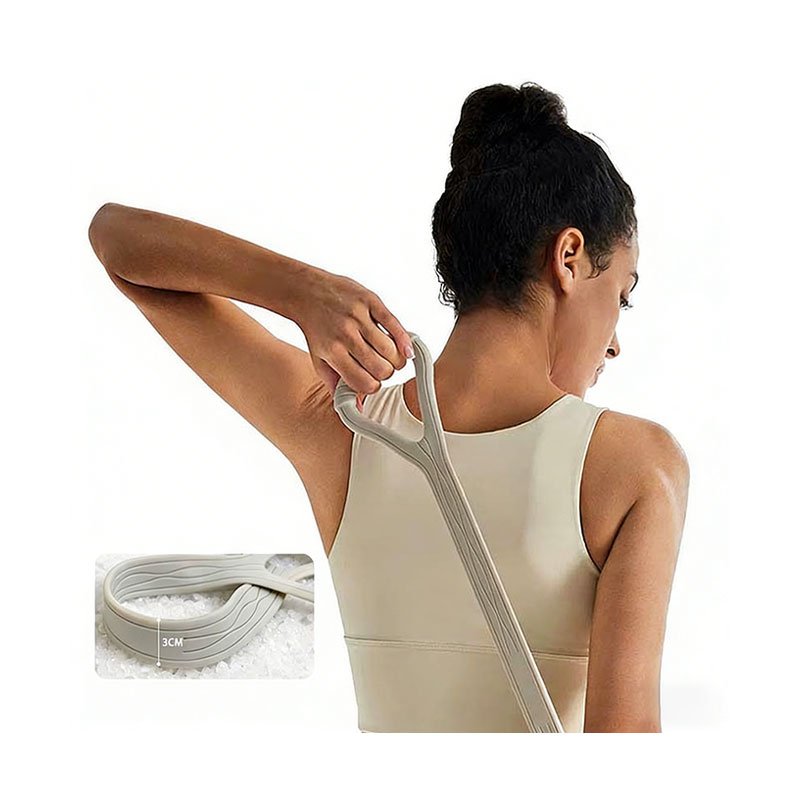
- Back scrubbers
- And various other items.
This demand is driven by the inherent advantages of silicone, which include:
- Soft and skin-friendly
- Antibacterial and mold-resistant
- Easy to clean
- Waterproof
- Heat-resistant
- Durable
- Aesthetically pleasing
Are you curious about how these silicone body scrubbers are made? Take a look at the details of our silicone brush manufacturing process below.
How Are Silicone Bath and Body Brushes Made?
Silicone bath brushes can be manufactured using silicone compression molding, a process in which solid silicone rubber is placed into a mold and shaped under controlled heat and pressure. Compression molding is the preferred process for solid silicone bath brushes, as it supports custom shapes, custom colors and stable soft bristles for body exfoliation. At Siliconexy (Xinyin), the manufacturing workflow includes the following steps.
Step 1: Silicone Material Preparation and Color Tinting
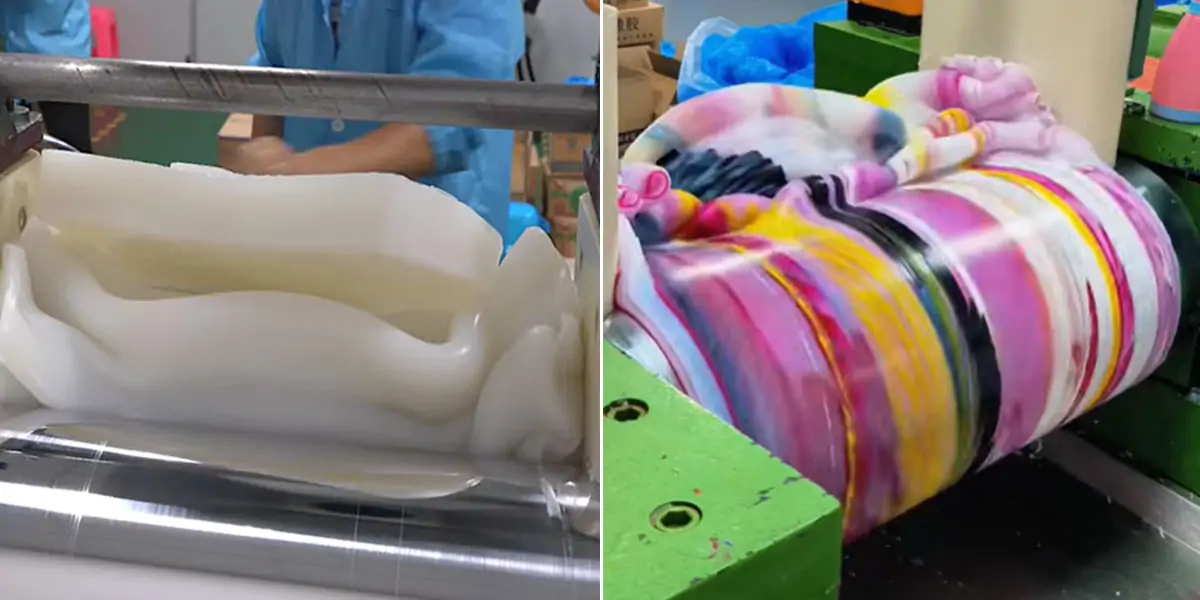
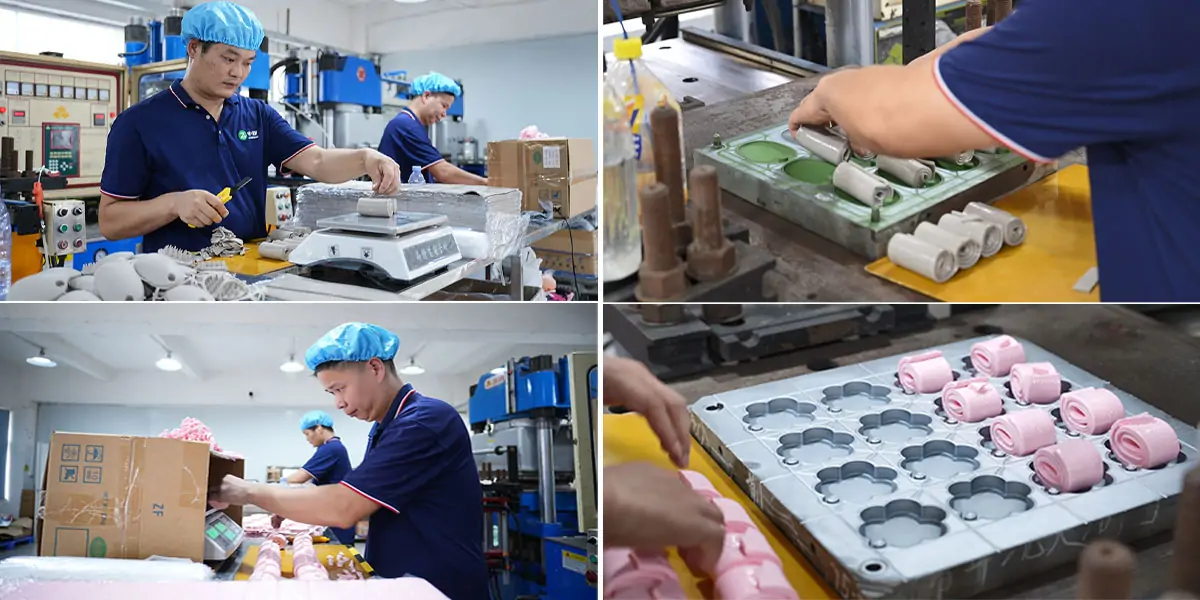
The process begins with selecting suitable solid silicone rubber and preparing the required color. We start by selecting FDA standard solid silicone raw material.
Color pigments are mixed into the silicone compound to achieve the target appearance. The material grade and pigment system are selected according to the product specifications and applicable requirements.
We strictly control blending uniformity to avoid color difference on finished silicone shower scrubber.
Step 2: Silicone Preform Trimming & Weight Calibration
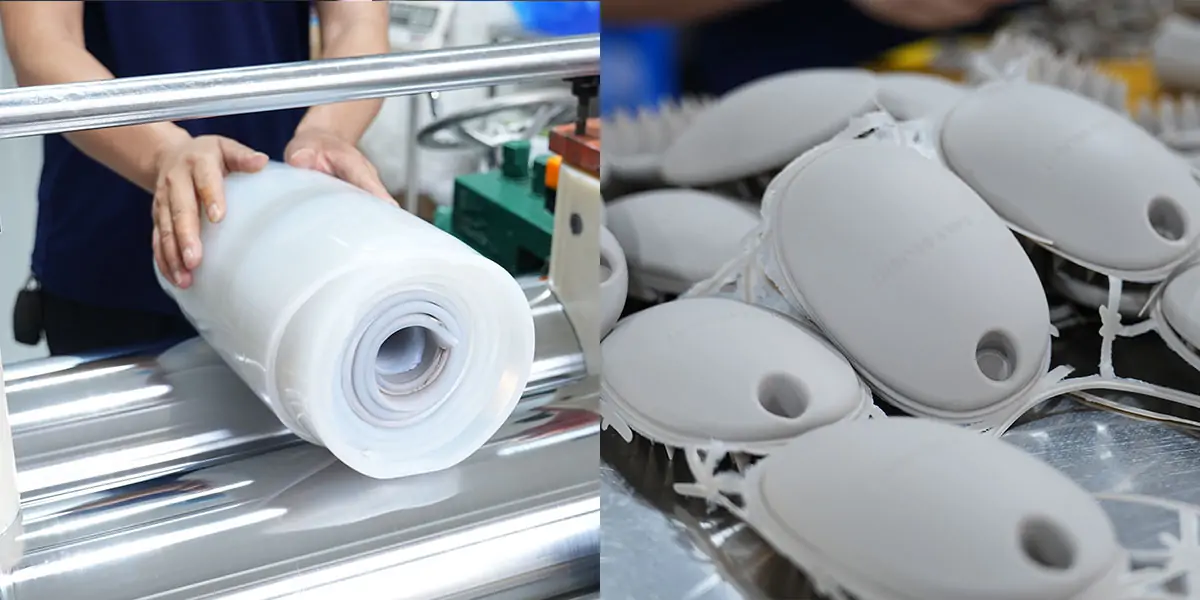
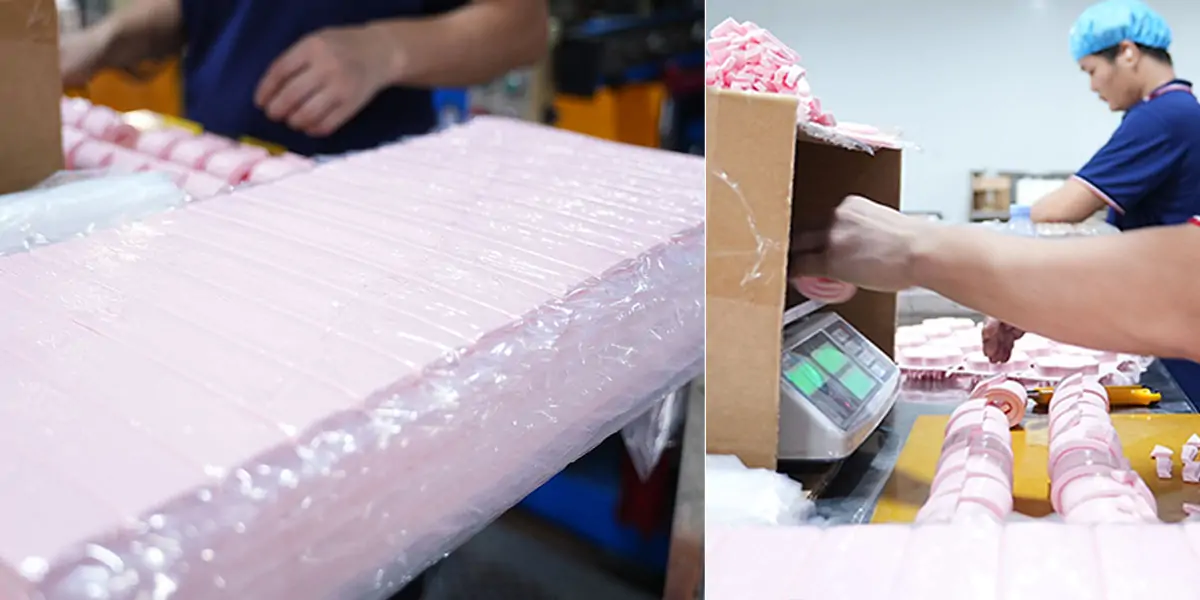
Cured HCR arrives as a semi-processed sheet or strip. It is trimmed and weighed into individual preforms matched to the mold cavity volume.
Each silicone blank is precisely weighed and cut into the exact preform shape and weight for one single bath brush mold cavity. Overweight charges create excessive flash and dimensional drift; underweight charges cause incomplete fill and weak bristle tips.
Preform weight consistency is one of the quiet determinants of batch-to-batch uniformity in a silicone body scrubber OEM run. Accurate preform cutting reduces flash, stabilizes product thickness and keeps consistent quality for bulk wholesale silicone bath brushes.
Step 3: Loading the Silicone into the Mold
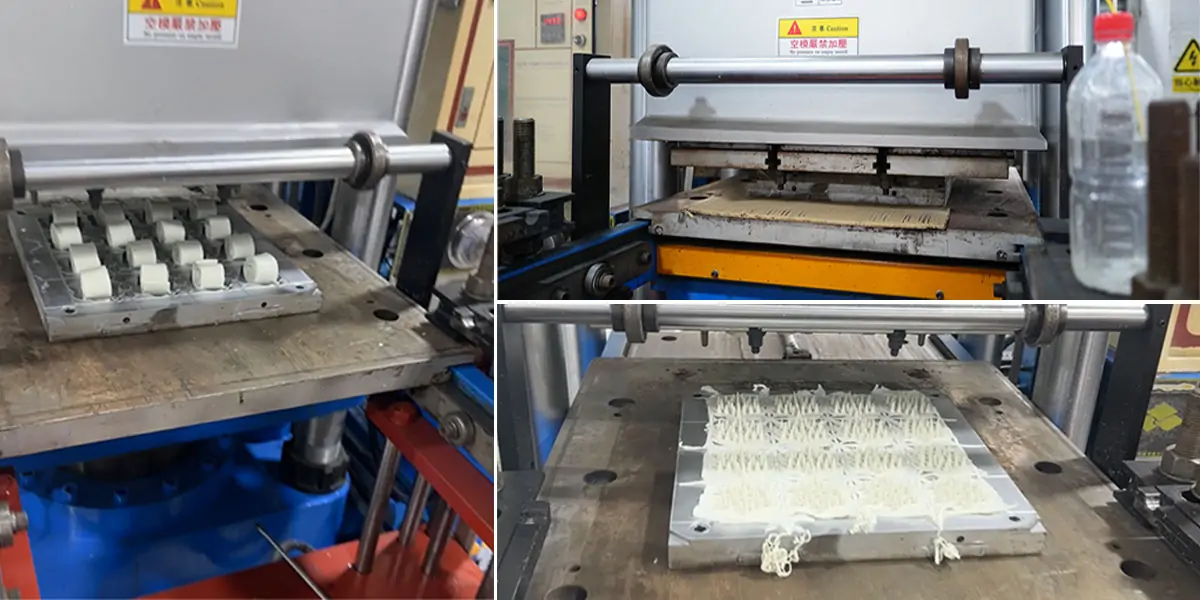
Workers place the weighed solid silicone slug into the preheated custom mold cavity engraved with the bath brush bristle pattern. Proper positioning ensures silicone flows fully into every bristle detail during pressing.
The mold carries the negative geometry of the brush head, bristle array, massage nodes, and handle or hanging hole. For dual-sided or multi-texture scrubbers, mold design may incorporate different node thicknesses in a single cavity.
The mold cavity defines the shape and dimensions of the finished bath brush, including its overall profile and molded bristle pattern. For OEM silicone body brushes, mold design is an important consideration because the product geometry influences its appearance, functionality, and manufacturing feasibility.
Step 4: Solid Silicone Compression Molding & Curing
The mold closes inside the hydraulic press. Under controlled heat and pressure, the solid silicone vulcanizes and takes the shape of the mold, forming the complete silicone bath and body brush with integrated soft massage bristles. Cycle time typically runs 2–15 minutes depending on compound, part thickness, and mold temperature.
This is the step where the material’s mechanical properties are locked in: HCR is chosen for its high tensile strength, tear resistance, and compression set, which matter when silicone bristles are repeatedly flexed against skin.
Compression molding is suitable for many custom solid silicone products because it supports detailed molded shapes and offers flexibility for product development and production planning.
Step 5: Silicone Brush Forming and Demolding
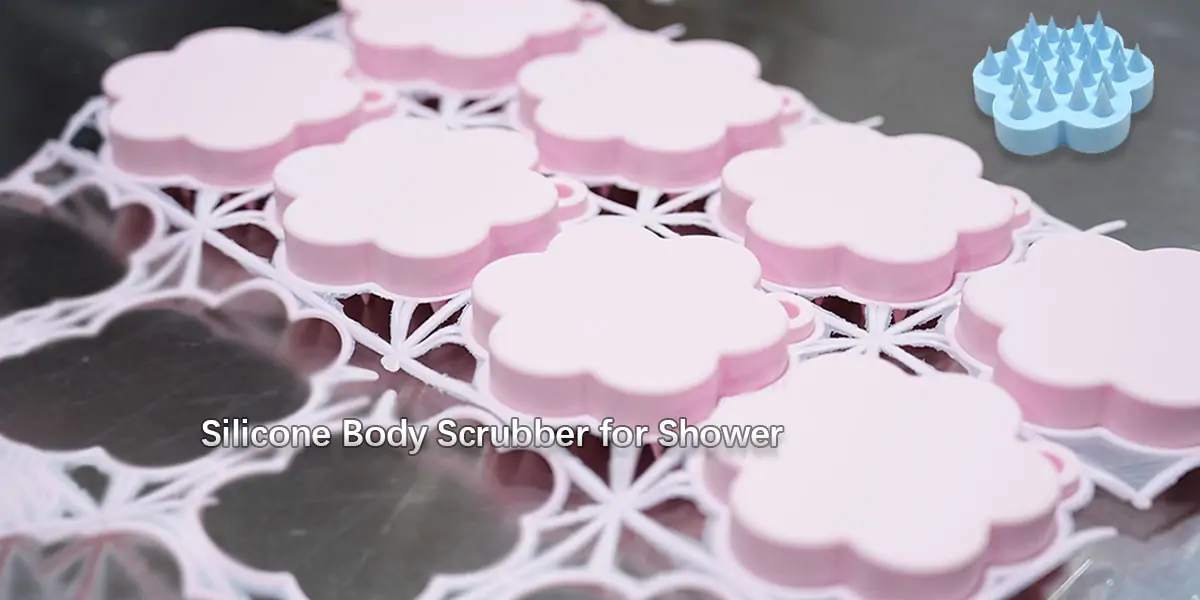
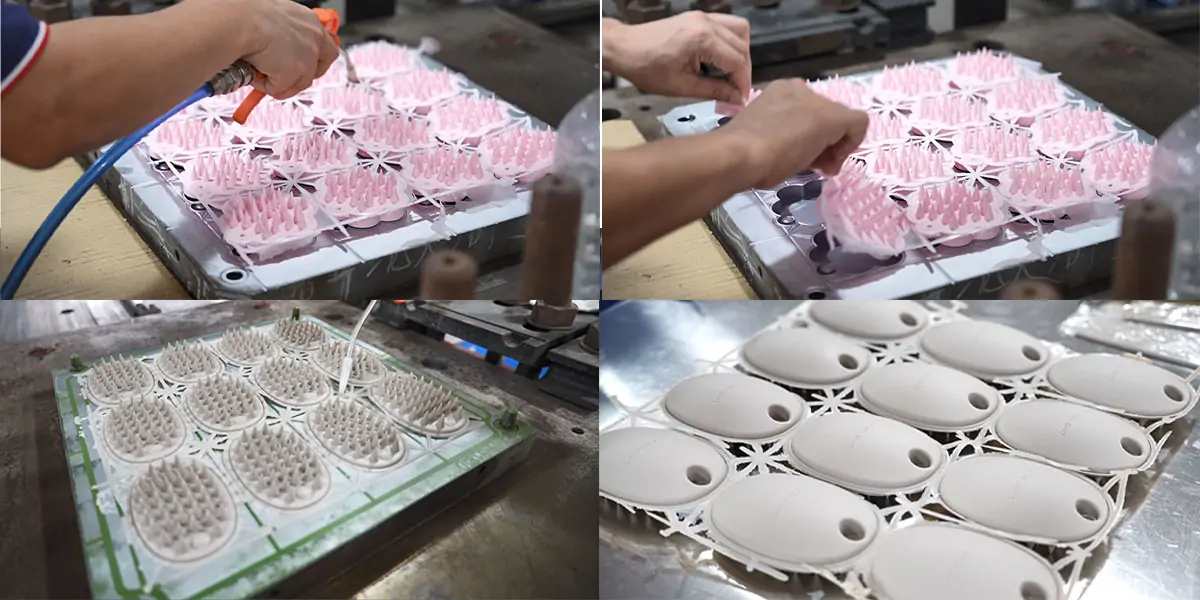
Once the curing cycle finishes, the press opens. The whole silicone bath brush structure, including scrubbing nodules and body frame, is fully molded. The molded product features its designed body and bristles. The final bristle geometry, dimensions, and firmness depend on the product design, silicone grade, and mold specifications.
After cure, the mold opens and the silicone bath brush is removed. At this stage the part carries flash along the parting line and may show minor dimensional variation. An inherent characteristic of compression molding compared with LSR injection molding.
Operators carefully remove the finished silicone scrubber from the mold. Proper demolding helps protect the molded bristles and product edges from unnecessary damage. Depending on the design, excess material around the parting line may require trimming.
Step 6: Trimming Excess Silicone and Removing Flash
After demolding, excess silicone material, known as flash, may remain along the mold parting line or around the edges of the bath brush. These excess materials are carefully trimmed and removed to achieve a cleaner appearance and smoother edges.
Proper flash removal helps maintain the product’s appearance, improve edge consistency, and reduce unwanted excess material around the molded bristles. Each silicone bath brush can then undergo a visual inspection to check for remaining flash, surface defects, and molding inconsistencies before packaging.
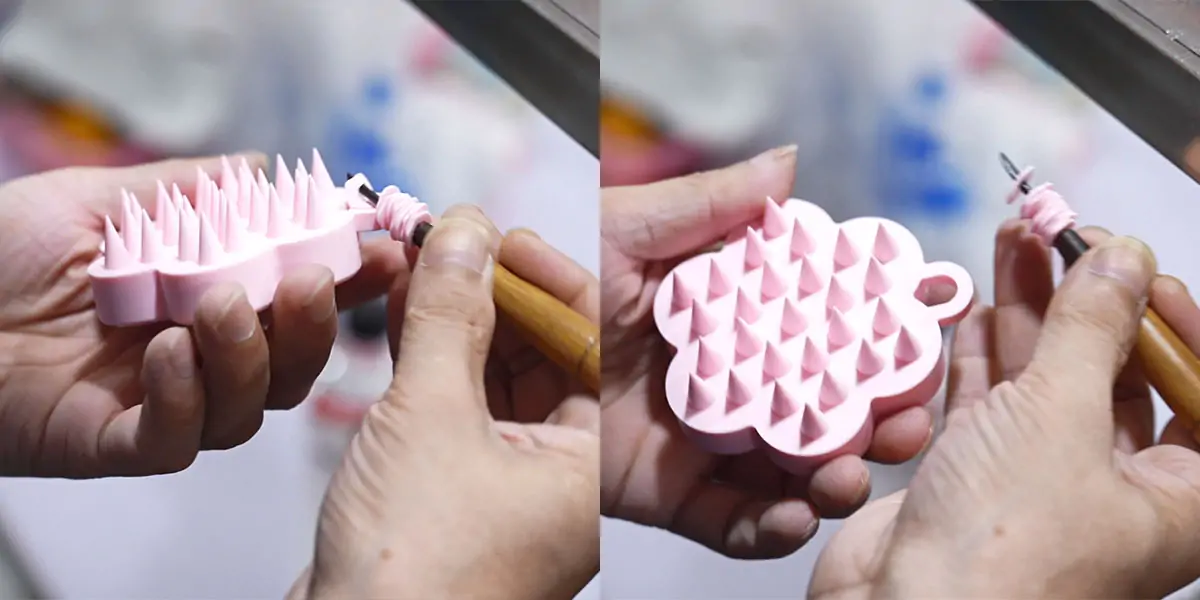
Bristle tips, massage nodes, and the hanging hole are checked for incomplete fill, tears, or color inconsistency. For wholesale silicone bath brush programs, this is where AQL sampling begins; a defect that reaches packaging becomes a retail chargeback.
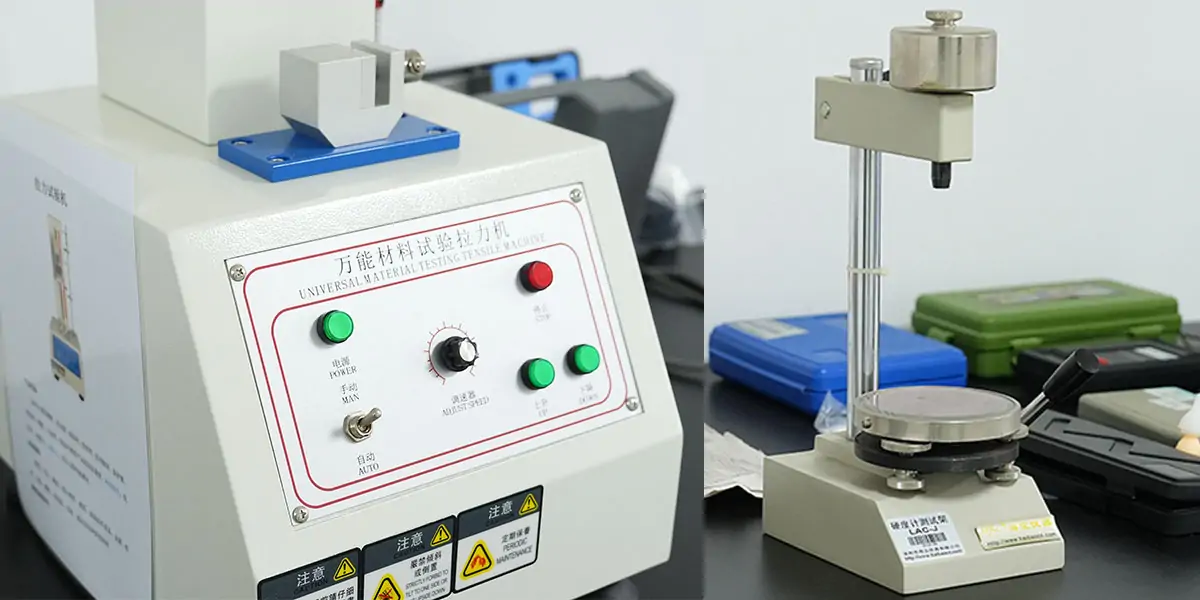
Step 7: Product Inspection
The completed brush is a non-porous silicone bath and body brush. Unlike loofahs and sponges, non-porous silicone does not harbor bacteria or mold in the same way, which is a core hygiene claim behind the category’s growth. Food-grade silicone brushes are also positioned as BPA-free and suitable for sensitive-skin users when the compound and cure are properly controlled.
The demolded silicone bath brush is checked against the agreed product specifications. Relevant inspection points may include:
- Appearance and color consistency
- Product dimensions and weight
- Bristle shape and completeness
- Surface defects and excess flash
- Overall molding quality
Additional testing can be defined according to the customer’s requirements and the intended market.
References:
- Silicone Scrubber vs Loofah: Which Is Better for Body Care?
- Are Silicone Scrubbers Good for Your Skin?
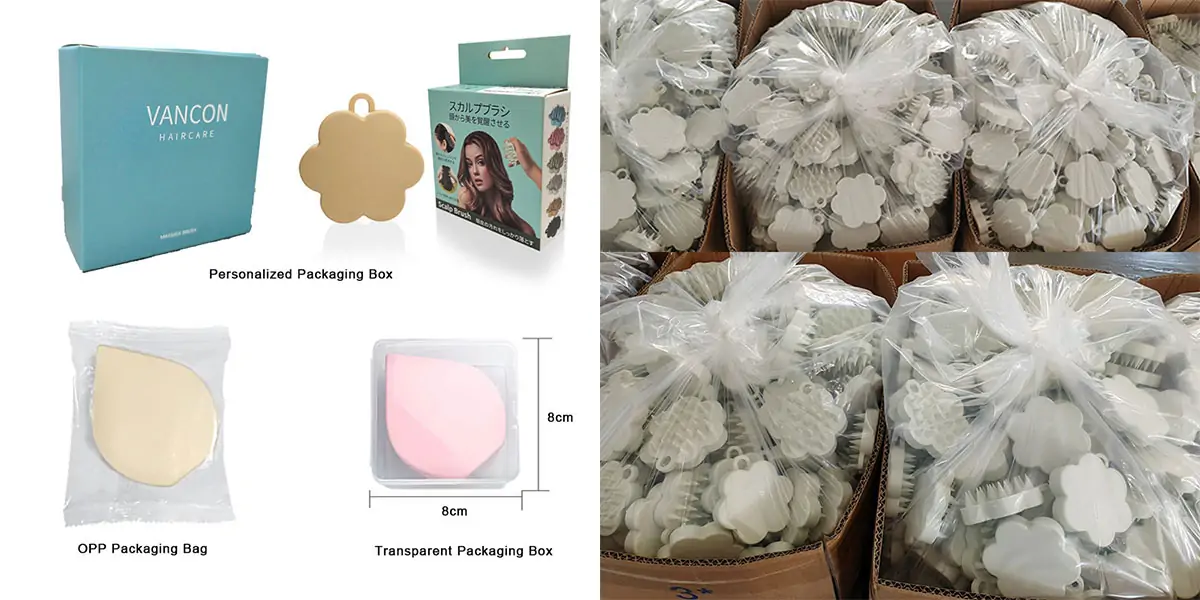
Step 8: Packaging and Preparation for Delivery
Packaging is also where silicone body scrubber orders diverge: logo printing, color-matched inserts, and retail barcodes are applied at this final stage rather than during molding.
After inspection, the finished silicone bath brushes are packaged according to the agreed packaging specifications. Options may include simple individual packaging, customized packaging, or retail-ready packaging, depending on the project.
The products are then prepared for shipment to the customer.
Why Choose Compression Molding for Custom Silicone Bath Brushes?
Compression molding is a practical manufacturing option for many solid silicone bath and body brushes. Its key advantages include:
- Flexible product customization. Mold design can be developed around the required brush shape, dimensions, bristle pattern, and other product features.
- Custom colors. Silicone compounds can be prepared in different colors to match a brand’s visual identity or product range.
- Suitable for solid silicone structures. The process is well suited to solid silicone products that require a defined shape and integrated molded features.
- Production planning flexibility. Tooling design, cavity configuration, material usage, and order quantity can be evaluated together to determine a suitable production plan.
Actual production efficiency, tooling cost, and unit price depend on the product’s complexity, mold design, order quantity, and manufacturing requirements.
Conclusion
Manufacturing a silicone bath and body brush involves several important stages: material preparation, color mixing, weighing and cutting, mold loading, compression molding, demolding, inspection, and packaging.
Each stage contributes to the consistency and quality of the finished product. For brands and wholesalers, choosing a suitable silicone material and a capable OEM/ODM manufacturer is an important step toward developing a reliable custom silicone bath brush.
If you are planning a new silicone bath and body brush project, Siliconexy can help evaluate your requirements and manufacturing options.
The Silicone bath body brush compression molding process:
Why Choose Siliconexy as Your Silicone Bath Brush Manufacturer?
- Raw material: FDA compliant solid silicone, safe for skin contact, non-toxic and BPA-free.
- Production: In-house compression molding workshop, support custom size, custom color, custom logo and custom shape silicone body scrubber.
- Service: OEM & ODM silicone bathroom accessories, MOQ 500-3000 PCS available for custom silicone bath and body brush wholesale.
- Application: Gentle exfoliating body brush for adults, baby shower massage brush, reusable silicone shower scrubber for daily skincare.
If you are sourcing a reliable silicone factory to develop your private label silicone bath brush, contact Siliconexy for samples and quotation.